


Plans for budget homes blocked over long-term affordability concerns

Richard Youle, Local Democracy Reporter
A group’s plans for low-cost homes have been blocked after a planning inspector ruled there was no guarantee the properties would remain affordable.
Gwyr Community Land Trust planned 14 energy-efficient homes, along with a “common house” with shared facilities and two guest bedrooms, a barn, polytunnels and community garden and orchard, in Bishopston.
The idea was that the houses would be allocated to members of the trust who were unable afford suitable open market housing and who had a connection to Bishopston or neighbouring Pennard, Fairwood, Mumbles, Mayals and West Cross.
Its planning application to Swansea Council prompted 88 letters of support from people who said, among other things, that affordable housing was much-needed, the farmstead-style project ticket biodiversity and food-growing boxes, and the very low-carbon design was inspirational.
There were 314 letters of objection from people who felt the scheme didn’t ensure the homes would be affordable and for local people forever. There were also concerns about the group’s search for alternative sites, a perceived lack of transparency, the loss of good-quality agricultural land off South Close and Providence Lane, and traffic concerns, among other things.
The council turned the application down on six grounds in April this year. Gwyr Community Land Trust, which at that point had submitted an appeal for non-determination of the application, also appeal the refusal decision.
Loss of land
Welsh Government-appointed planning inspector Anthony Thickett held a hearing in November and has now rejected the appeal after considering key issues including the perpetuity question and loss of “best and most versatile” agricultural land.
His report said occupiers of the 14 homes could have up to 65% ownership and would need a mortgage to fund their share, but he was concerned what would happen if things went wrong for an occupier or the trust itself.
Referring to a particular mortgage clause occupiers would need, Mr Thickett said the trust conceded at the hearing that a property could be offered on the open market if an individual defaulted.
His report added: “Should the trust default, the council or a registered social landlord (RSL) would be invited to take over its interests. In the event neither the council nor a RSL were willing or able to take over responsibility, any person or body taking over the trust’s interests would not be bound by the provisions in the unilateral undertaking requiring the properties to be retained as affordable housing.”
Affordable housing
Mr Thickett acknowledged a need for affordable housing in the Bishopston area but said: “In these circumstances, there is no mechanism to ensure the properties would be available in perpetuity to those who cannot afford market housing.”
And because of this, he said, the scheme didn’t “satisfy the definition of affordable housing”.
Referring to the selection process for occupiers, Mr Thickett said support for the aims of the trust and contribution to the community each carried the same weight as housing need, income and local connection.
“As a co-housing project, I understand the desire to ensure residents are committed to its success and achieving its aims,” said Mr Thickett. “Those aims are laudable. Nevertheless, a family in evident need, despite demonstrating compliance with the objective tests relating to their financial situation and local connection, could be denied a home because they are deemed not to fit in.”
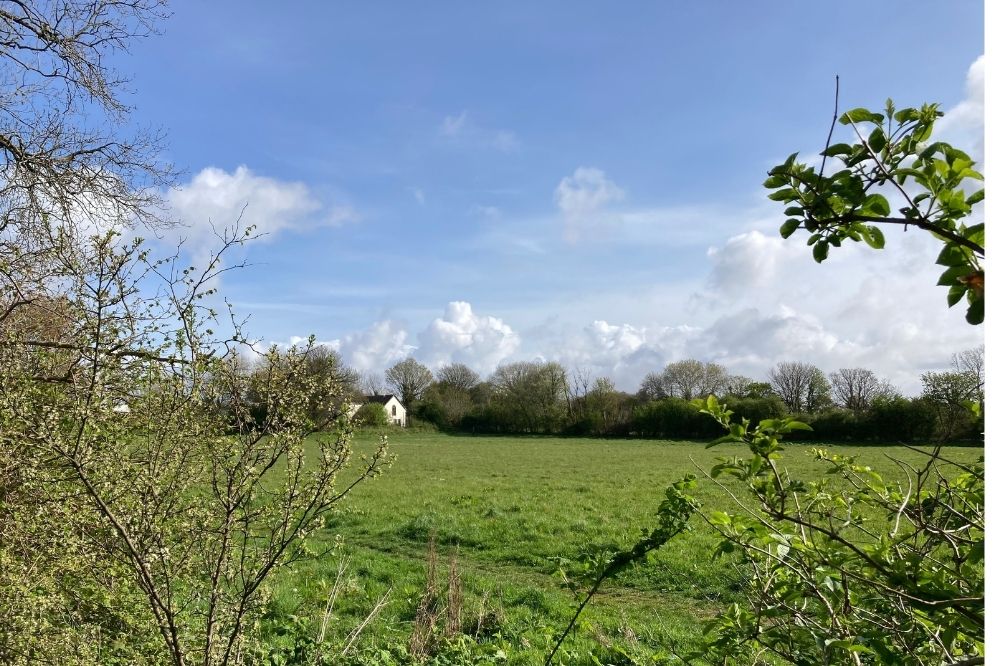
While acknowledging the trust’s biodiversity improvement proposals Mr Thickett said the development, including a new access road and parking area, would be “a significant and harmful visual intrusion into this open area”.
He also said it would be detrimental to highway safety by increasing traffic at a road junction with substandard visibility.
Turning to the loss of best and most versatile agricultural land, Mr Thickett said although the field in question wasn’t being farmed to its potential it could be in the future, and that such land should – according to planning policy – be conserved for the future.
Response
Responding to the refusal decision a Gwyr Community Land Trust spokesman said: “We are obviously gutted about the decision, as this project has been the culmination or nearly five years of incredibly hard work and commitment from a huge number of people, including members, supporters and the professionals involved in putting together the scheme and application.”
He said the trust’s primary purpose was to ensure genuinely affordable housing forever, and that the message in the trust’s view was that community groups could only build affordable housing if it was “being entirely controlled and mediated by the exact organisations who are currently failing to deliver the homes that people need”.
Bishopston Community Council said it supported the principle of building 14 low-carbon affordable homes but felt the proposed location was not ideal for factors referred to in the report.
Swansea councillor Lyndon Jones, who represents Bishopston, said he felt the planning inspector had “got it absolutely right”. Referring to the land in question Cllr Jones said: “That is the buffer zone between Bishopston and Murton – once you start building on that you erode the difference between the villages and you lose the rural nature of it.”
Support our Nation today
For the price of a cup of coffee a month you can help us create an independent, not-for-profit, national news service for the people of Wales, by the people of Wales.



I can see both sides of the argument. Shame it wasn’t affordable rented props in perpetuity and also not on such a bridge site. I presume therefore that this site can never be built on then?
The Swansea councillor’s objection has the smell of a “but what about the value of my home?” argument, NIMBY-ism driven by a need to get a return on his “investment”. The proposals do look a bit too unguarded in terms of secondary sales, but that could have been discussed in the consultation period if there were no other concerns. The UK as a whole needs more affordable housing as the stock never recovered from Thatcher selling off the council houses to bribe voters.