


Plans to rebuild fire-hit seaside pub refused over protected seabird impact
Bruce Sinclair, Local Democracy Reporter
Changes to previously approved plans to rebuild a fire-damaged seaside pub have been refused amid concerns they could put a protected seabird species at risk of “injury or death”.
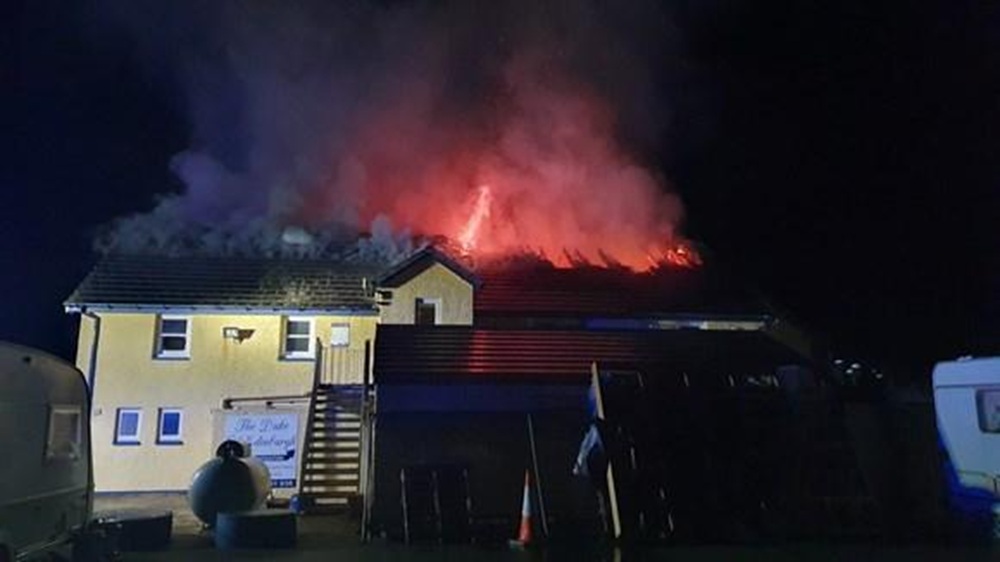
The proposals related to the Duke of Edinburgh Inn in Newgale, Pembrokeshire, which was badly damaged in a major blaze in January 2024.
Developers had sought to amend earlier consent for the rebuilding of the pub, including enlarging first-floor accommodation and making changes to windows and external access.
The application, submitted to Pembrokeshire Coast National Park Authority, was rejected by planning officers who said the revised scheme would harm both the landscape and local wildlife.
The pub, a well-known landmark in the coastal village, was severely damaged in a fire in the early hours of January 16, 2024. Flames tore through the roof of the two-storey building, with crews from across Pembrokeshire taking around six hours to bring the blaze under control. An investigation by Mid and West Wales Fire and Rescue Service found no suspicious circumstances.
Local community council Nolton and Roch had supported the original approved plans, describing the Duke of Edinburgh as “synonymous with Newgale”.
However, officers said the latest amendments would result in a development that was “unsympathetic to the landscape and seascape” and excessive in scale, particularly due to proposed balconies and increased glazing.
A major concern was the impact of additional lighting on Manx shearwaters, a protected seabird species that breeds in large numbers along the Pembrokeshire coast.
The area forms part of the internationally important Skomer and Skokholm and Seas off Pembrokeshire Special Protection Area, which supports around 60% of the world’s breeding population of the species.
Planning officers warned that increased fenestration and glass frontage would lead to higher levels of artificial light, which can disorientate seabirds — particularly fledglings — causing collisions or grounding that can result in death.
‘Adverse impact’
A report stated the changes could have a “significant adverse impact” on biodiversity, with birds put at “significant risk of injury or death”.
Both the park’s ecologist and the Wildlife Trust of South and West Wales raised concerns about the proposals, noting that artificial light is known to attract seabirds and increase the likelihood of grounding events.
The application was refused on the grounds that it would harm both the visual character of the area and the local environment.
The decision leaves uncertainty over the future of the fire-damaged pub, despite earlier support from the local community for its restoration.
Support our Nation today
For the price of a cup of coffee a month you can help us create an independent, not-for-profit, national news service for the people of Wales, by the people of Wales.


