


Plans to reverse 20mph limits on four Welsh roads backed by majority of residents
Anthony Lewis, Local Democracy Reporter
Plans to turn four stretches of Welsh road back to 30mph from 20mph have been supported by thousands of people.
The council’s cabinet on Thursday, May 14, will discuss proposals to revert the speed limits on parts of Aberdare Road, Cyfarthfa Road, the A4054 Cardiff Road in Quakers Yard, and Swansea Road to 30mph.
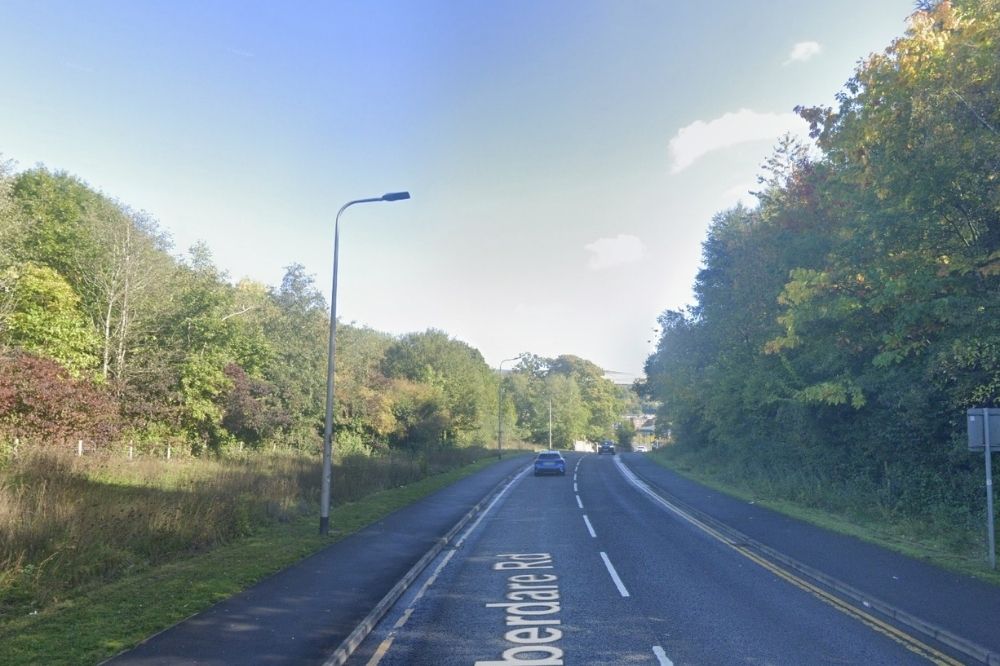
The proposal for Aberdare Road is for it to revert to 30mph from from its junction with Ynysfach Road in a westerly direction to its junction with the Cyfarthfa Retail Park/Aberdare Road roundabout.
Following a public consultation 2,541 people (77.4% of those who responded) supported the idea with 742 (22.6%) being against it.
Aberdare Road was identified as a road that could potentially revert to 30mph following a review.
The plan for Cyfarthfa Road is for it to revert to 30mph from its junction with the A4102 Swansea Road in a northerly direction to its junction with Brecon Road and part of Brecon Road from its junction with Cyfarthfa Road for a distance of 18m in a north-westerly direction.
Following a public consultation 2,504 people (76.27% of those who responded) supported the idea with 779 (23.73%) being against it.
A review of Cyfarthfa Road found that the road performs a strategic movement function connecting key parts of the network, the property frontage density is very low, footway provision is appropriate, and traffic movement aligns more closely with 30mph than a 20mph setting.
The plan for the A4054 Cardiff Road in Quakers Yard is that it reverts to a 30mph speed limit from a point 128m south of its junction with the south side of Beddoe Terrace for a distance of 412m in a northerly direction.
Following a public consultation 2,541 people (77.4% of those who responded) supported the idea with 742 (22.6%) being against it.
A review of Cardiff Road found that it “performs a strategic movement function connecting key parts of the network, the property frontage density is low, footway provision is appropriate, and traffic movement align more closely with 30mph than a 20mph setting”.
The proposal for Swansea Road is for it to revert to 30mph from a point 23m east of its north-west junction with Heol Tai Mawr for a distance of 1,175m in a westerly direction.
Public consultation
Following a public consultation 2,510 people (76.45% of those who responded) supported the idea with 773 (23.55%) being against it.
A review of Swansea Road found that “the road performs a strategic movement function connecting key parts of the network, the property frontage density is very low, footway provision is appropriate, and traffic movement align more closely with 30mph than a 20mph setting”.
If agreed by cabinet public notices will be published letting people know of the council’s intentions to make traffic regulation orders in relation to the four stretches of road.
If no objections are received then the proposals will be implemented but if there are objections then a report will go to the appropriate council committee for consideration.
The Welsh Government introduced a default 20mph speed limit in September 2023.
Welsh Government issued revised guidance in late 2024 to help councils in reviewing locations where a 30mph speed limit may be more appropriate.
The public was also invited to submit requests to councils for any roads they believed should be considered in relation to the revised guidance.
Support our Nation today
For the price of a cup of coffee a month you can help us create an independent, not-for-profit, national news service for the people of Wales, by the people of Wales.
Get more trusted Welsh news
Choose Nation.Cymru as a preferred source in Google News to see more of our journalism.




What a surprise.
It’s only a surprise to the blanket brigade. Everyone else knew the default was a starting point and local communities were expected to tailor it to their needs.
Why change it without consultation in the first place?
It was in the 2021 manifesto.
Why change it back then?
Because it’s a default not a blanket.
Ask the council that changed it.
The council did not consult same old same old
It’s literally in this article: “Following a public consultation 2,541 people supported the idea”
Some in Cardiff were changed back last year, too; there were likely others too, elsewhere in Cymru. It’s worth mentioning that there are communities that are proposing a drop to 20mph on suitable roads, too. I noticed two communities proposing the drop on certain roads on the news during 2025, but I can’t find the news reports or a single list that consolidates all the ones that are also dropping. Counter to the propaganda that was distributed by various sources, but in particular the Wales Network News, which falsely claimed official links to Plaid Cymru. Much of the misinformation seemed… Read more »
I sincerely hope those who fell for Welsh–English Conservative and Reform UK propaganda on social media don’t have any family members involved in traffic accidents. The figures didn’t lie: lives were saved by reducing speeds from 30 mph to 20 mph. The only mistake was the Welsh Labour Government failing to make the public more aware and in its implementation. Some areas needed a reduction; others did not. My advice is simply to stay safe while driving and to be more aware when crossing the road. Life is too precious—don’t waste it.