


Plant discovery could boost carbon storage in soil
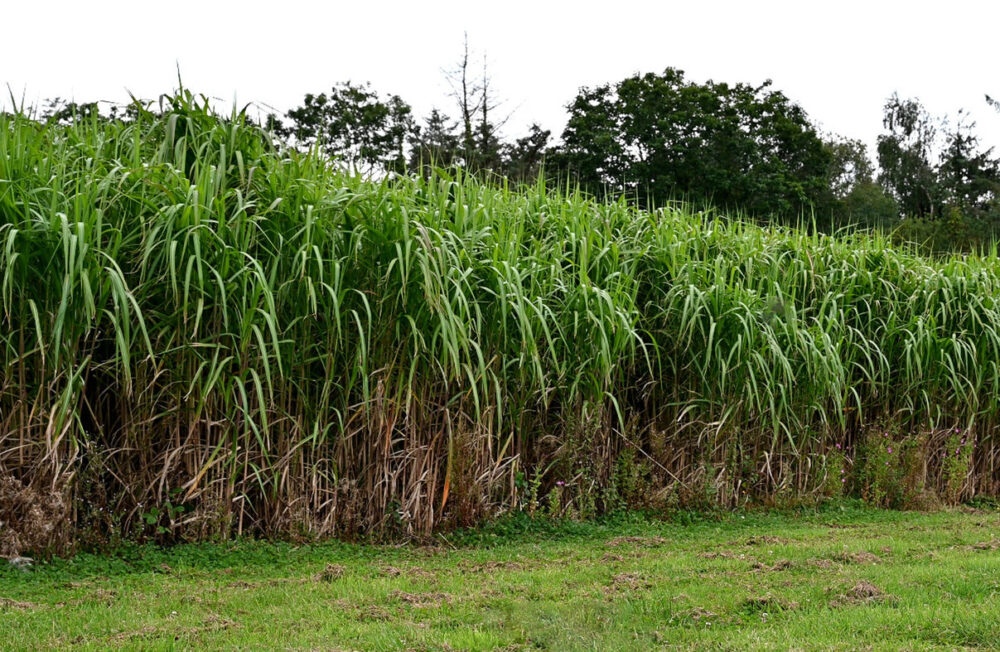
Scientists at Aberystwyth University have identified key traits in the plant Miscanthus that could significantly increase the amount of carbon stored in soil, offering new opportunities to combat climate change.
Miscanthus, a tall perennial grass known for its straw-like stems, can grow up to four metres in a single season. Typically harvested in spring, the crop regenerates naturally each year, making it an attractive option for sustainable agriculture.
The plant is already widely recognised for its environmental benefits. It grows well on land less suitable for food production and is commonly used as a bioenergy crop for heat and electricity.
Beyond energy, Miscanthus is also used in green manufacturing, chemicals production, construction materials and livestock bedding.
Crucially, the crop has the ability to store carbon below ground, helping to reduce greenhouse gas concentrations in the atmosphere.
The new findings, published in the journal Frontiers in Plant Science, shed light on which specific features of the plant are most important for enhancing soil carbon storage.
Researchers analysed the chemical composition of leaves, roots and rhizomes — the woody underground stems that enable Miscanthus to regrow. The study examined 11 different Miscanthus varieties to determine how plant structure and chemistry influence carbon retention in soil.
The scientists found that rhizomes play a particularly important role in transporting carbon deeper underground, where it is more likely to remain stable over long periods. Carbon stored at greater depths is generally less susceptible to disturbance and decomposition.
In contrast, roots with lower levels of lignin — a natural compound that strengthens plant cell walls — were associated with higher carbon storage closer to the soil surface.
Together, the results suggest that Miscanthus varieties with extensive underground growth and roots containing lower lignin levels may be most effective at locking away carbon.
‘Step forward’
Dr Paul Robson, from the Institute of Biological, Environmental and Rural Sciences (IBERS) at Aberystwyth University, who led the research, described the discovery as a significant step forward.
“This is an important breakthrough in our research, helping us understand which characteristics make Miscanthus most effective at storing carbon in the soil,” Dr Robson said.
“Varieties store carbon differently, and understanding these relationships helps guide breeding strategies that deliver climate and agricultural benefits together.”
Dr Robson added that the work has implications beyond crop science.
“The UK needs to reduce CO₂ emissions in order to mitigate climate change, and we also need to develop our economy to take advantage of green technologies as opposed to relying on fossil fuels,” he said.
“We hope that this research will give even greater impetus to that shift to a greener society.”
Plant breeding
The study also highlights the role plant breeding could play in tackling environmental challenges.
Dr Amanda Holder, a Postdoctoral Research Associate at Aberystwyth University, said Miscanthus breeding programmes remain at a relatively early stage, meaning there is considerable scope for improvement.
“These results provide practical guidance on which traits are most likely to support soil carbon storage,” Dr Holder said.
“The study shows that it’s possible to enhance soil carbon storage without compromising productivity, supporting the case for Miscanthus as a versatile, low-carbon crop.”
Researchers emphasise that selecting and developing varieties with favourable traits could help farmers produce “climate-smart” crops that combine high yields with measurable environmental benefits.
Support our Nation today
For the price of a cup of coffee a month you can help us create an independent, not-for-profit, national news service for the people of Wales, by the people of Wales.



Miscanthus like all species of grass, grow from the base as they are unlike all other plants and trees. It’s where the “apical meristems” are, the bit where cells divide and grow. On trees these are up in the branches but for grass this is at the base of the plant. It’s the reason why the more you cut it, or graze it, the more vigorous the growth. and by definition the amount of CO2 extracted from the atmosphere by photosynthesis. The beneficial effects of such pasture, CO2 extraction, from acreage grazed by livestock is often underestimated if you just… Read more »