


Previously undocumented seagrass meadow found in Welsh city
Emily Price
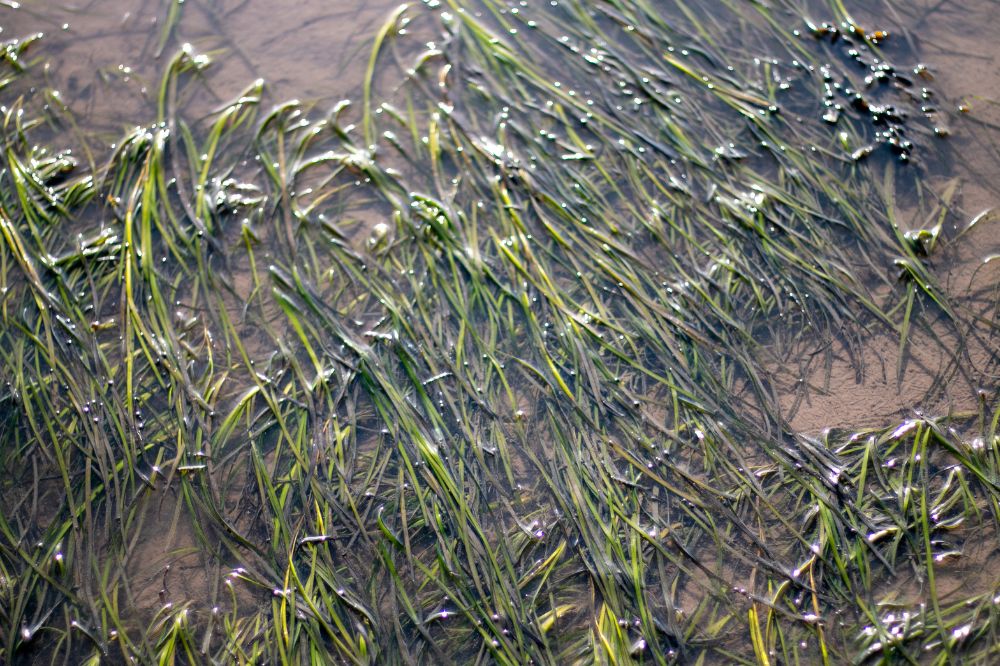
A previously undocumented intertidal seagrass meadow has been found in Wales’ capital.
The discovery in Cardiff’s Severn Estuary revealed a healthy and apparently expanding seagrass meadow in one of the UK’s most challenging estuarine environments.
The newly discovered meadow, which was found by Project Seagrass’ Chief Conservation Officer Dr Benjamin Jones, does not seem to appear in existing Natural Resources Wales records or available habitat maps.
The site has now been mapped and will be shared with the relevant agencies so that it can be added to the evidence base for Wales’ coastal habitats.
The two newly mapped patches of seagrass cover close to 1,000 m² in total.
While this figure may sound small in a world of large conservation targets, this is a particularly significant find in this part of the Severn Estuary.
The meadow sits within one of the most physically dynamic coastal environments in the world, shaped by the second largest tidal range on Earth and exposed to a complex mix of pressures from climate change, coastal squeeze, degraded water quality, historic contamination, industrial influence, and coastal development.
Dr Jones said: “Finding this meadow was a genuine bucket list moment.
“I have worked on seagrass for years, but I have never found a meadow that nobody seemed to know was there.
“Yes, it may be small in global conservation terms, but it does not feel small when you are standing there looking at it in the Severn Estuary.
“Most importantly, it is now on the map.”
Healthy
The meadow is made up of eelgrass, or Zostera marina, a species of seagrass found around the UK coastline.
On the evening the meadow was found, the plants appeared healthy with seed and flower laden shoots visible.
Examination of available satellite imagery suggests that the seagrass meadow has been present since at least 2006 and has increased in size over time.
However, it was only possible to recognise those faint historical signs once the meadow had been found in the field and its location was known.
Dr Jones said: “We do not yet know the full story of this meadow. The satellite imagery helps us look backwards, but only because we knew where to look.
“What matters now is to verify the record, monitor the meadow, and understand whether this is persistence, recovery, expansion, or something linked to nearby restoration activity.”
This new finding highlights how easily small coastal habitats can remain hidden until someone sees them on the ground.
Citizen scientist initiatives such as Seagrass Spotter will play a role in this mapping, encouraging the public to upload their seagrass sightings and contribute to a growing dataset mapping the World’s seagrass.
Conservation
The finding comes at a time of growing interest in seagrass conservation, restoration and recovery across Wales and the wider UK.
For over a decade, Project Seagrass has been working to conserve and better understand seagrass habitats across Welsh waters and globally, including in the Severn Estuary, where restoration is challenging.
Experts say the Severn Estuary faces a difficult environmental future.
Rising sea levels and stronger storms are increasing flood and erosion risks, while natural habitats such as mudflats and saltmarshes are increasingly squeezed against hard coastal infrastructure.
Water quality remains a major concern, with pressures from sewage discharges, nutrient runoff, agricultural pollution and wider catchment impacts.
Historical industrial activity has also left a legacy of contaminants in parts of the estuary.
The Cardiff discovery does not mean the estuary is free from pressure or that recovery is guaranteed.
It does however highlight why local observation remains an essential part of marine conservation.
“There are still meadows out there waiting to be found,” said Jones.
“Sometimes conservation starts with noticing what others have missed. This meadow is now visible. That gives us the chance to learn from it, monitor it, and hopefully protect it.”
Support our Nation today
For the price of a cup of coffee a month you can help us create an independent, not-for-profit, national news service for the people of Wales, by the people of Wales.
Get more trusted Welsh news
Choose Nation.Cymru as a preferred source in Google News to see more of our journalism.


