


Public Health Wales criticised over response to Michael Sheen’s toxic waste investigation
Mark Mansfield
A former regional director of public health has criticised Public Health Wales and environmental authorities over their response to concerns highlighted by Michael Sheen’s investigation into historic chemical dumping.
Writing in the BMJ, Professor John Ashton, a former president of the UK Faculty of Public Health and former regional director of public health for north-west England, accused public bodies of complacency and called for stronger monitoring and action to address Wales’ toxic waste legacy.
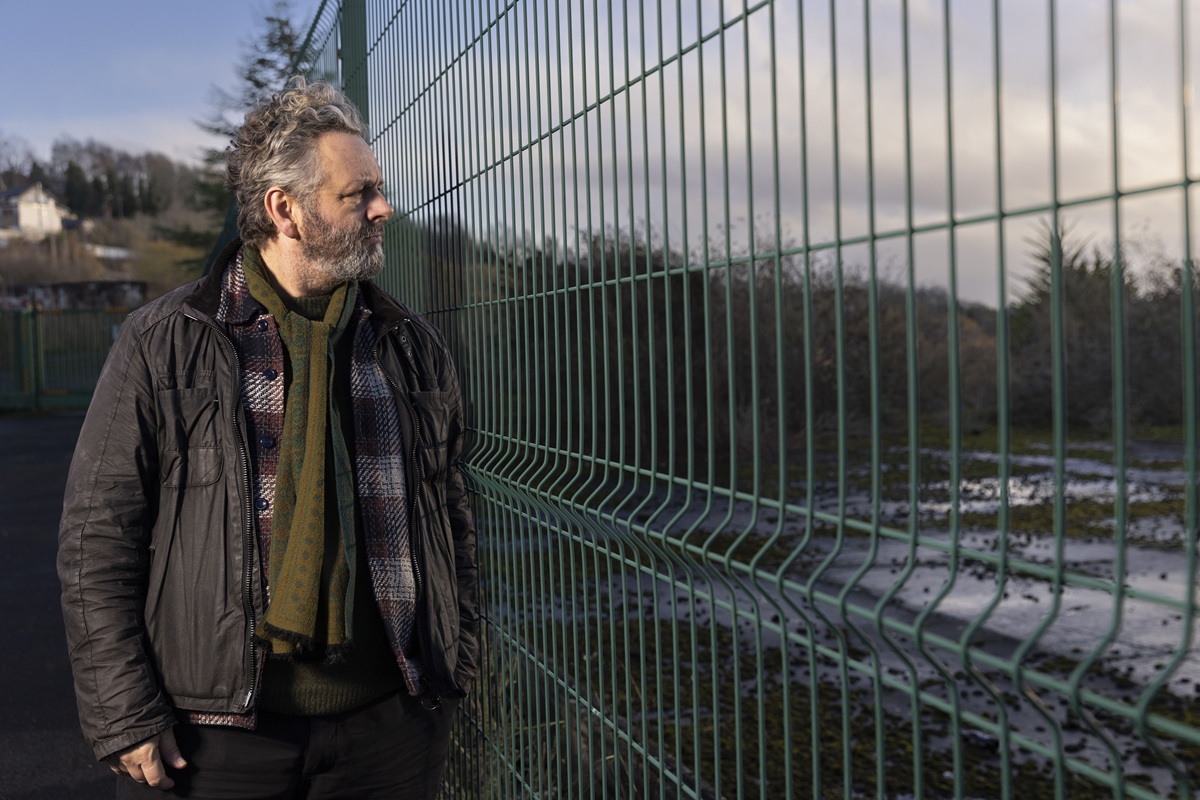
The Welsh actor’s BBC documentary Buried examined the dumping of chemical waste across Wales, including polychlorinated biphenyls, or PCBs — persistent pollutants that can accumulate in the environment.
Ashton singled out responses from Public Health Wales, Natural Resources Wales and Wrexham council, arguing that the programme had raised important questions about failures to address potential health and environmental harms.
“The complacency implicit in their responses is widespread,” he wrote.
In a statement published on September 21, before Ashton’s article, Public Health Wales said historical contaminated land should be addressed as a priority and acknowledged the concerns of affected communities.
However, it said blood testing for PCBs was not recommended as a public health action.
“This is because it does not provide a reliable means of assessing an individual’s exposure to contamination or the potential health impact,” the statement said.
PHW explained that people can encounter PCBs through food, building materials and other environmental sources. Finding elevated levels at a particular site does not necessarily establish that it is the source of chemicals detected in someone’s body.
“Testing for PCBs in blood does not tell us how or where people may have been exposed to them,” it said.
“There is no way to treat or manage a particular PCB level in someone’s blood, even if we measured it.”
The organisation said it was working with partners, including the Welsh Government, on addressing problems linked to contaminated land.
Concerns over evidence
Ashton’s article, published on November 6, questioned the response of the Welsh Cancer Intelligence and Surveillance Unit, part of PHW, which had urged caution over small-area analyses and said more recent evidence did not indicate a requirement for further study.
He also challenged the response to concerns about a polluted lagoon near the former Ruabon chemical works, citing authorities’ position that it did not meet the legal definition of contaminated land requiring remediation.
Ashton acknowledged that investigating residents’ concerns about apparent neighbourhood clusters of illness was difficult without reliable historical data.
“This is compounded by the assumption that the burden of proof of harm lies with the victims rather than the perpetrating companies,” he wrote.
“In the sphere of adverse chemical harms, the industries involved mostly have a free ride.”
He argued that the current system allowed responsibility to be passed between companies, public health and environmental bodies, and government.
“The current regulatory regime is not robust or fit for purpose, and has allowed chemical companies, local public health and environmental bodies, and the government to pass the buck between them.”
Calls for reform
Ashton called for a coordinated approach to collecting health and environmental information and cleaning up contaminated sites, with chemical companies required to retain comprehensive records.
He also proposed a system comparable to the Yellow Card scheme used to report suspected adverse effects of medicines, allowing healthcare professionals to record suspected harms associated with chemical exposure.
In its earlier explanation of the Ruabon sites, the Welsh Government said investigations had identified contaminants but had not found pollution or contaminant linkages meeting the legal threshold for contaminated land. It said monitoring continued, including water sampling twice a year.
Support our Nation today
For the price of a cup of coffee a month you can help us create an independent, not-for-profit, national news service for the people of Wales, by the people of Wales.
Get more trusted Welsh news
Choose Nation.Cymru as a preferred source in Google News to see more of our journalism.


