

Public urged to help complete landmark survey of Welsh chapels
Nation.Cymru Staff
The organisers of a major national survey of Welsh chapels are appealing for public help after receiving responses for just one in 10 of the buildings identified so far.
Capeli Cymru, a new project from The Royal Commission on the Ancient and Historical Monuments of Wales, launched a census to map Wales’ chapels in April 2026.
The survey aims to build the most comprehensive picture in over a century of their condition, use and future, safeguarding one of Wales’ most distinctive cultural and architectural legacies.
Previous research has identified nearly 6,500 chapel sites across Wales, but there is currently no accurate national record of how many remain active.
The Welsh Nonconformist Chapel Census has been gathering information on how many chapels remain open for worship, how they are used by communities, and the physical condition of their buildings.
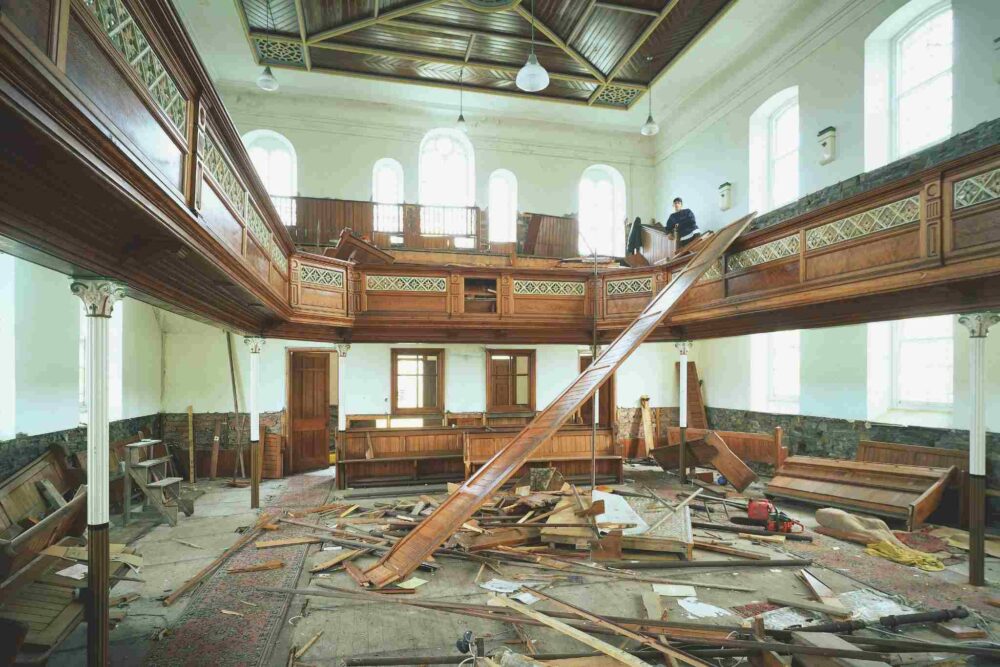
It is also tracking what has happened to chapels that have closed, identifying those that have been repurposed, converted, demolished or left empty.
Members of the public, including chapel members, owners, and local residents have been invited to contribute to one of two surveys — for congregations at active chapels, and for anyone able to provide information about chapels in their area.
However, Capeli Cymru has revealed that, while responses have been received for around one in 10 known chapels, updated information is still needed for the remaining 90%.
Organisers are now asking people to help fill in the remaining gaps by submitting updated information about the thousands of chapels still marked on the project’s interactive map.
They are particularly keen to know whether buildings are still functioning as places of worship, have closed, or have been converted for other uses such as homes, cafés, community facilities or businesses.
The census builds on two landmark surveys that documented the central role of chapels in Welsh life.
The 1851 Religious Census recorded foundation dates, seating capacity and attendance, revealing the growing strength of Nonconformity during the industrial era, when chapel attendance outstripped that of the Anglican Church.
A further survey in 1905, conducted ahead of the disestablishment of the Church in Wales, found that around three-quarters of the population identified as Nonconformist.
Susan Fielding, of the Royal Commission, said: “The 1851 and 1905 censuses provide two invaluable snapshots of the chapel’s past. Our 2026 census will offer a third.
“Together, they tell an evolving story of faith, community, and identity which is vital in informing national strategies to protect buildings commonly referred to as the ‘National Architecture of Wales’.”
The new data will help shape future strategies to protect Wales’ chapel heritage, while also contributing to Cadw’s national survey of historic assets and updated heritage listings
The Capeli Cymru project is funded by more than £150,000 from the National Lottery Heritage Fund, with the potential for further investment of up to £1.25 million
Both questionnaires can be accessed on the Capeli Cymru project page
Support our Nation today
For the price of a cup of coffee a month you can help us create an independent, not-for-profit, national news service for the people of Wales, by the people of Wales.
Get more trusted Welsh news
Choose Nation.Cymru as a preferred source in Google News to see more of our journalism.



As a child and young woman I attended Bethania (Calvinistic Methodist chapel in Maerdy) in the Rhondda Valley. It was a beautiful building and I was fortunate enough to become organist for a few years. I’d attended Sunday School there as a child. Sundays were special days. Dad put me on the bus from Ferndale and Auntie Katie was waiting at the bus stop in Maerdy. We went to Sunday School then up to Mamgu’s for tea. I stayed with Mamgu in the evenings while my aunts and Dad went to chapel. I helped Mamgu find the hymns in her… Read more »