


Rare Welsh birds celebrate first breeding success on coastline since 2012
Nation.Cymru Staff
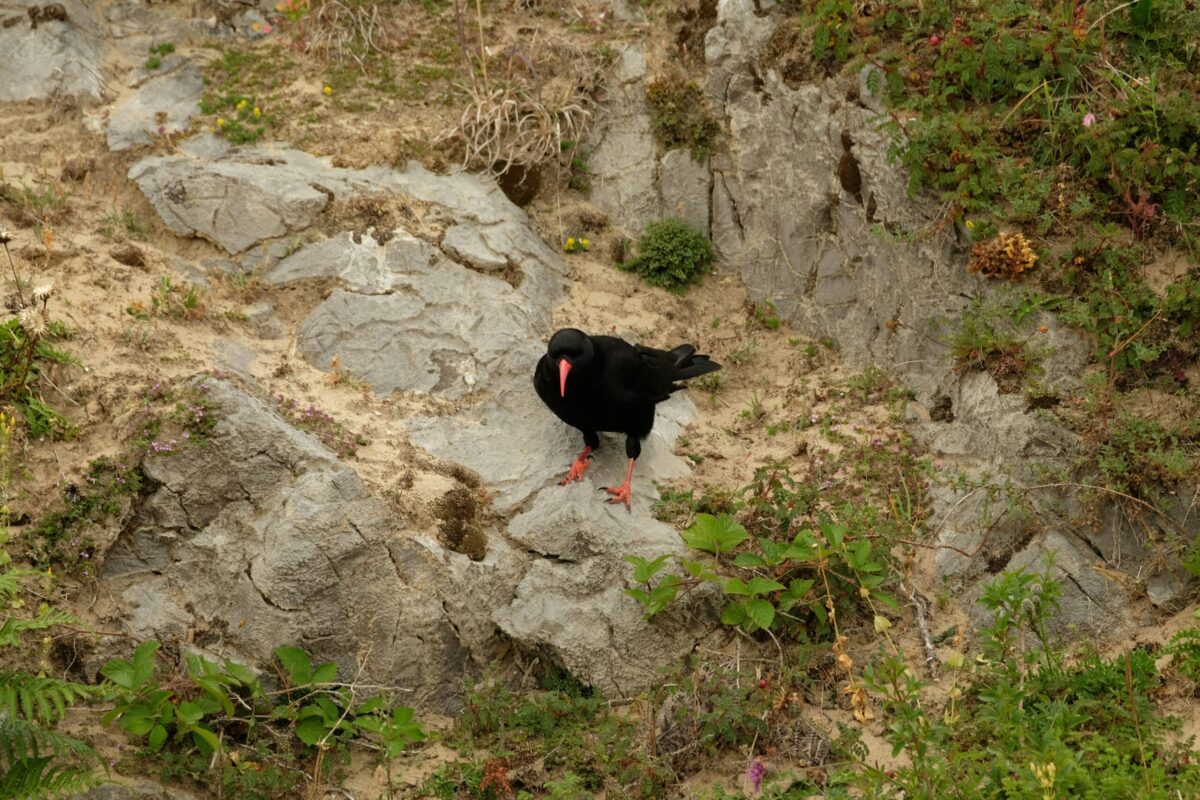
Three chicks belonging to one of the UK’s rarest breeding birds have successfully fledged on the north Wales coast for the first time in over a decade.
The Chough chicks were raised by a young breeding pair nesting at RSPB South Stack on Ynys Môn, with their mother, affectionately known as ‘Little Moon’, hatching at RSPB South Stack in 2020.
After settling on The Range last year, Little Moon and her partner have now successfully raised the chicks in their first known breeding attempt together.
The last recorded Chough breeding attempt on this section of north Wales’ coastline was in 2012, ending a long history of successful nesting that stretched from the mid-1990s.
Their success also represents a significant milestone for Choughs overall, with only around 300 pairs breeding across the United Kingdom during the last survey in 2014.
Wales is a stronghold for the birds, supporting 79% of the UK population, and RSPB South Stack alone holds around 4% of the total.
However, previous studies show that between 1994 and 2019, the number of territories occupied by Choughs in north and mid Wales fell by 27%.
News of the fledging Choughs builds on the successes seen last year, with record-breaking gull numbers, Grey Seal activity and Oystercatchers observed at the site, after a decade of absence.
Laura Kudelska, Senior Site Manager at RSPB South Stack said: “To see Little Moon return to raise three healthy chicks in this sea cave is incredibly rewarding.
“We’ve watched her grow from a chick at South Stack into a successful parent, and her story is a reminder of why protecting these special places matters.
“This achievement is also a fantastic example of partnership in action. Thanks to the support of visitors and organisations who helped communicate the seasonal restrictions, these birds were given the space they needed to breed successfully.”
Exclusion Zone
The chicks were raised within the seasonal exclusion zone granted by Natural Resources Wales (NRW), which runs from 2 March until 31 August 2026.
Choughs nest in sea caves and require quiet, undisturbed sites that are safe from predators and above the reach of storm tides.
During the breeding season, they are particularly sensitive to disturbance, making protected nesting areas vital to their success.
The exclusion zone puts temporary access restrictions in place to protect the Choughs and other vulnerable wildlife during breeding season.
Euros Jones, NRW Operations Manager for North-West Wales, said: “This summer, monitoring by RSPB Cymru within the exclusion zone has recorded further encouraging signs of recovery, building on the outcomes seen last year.
“Evidence to date indicates that limiting access in targeted areas can help protect priority habitats and species.
“Maintaining the exclusion zone has allowed this progress and monitoring to continue, whilst providing time for all parties to continue their discussions.”
Protection
RSPB Cymru noted that this has only been possible with the support of visitors and the efforts of partners, including Natural Resources Wales (NRW), Isle of Anglesey County Council, BMC Cymru, Eryri Actif, the National Coasteering Charter and local outdoor groups.
Partners helped communicate the importance of the seasonal exclusion zone, requiring people to avoid the sea cliffs and caves during the breeding season and giving the birds the best possible chance of raising their young.
Eben Muse, Policy and Campaigns Officer for BMC, said: “We’re thrilled to see the success of these Chough chicks – the BMC supports evidence-led access restrictions to protect nature.
“We deliver up-to-date information on necessary restrictions on our Regional Access Database app and website with the help of volunteers and climbers from all over Wales.”
Catherine Williams, Executive Officer for Eryri Actif, added: “We’re delighted to see these three Chough chicks successfully fledge. Temporary, proportionate restrictions can reduce disturbance around sensitive nesting sites playing an important role in supporting breeding success.
“We are committed to working with the RSPB, NRW and other partners towards a more sustainable approach to access management – one that provides the protection wildlife needs while enabling people to continue to enjoy these special places responsibly.”
The chicks have now left the nest and can be seen around the reserve with their parents as they learn to forage and develop their flying skills.
Although they have fledged successfully, they remain dependent on their parents for several weeks and continue to use the caves as safe resting places.
RSPB Cymru thanked visitors for their patience and support throughout the seasonal closure.
For more information on RSPB South Stack, visit their site here.
Support our Nation today
For the price of a cup of coffee a month you can help us create an independent, not-for-profit, national news service for the people of Wales, by the people of Wales.
Get more trusted Welsh news
Choose Nation.Cymru as a preferred source in Google News to see more of our journalism.



So charging for parking must have made all the difference…
I think you have got that wrong , there was I’m sure 21 chicks bread sussesfully from 14 breading pairs. As for the parking charges ,Well at lease all monies goe back into this Triple SSS nature reserve, to manage for visitors from all over the world to visit.