


Record-breaking year for Skomer Puffins as population tops 50,000
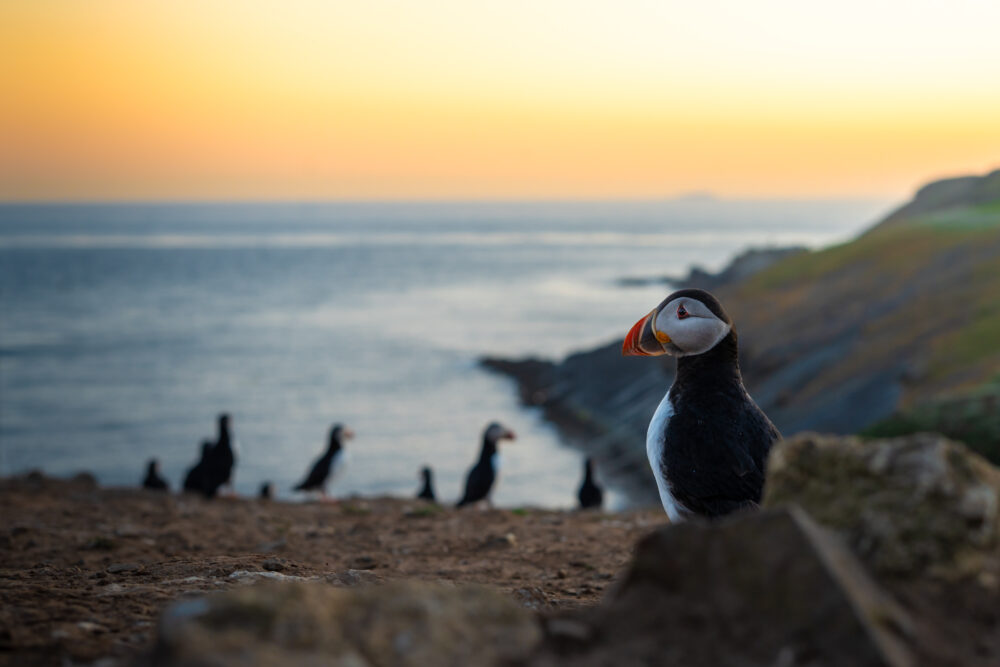
It has been another record breaking year for the Skomer Island Puffins, with 52,019 recorded in the 2026 count, beating the previous record of 43,626 set in 2025.
Skomer Island, located of the coast of Pembrokeshire, is an internationally important seabird island where, every year, the Wildlife Trust of South and West Wales (WTSWW) undertake an annual count to monitor the Puffin population.
Leighton Newman, Skomer Island Warden for WTSWW, said: “After the tragic number of seabirds washing up on beaches across southern Europe earlier this year, we weren’t expecting a count this high this season.
“It’s a very pleasant surprise to see the Puffin population thriving.”
Every spring, the Skomer team set out on a clear evening with binoculars and notepads to count every single Puffin on land, in the sky and at sea.
The island is broken up into seven sections, and the team must work against the clock and the elements to make sure they have accounted for every single Puffin.
Timing is key, as if the count is conducted too early in the season the bulk of birds won’t have returned to breed. Too late in the season and they’ll be settled on eggs in their burrows.
Puffin counters use the same method today that the wardens have used since the 1980s, meaning they can compare over four decades of Puffin population data.
Long-term monitoring work is a core part of the conservation work on Skomer Island and the team also conducts boat-based surveys in summer to record the number of Guillemots, Razorbills, Kittiwakes and Fulmars breeding on the cliffs around the island.
With the help of volunteers and researchers, they also monitor Manx Shearwaters, reptiles, marine mammals and the endemic Skomer Vole.
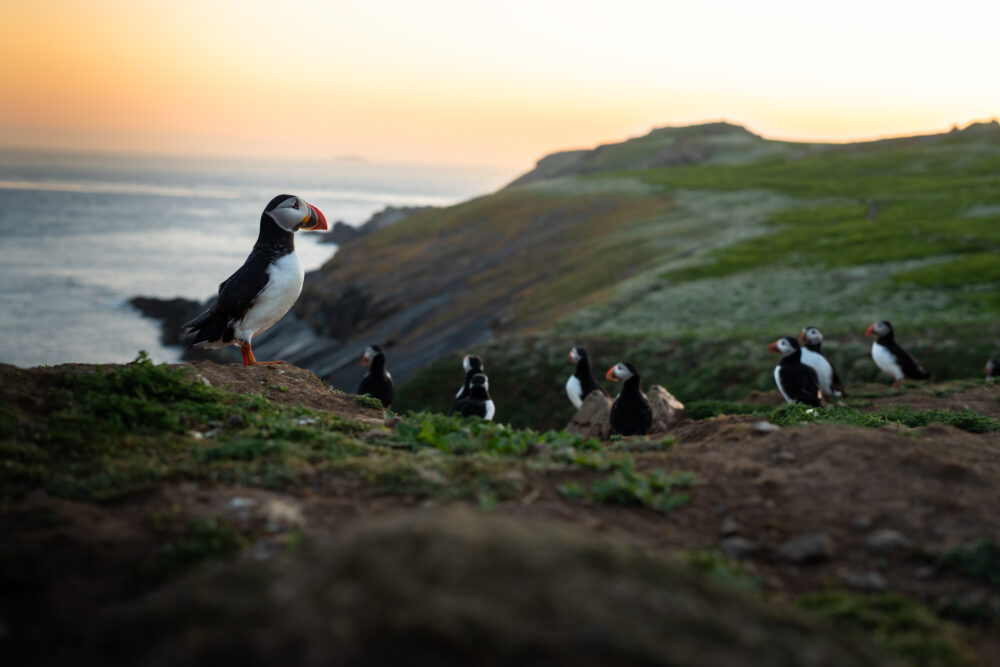
Long-term monitoring helps the WTSWW to better understand how seabird populations are changing and can sound alarm bells when something goes wrong.
Seabirds are facing a myriad of threats on land and at sea, from pollution and invasive predators to Avian Influenza and offshore renewable development. Globally, they are one the fastest declining family of birds.
Leighton Newman added: “Puffin numbers are declining at many sites around the UK, but Skomer bucks the trend – and it’s thanks to long-term monitoring work that we know this.
“It’s special that Skomer is a refuge for so many seabirds and it’s a privilege to be able to work to protect them, but we want to see seabird populations thriving across the UK.”
The increase in Skomer Island’s Puffin population is likely linked to the abundance of food in the wider area, meaning there is plenty of fish for chicks resulting in high breeding success, as well as good adult survival over winter.
The absence of rats and other predators on the island is also thought to have contributed to the success of seabird populations there.
The Trust’s annual counts allow them to get an accurate picture of how seabirds are faring to better inform their work to protect them.
They submit their counts to a national dataset used by decision makers to inform important seabird conservation strategies, nationally and globally.
The data is also available to academics to encourage further research and greater protection.
WTSWW are asking wildlife lovers to support their Big Give appeal, running from 22 – 29 April, to raise £40,000 to fund their essential seabird monitoring work on Skomer.
Support our Nation today
For the price of a cup of coffee a month you can help us create an independent, not-for-profit, national news service for the people of Wales, by the people of Wales.


