


Research into free-roaming cats in Wales may hold clues for wildcat reintroduction
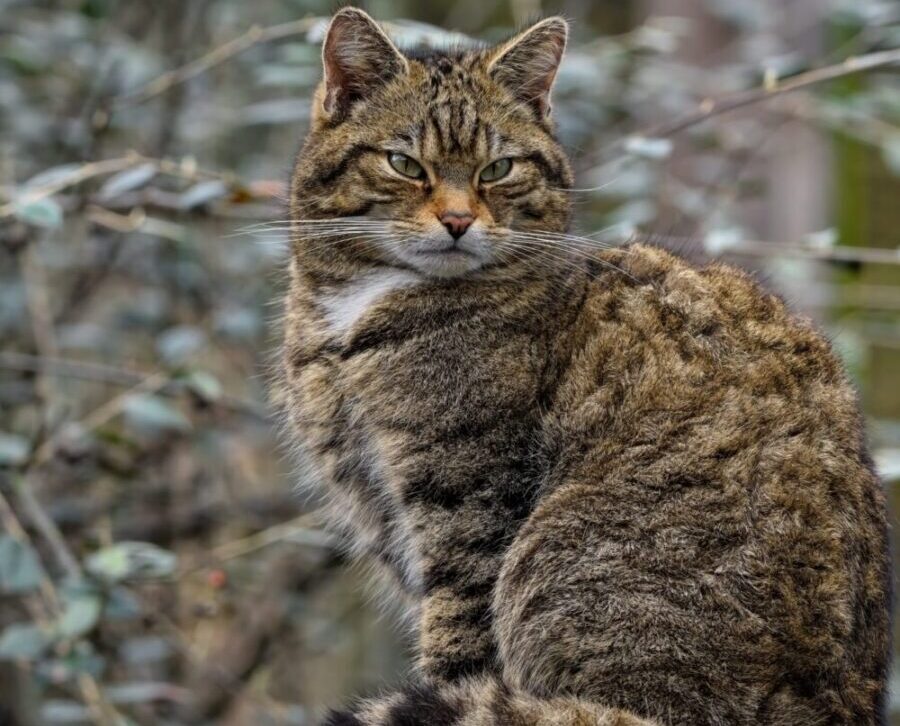
A new scientific study examining the hidden lives of feral and free-roaming cats across rural Wales could provide important evidence for future wildlife conservation efforts, including the possible return of the European wildcat.
Researchers from Aberystwyth University, Queen’s University Belfast and Vincent Wildlife Trust are investigating how free-roaming cats live, move and interact with their surroundings, and whether they play a role in spreading diseases that affect wildlife, livestock and humans.
The project aims to address major gaps in understanding about rural cat populations, which are far less studied than their urban counterparts.
Unlike domestic pets, free-roaming cats often live independently of humans, forming loose colonies around farms, outbuildings and industrial sites.
Because of their secretive behaviour and limited monitoring, the size of the UK’s feral and free-roaming cat population remains unknown. However, scientists warn these animals can act as reservoirs for zoonotic pathogens – diseases that can pass from animals to people – making them a potential public and veterinary health concern.
The findings will help inform ongoing work by Vincent Wildlife Trust, which is exploring whether conditions in parts of Wales could support the reintroduction of the European wildcat, a species that once inhabited the country.
As part of the study, researchers will assess free-roaming cat populations across Wales, examining their behaviour, population dynamics and the pathogens they may carry. The team will use camera traps, genetic testing and sample analysis to estimate numbers, track movement patterns and understand how cats interact with their environment.
Lead researcher Sophie Harries, a OneZoo-funded PhD student at Aberystwyth University, said the research fills a significant knowledge gap.
“This is the first study of its kind to focus specifically on free-roaming cats in rural environments,” she said. “While urban populations have been studied extensively, rural cats remain largely overlooked.”
DNA analysis will allow scientists to identify individual cats, determine sex and assess genetic relationships between populations. This will help reveal how connected different groups are, how far cats travel and whether factors such as inbreeding influence disease transmission.
The study will also explore interactions between free-roaming cats and other species, particularly through hunting and scavenging. Researchers will analyse faecal samples to identify prey species and dietary patterns, shedding light on how diseases might spread between animals.
Viruses
Samples will be processed at Aberystwyth University’s VetHub 1 facility and screened for a range of parasites, bacteria and viruses. The research will also examine how land use, vegetation and human population density affect disease risk.
Dr Niall McKeown, a wildlife ecologist at Aberystwyth University, said the findings could have wide-ranging benefits.
“Feral cats are an important but often overlooked part of rural ecosystems,” he said. “Understanding their movements and interactions helps address key knowledge gaps for animal and human health.”
Vincent Wildlife Trust researcher Dr Jenny MacPherson added that the work would support evidence-based conservation decisions.
“By studying cats in rural settings, we can better understand how wildlife, farming and communities can coexist,” she said.
The project forms part of the UK-wide OneZoo initiative, which brings together experts to address the links between wildlife, livestock and human health.
Support our Nation today
For the price of a cup of coffee a month you can help us create an independent, not-for-profit, national news service for the people of Wales, by the people of Wales.


