


Research reveals children’s play is linked to social skills and brain activity
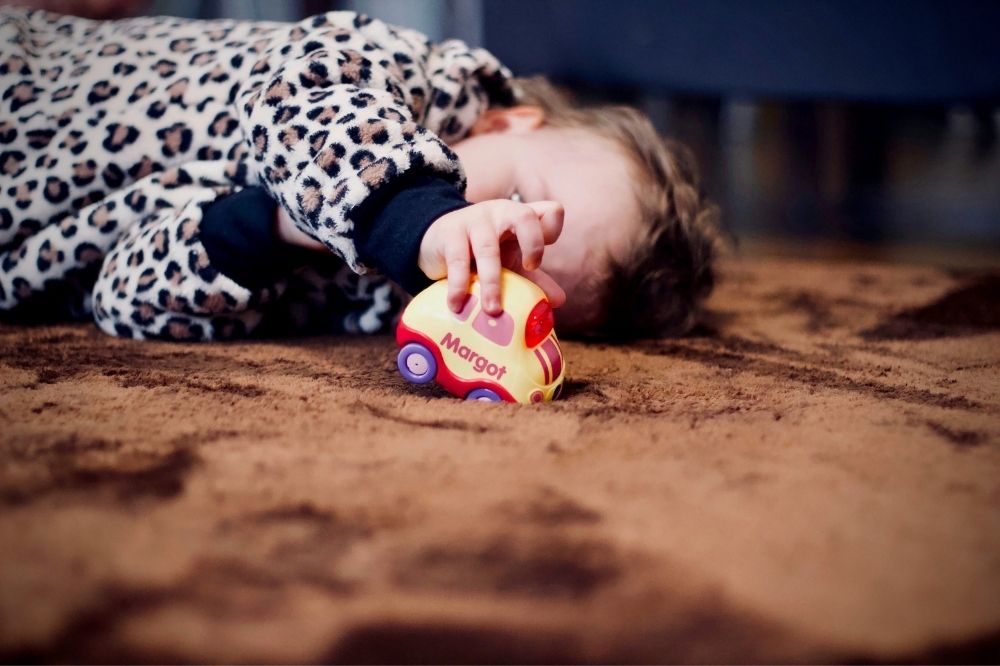
New research by Cardiff University and King’s College London finds children’s play changes in social settings, alongside differences in brain activity.
The study examined how children aged four to eight engaged with toys during solo play and joint play with an adult experimenter.
Researchers were particularly interested in the types of play children preferred, the language they used, and how these behaviours connected to social skills and neural activity.
Fifty-seven children took part in the study and were given identical sets of Barbie dolls and accessories. They were observed while playing on their own and with another person.
During the sessions, children wore neuroimaging equipment to monitor activity in brain regions linked to social understanding and self-control. Parents also completed detailed questionnaires about their child’s social behaviour.
Researchers found that, overall, children spent more time arranging and organising toys than acting out stories, a behaviour known as ‘set-up play.’ However, pretend play increased noticeable when children played with a partner.
Children who engaged more in pretend play during joint sessions tended to show stronger social skills. These children were reported by parents to have fewer peer difficulties and more prosocial behaviours, such as sharing and helping.
The study also found that toy choice reflected social ability. During joint play, children focused more on the dolls themselves, while solo skills were more likely to play with dolls overall, particularly when playing alone, whereas those with more peer challenges spent more time with non-doll objects.
Brain imaging revealed that while overall play style was not directly linked to neural activity, children who used more language about emotions, thoughts and desires showed increased activity in brain regions associated with perspective-taking and executive functioning.
Researchers say the findings highlight the importance of social pretend play and emotional language in children’s development, and suggest that play-based approaches could be valuable in supporting children who experience social difficulties.
The research was conducted at Cardiff University’s Schools of Psychology and Social Sciences, the Cardiff University Centre for Human Developmental Science, and the Institute of Psychiatry, Psychology & Neuroscience at King’s College London.
You can read more about the study here.
Support our Nation today
For the price of a cup of coffee a month you can help us create an independent, not-for-profit, national news service for the people of Wales, by the people of Wales.


