


Residents lodge formal Ombudsman complaint over ‘biased and unlawful’ disposal of historic library for mosque use
Nation Cymru staff
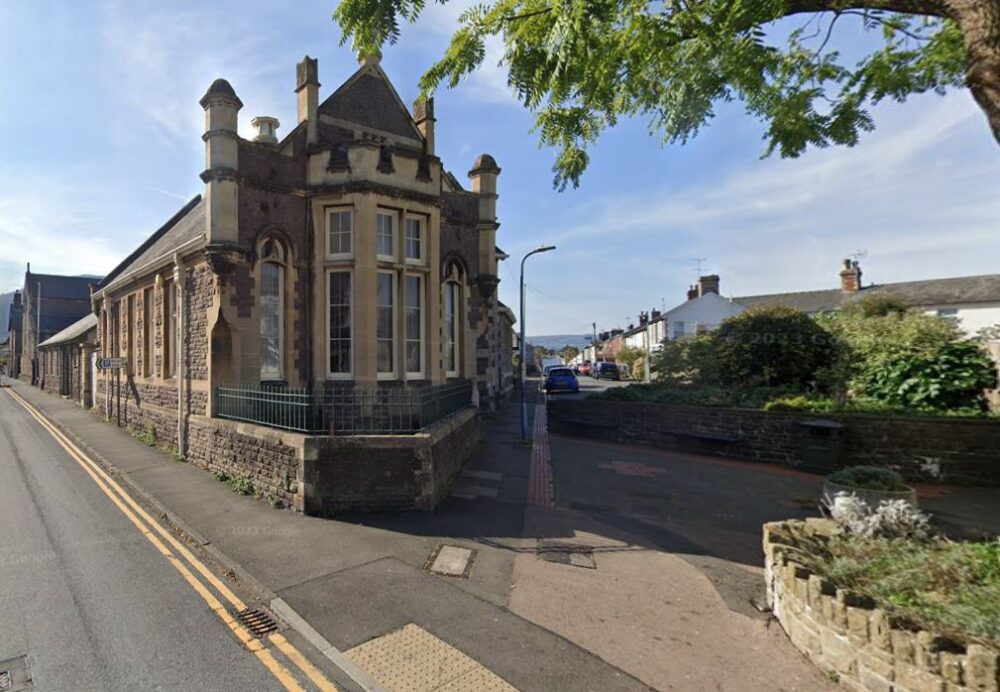
Three Monmouthshire residents have submitted a formal complaint to the Public Services Ombudsman for Wales, alleging maladministration, bias, and breach of statutory duty by Monmouthshire County Council (MCC) over its decision to lease the Grade II listed Carnegie Library in Abergavenny to the Monmouthshire Muslim Community Association (MMCA) for use as a mosque.
Residents Dr Louise Brown, Rachel Buckler and Simon Howarth, supported by the Christian Legal Centre, argue that the Council’s Cabinet acted unlawfully and against the public interest when it agreed a 30‑year lease at just £6,000 per year, despite its own valuations showing the building could command £20,000–£25,000 annually, or be sold for approximately £350,000.
Their legal advisers have seen documents with higher tenders submitted to MCC, including one from a Day Nursery with Flying Start provision, at a level of £33,500. Knowing disposal of a significant public asset by the Council at a massive undervalue is a serious breach of duty under the Local Government Act 1972 and cries out for investigation, according to the complainants.
The complaint follows the Council’s refusal to reconsider its decision after it was called in by the Place Scrutiny Committee, which raised serious concerns about the tendering process, lack of transparency and failure to obtain best consideration for a valuable public asset.
The residents allege that the Council has acted in breach of section 123 of the Local Government Act 1972, which requires councils to obtain the best consideration reasonably obtainable when disposing of land, unless strict statutory safeguards are met.
According to the complaint, alternative tenders offering significantly higher rents and even a freehold purchase were withheld from councillors and the public prior to the Cabinet decision. Meanwhile, the successful MMCA bid benefited from unexplained advantages within a scoring system that rewarded length, detail, and alignment with council political priorities rather than financial value.
Rachel Buckler said: “This is not about opposing a faith community. It is about whether Monmouthshire County Council followed the law and acted fairly with public property. The evidence shows that it didn’t. Public assets appear to have been disposed of at a serious undervalue, without proper marketing, independent valuation, or transparency.”
“When residents are denied access to basic financial information, scrutiny becomes impossible. That should concern anyone who believes in good governance.
“This decision affects every council taxpayer in Monmouthshire. If valuable assets are effectively given away, the public pays the price. That is why independent scrutiny is now essential.”
Allegations of bias and predetermination
The Ombudsman complaint highlights what residents describe as a pattern of pre‑existing engagement between Cabinet members and the MMCA, including meetings during Ramadan in 2023 and 2024 in which senior council figures publicly pledged to deliver a mosque for the county.
The complaint argues that these commitments predated the tender process and raise the appearance of predetermination and bias, particularly given evidence that MMCA representatives were able to visit the library months before it was marketed, allowing them to prepare a detailed business case beyond the reach of other bidders.
Simon Howarth said: “The more documentation we examined, the clearer it became that this process was not conducted on a level playing field. One group appears to have had advance knowledge and access that others simply did not.”
“That raises serious questions about when the real decision was made, and whether the tender process was ever genuinely open.”
The complaint also raises concerns about the complete absence of consultation with residents most affected by the proposed change of use, particularly elderly women living in the adjacent Rachel Herbert almshouses, which were founded in the nineteenth century to provide quiet accommodation for vulnerable residents.
Under Welsh planning law, no planning permission or public consultation is required for a change of use from library to place of worship. However, the complainants argue that this made it more, not less, essential for the Council to consult residents whose lives would be directly affected by daily religious activities, increased footfall, noise, lighting, and smells from regular communal meals.
Dr Louise Brown said: “These are elderly residents living just metres from the building. Many are frail and depend on peace, routine and privacy. Yet they were never consulted, never warned, and never given the chance to express their concerns.”
“That is not community cohesion. It is a top‑down imposition which fails to treat vulnerable residents with dignity or care.”
One almshouse resident has now formally instructed solicitors to express her concerns to the Ombudsman, fearing disturbance and loss of privacy. She has asked that her identity remain confidential due to fear of being publicly portrayed as opposing the mosque.
The residents are asking the Ombudsman to investigate alleged bias, maladministration, lack of transparency, and breach of statutory duty, and to examine the conduct of both officers and Cabinet members involved in the decision.
They warn that if councils are permitted to dispose of valuable public property at deep undervalues, without proper process or accountability, local taxpayers ultimately bear the cost through higher council tax or reduced services.
Support our Nation today
For the price of a cup of coffee a month you can help us create an independent, not-for-profit, national news service for the people of Wales, by the people of Wales.
Get more trusted Welsh news
Choose Nation.Cymru as a preferred source in Google News to see more of our journalism.



Sounds very dodgy. Why no consultation and so cheap. Just hope Ombudsman serves justice.
It’s a local council, so £ shh!
ADF anywhere near this?
I would be willing to believe that they could be interested in the “law” for the sake of the community, but spending just a few minutes reading their previous cases would suggest that the Christian Legal Centre only care about themselves. As well as the seemingly usual “anti-science” cases, there is the English PC who lost his job for repeatedly and unwantingly quoting anti-LGBT bible texts to his non-straight friends and even sent them information on organisations that could “cure their gayness”. There’s also the mental health worker they defended for being suspended after repeatedly “harassing and bullying” a junior… Read more »
The account above does suggest to me that there are genuine concerns which have been hijacked or adopted by the Christian Legal Centre in order to fit some kind of agenda.
Oh, absolutely. We don’t really know the three people involved, so the Christian Legal Centre may have somewhat hijacked a genuine case in a similar way to their USA compatriots, the Alliance Defending Freedom do. Both groups have worked together, and they even launched the Wilberforce Academy in 2010 in New Jersey in partnership, so there is an unsurprising connection with Far Right Christian fundamentalists. Both these groups do preach subjects like Critical Race Theory and also that Muslim’s and Atheists, like myself, are actually a lower form of life. Again, it doesn’t necessarily mean the three people involved have… Read more »
Call me cynical, but the first thing I did was google the Christian Legal Centre.
It turns out as the other comments have said, they are funded mainly by far-right American evangelical groups and seem to specialise in taking on cases that can promote their agenda.
There is a long article in the Guardian about them.
Given their avowedly sectarian actions in the past, I have to ask whether they would act if the proposal was for example to rent the property to an evangelical church rather than a mosque?
Modern prejudice is often simply holding different folk to different standards. Uncovering genuine procedural problems doesn’t diminish the fact that others wouldn’t have attracted the scrutiny in the first place. The real test will be if there’s a fundamental change in the process to ensure similar problems are picked up or avoided whichever group is involved, or if the crusade ends with the desired result.
Religious buildings should be maintained and funded by the relevant congregation at their expense and not subsidised by the public at large. This is especially true in Wales where there is no established religion. This account hints at corruption and if proved the cabinet members should be surcharged the cost lost by the subsidy so caused.
Fact checking The three residents cited are not residents of Abergavenny. The Abergavenny Council of Churches and Abergavenny Town Council support the proposal for the Grade II listed building. The building has serious delapidations and the low rent is because the tenants will have to undertake full repairs and the maintenance of the building. Charging a market value rent would mean that the landlord (MCC) would be responsible for the repair and upkeep of the building. There is no budget for this to be an option. The three complainants , Monmouthshire County Councillors, have failed to obtain a judicial review… Read more »
Does Abergavenny realy need a mosque?..
No it doesn’t, but as the saying goes, if you built it they will come.
Awwww is the wittle snowflake scared of Muslims?
I don’t know, but I will not be using it. Ask the people that want to use it as a mosque.
Does Abergavenny really need all those churches?
Does any community really need a religious building? It’s not really about “need”, it’s about the Muslim community that is already there, which is around 350 people. Abergavenny currently has the highest number of Welsh Muslims in Monmouthshire, but falls well behind the other districts in terms of supporting the different religious communities in the town. You combine that with the fact that none of the other tenders was willing to accept a full repair and insurance lease for the property.There is a Cabinet Report on gov.uk from a year ago which covers the specifics of the tender and why… Read more »
Yes it does now. The afghani’s that risked their families lives to give British intelligence services information have been housed there.
There’s a community of (very nice) kurds, Afghans etc in Aber now.
They’ve integrated very well with Cymru and contribute to Llwnu estate as much as they can.
I for one say, give them somewhere to worship.