


Restoration work planned at historic house where David Lloyd George died
Dale Spridgeon, Local Democracy Reporter
A historic house where former prime minister David Lloyd George spent his final days is set to undergo structural work to preserve the library in which he died.
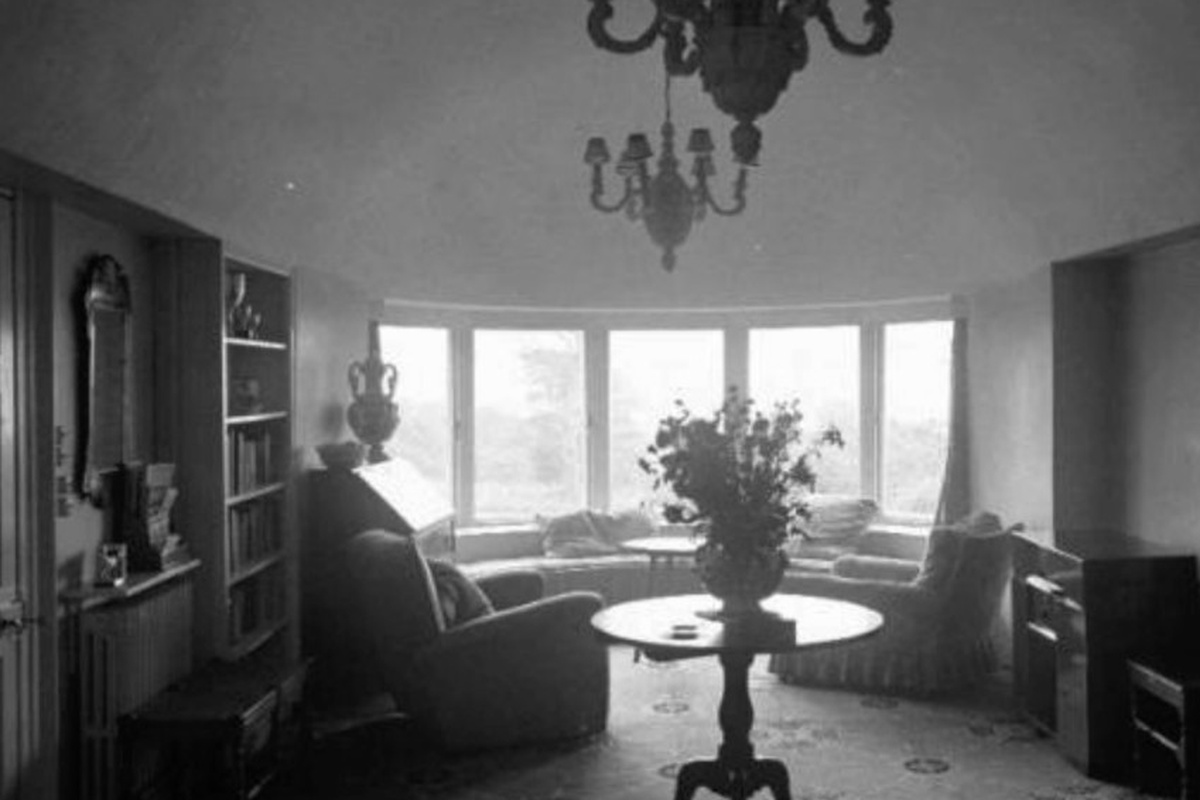
Plans have been submitted for repairs at the Grade II* listed Tŷ Newydd in Llanystumdwy, Gwynedd, after movement and cracking were identified in its distinctive vaulted library ceiling.
Lloyd George bought the property in 1939 for his retirement, returning to the village where he had spent much of his childhood.
He died in the library on March 26, 1945, aged 82, after asking for his bed to be moved beside its window so he could look out towards Cardigan Bay.
The house also has a strong connection to Portmeirion creator Clough Williams-Ellis, who remodelled it for Lloyd George and his wife during the 1940s.
Today, Tŷ Newydd is home to the National Writing Centre for Wales, run by Literature Wales.
Cyngor Gwynedd has received an application for structural support to a modified roof truss in the roof space above the library, as well as the replacement of wall plates supporting its ceiling.
Planning documents state: “As Lloyd George’s health deteriorated, Clough completely overhauled the house.
“The library became a focal point with the addition of a vaulted ceiling, cream chandeliers and the semi-circular bay window.”
The documents say that as his health declined, Lloyd George “asked for his bed to be moved to beside the library window so he could see Cardigan Bay”.
His funeral attracted crowds to Llanystumdwy, who watched as his coffin was carried on a farm cart to his nearby burial place beside the Afon Dwyfor.
‘Unique acoustic experience’
The plans describe the library as having particular architectural and historic significance.
They state: “Walking into the library room, one is struck by the combination of the barrel-vaulted ceiling and the semi-circular bay window.
“This rare combination is visually impressive but also provides a unique acoustic experience.
“It is possible to hear a whisper from someone stood by the bay window from the opposite side of the room, due to the configuration of curved surfaces. As a result, this room has very high aesthetic and sensory value.
“The strong aesthetic in this room is undeniably influenced by the input of Clough Williams-Ellis.
“Specifically, the reused reclaimed chandeliers, curved roof and bay window are all emblems that feature throughout Clough’s work, such as at the Angel Hotel in Portmeirion.”
Movement
The application says movement has been identified in the ceiling which is affecting the appearance of the historic room.
The documents state: “At present there is movement in this ceiling which has been identified as impacting on the aesthetic value of the library.
“Addressing this movement to conserve the ceiling is the key objective of the proposed works set out in this heritage impact assessment.”
A structural assessment was carried out to establish the cause of cracking in the barrel-vaulted ceiling.
The plans add: “The structural assessment into the source of cracking to the barrel-vaulted ceiling provided conclusive evidence that structural re-mediation work is required to preserve the library room and ensure that it carries on being appreciated into the future.”
Support our Nation today
For the price of a cup of coffee a month you can help us create an independent, not-for-profit, national news service for the people of Wales, by the people of Wales.
Get more trusted Welsh news
Choose Nation.Cymru as a preferred source in Google News to see more of our journalism.


