


Retired medics throw down gauntlet to Welsh Government over devastating A&E pressures
Martin Shipton
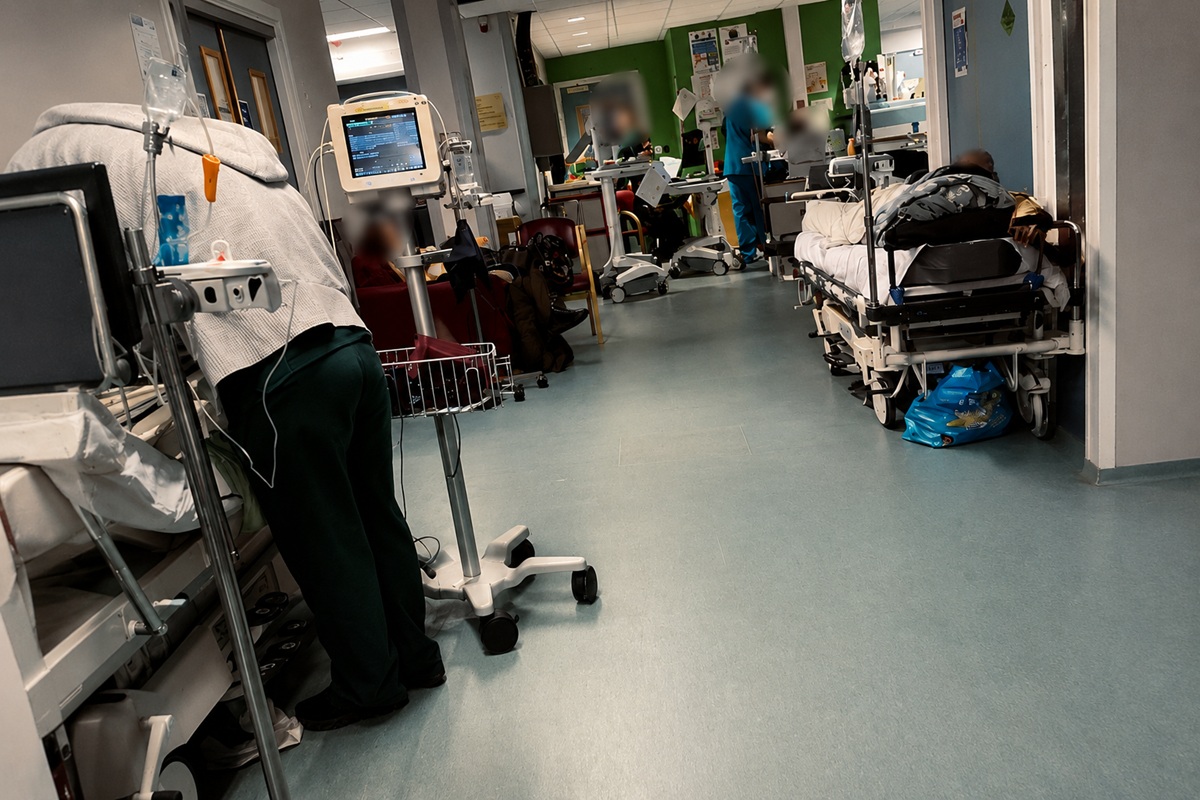
A group of distinguished retired medics has called on Health Minister Mabon ap Gwynfor to block controversial plans to close down beds in community hospitals so they can ease the “devastating pressure” on accident and emergency units.
They have also recommended a series of small measures aimed at making long waits in A&E departments more bearable.
The group – which calls itself BEDS, standing for Bring back community beds; End Unnecessary deaths and corridor tragedies; Dignity restored to patients; Senior Medics at the front door – comprises Jonathan Osborne (Past Chair of the Welsh Consultants Committee); Mair Dowell (a Retired A&E sister at Ysbyty Glan Clwyd); Bridget Osborne (Past Chair of the Royal College of GPs Wales) and Rajan Madhok (a retired Director of Public Health).
In their letter to Mr ap Gwynfor, which has been copied to every Member of the Senedd, they state: “We are writing an open letter to you in the hope that we can work together constructively to ease the devastating pressure on A&E departments in Wales.
“We are seriously concerned about the coming winter and want to prevent a repeat of last year’s chaos and unnecessary deaths. We hope that your leadership will bring the necessary changes.
“Sadly, our approaches to the health board in north Wales have not resulted in any visible improvements.
“The BEDS Campaign — End Corridor Care in A&E — was founded by concerned retired nurses and doctors, mainly in the Betsi Cadwaladr health board area. Like so many others, we have seen worsening conditions for staff and patients in the A&E departments of our major hospitals.
“Alongside the serious risks to patients’ health, these conditions dehumanise people by failing to protect their dignity when they are at their most vulnerable.
“As interested and experienced outsiders it seems to us that, with winter approaching, we have not seen a coherent plan to prevent the pressure that colder weather and increased patient numbers will inevitably bring.
“In our opinion, whilst recognising the constraints, we feel that action is needed on three fronts:
“1. ‘Y pethau bychain’ — small measures to rebuild patient trust and protect dignity;
“2. Using what we have — recognising long-term savings in maintaining and restoring effective services;
“3. Building on Bevan — enabling the Welsh NHS to lead the way in serving its communities.
“We all want dignified, compassionate health and social care in which staff and patients are valued.
“Y pethau bychain. Dewi Sant believed in doing the small things first.
“We believe several straightforward measures could be introduced quickly to make patients more comfortable in the emergency department. Although this section applies to north Wales, many of the recommendations could be adopted elsewhere in Wales.
“* Provide more comfortable, softer seating in A&E. This can reduce pressure damage in vulnerable patients, helping to prevent sores, deep vein thrombosis and to avoid consequent prolonged nursing care.
“* Restore regular food and drink trolleys for patients and relatives. Before Covid, ‘Red Robin’ volunteers took refreshments to those waiting, helping prevent dehydration, boosting morale and supporting people unable to access vending machines. Welsh communities have always been willing to help; they need only to be asked.
“* Introduce a buzzer system to call patients. Cafés and restaurants use vibrating buzzers to notify customers when orders are ready. A similar system in A&E would allow patients to use the toilet or move around to find a more comfortable place to wait without fear of missing their name being called.
“* We also feel that consideration should be given to separating disruptive and intoxicated patients into a separate area, which is properly supervised as some of them may be vulnerable, in a distressed mental state or with a hidden, serious illness (eg hypoglycaemia/hepatic failure).
“* Limit accompanying relatives to one per adult patient, to reduce overcrowding and the risk of spreading airborne infections.
“* Clean and service toilets more regularly in areas where very sick patients are waiting.
“* Ensure access to bathroom facilities for patients waiting over 12 hours.
“* Increase early-morning staffing so that people who have waited overnight can be seen and treated promptly. Indeed, patients who are not likely to be seen during the night could be sent home with advice to return in the morning to dedicated, fast review A& E clinics, without losing their place in the queue.
“* Ensure patients referred with a GP letter are seen quickly on arrival by the specialist team to whom they have been referred. Putting their emergency referrals back at the bottom of the triage pile, when they have already been triaged by a specialist in generalism, puts those patients at risk from the increased delay.
“* Provide more consultant support for junior colleagues triaging A&E, especially out of hours and at weekends, so that life threatening conditions are recognised in time and so that simple situations are not over investigated.
“* Reduce pharmacy delays in supplying discharge prescriptions, so that patients can go home in a timely fashion once they have been seen or discharged from the wards.
Measures for staff
“* Provide hot food and drinks for A&E staff, especially out of hours and at weekends.
“* Provide lockers for personal belongings.
Using what we have
“Professor Sir Chris Whitty, Chief Medical Officer for England, said: ‘Community hospitals will become more, not less important, because they are in exactly the right place to meet the challenges of ageing and frailty in rural and coastal communities. They will reduce the pressure on acute hospital beds.’
“We advocate reopening inpatient wards at Tywyn and Penley, and other community hospitals across Wales.
“The Rainbow Foundation, a charity specialising in supporting and rehabilitating older patients, showed that reopening just four inpatient beds in Penley would save NHS Wales £2.4m over three years. Tywyn has a fully refurbished 17-bed ward standing empty.
“Across Wales, further existing community hospital beds could be reopened, with similar potential savings.
“Staffing problems are often cited as a barrier, but qualified nurses in Wales remain without jobs, and there is little evidence of genuine, sustained attempts to recruit for rural hospitals.
“Over the past 15 years north Wales has lost approximately 40% of its beds, mainly in the community. It now has approximately 260 hospital and community beds per 100,000 population compared to 344/100,000 in Wales as a whole and to the OECD average of 420/100,000.
“We are dismayed that some health boards are continuing to propose the closure of beds in community hospitals.
“The proposed further closure of community beds all over Wales, but particularly in rural areas such as north and mid Wales, will have a catastrophic effect on emergency waiting times and cause further unnecessary deaths due to delays in care.
“We would urge you to urgently review and consider reversing this closure programme which seems to have continued on auto pilot since the government of Wales changed.
Building on Bevan
“Nye Bevan believed healthcare was both the duty and the right of the community. In Wales that strong instinct to care for our neighbours lives on.
“While ‘Community by Design’ and ‘Virtual wards’ may have a role for some patients, they cannot replace community hospitals across rural Wales. Providing intensive individual care in every home is difficult, costly and impossible without the sustained staffing and resources that are not currently available.
A more pragmatic approach would return to a tried-and-tested model.
“Resourcing and expanding primary care would take time and significant investment, but it remains the most cost-effective long-term way to provide coordinated, compassionate care and keep many patients out of expensive acute beds.
“GPs have unrivalled knowledge of local health needs and partnership working in primary care teams. Strengthening community hospitals would be central to this aim. Wales also has an outstanding charity and voluntary sector, ready and willing to help.
“These are just some of our ideas and we are sure that there are more which have been used elsewhere.
“We are not proud of living in a society where we, and our elderly friends, are afraid of falling ill. We can – and must – do better.
“We wish you the very best in your role, we know it is not easy and we are keen to help.
“Equally, we feel that there is now a trust deficit – we do not feel confident that we are being listened to, or that there are demonstrable improvements.
“As Plaid Cymru passes 100 days in government, we urge you to lay out a clear timetabled plan of action for tackling the challenges in health and social care — perhaps drawing inspiration from some of the ambitious aims set out by the new Prime Minister.
“It is sad that Wales, which led the way with the creation of the NHS, has now fallen behind.
“Despite the constraints, we believe Wales can set a positive example of a health and care service working for the benefit of all.
“We look forward to hearing from you and the Chair of our own health board. We will be tabling these issues for discussion at the September public meeting of Betsi Cadwaladr Health Board.”
Priority
A spokesperson for the Welsh Government responded: “No one should experience undignified care in an emergency department.
“The Cabinet Minister has made clear that improving emergency and acute care is a priority and will launch a new policy framework this autumn to improve outcomes, hospital flow, discharge, and integration with community-based care. Our ambitious National Care Service and Community by Design programmes will also be crucial to achieving these aims.
“We will carefully consider the issues raised in this letter as part of the development of the new framework.”
Support our Nation today
For the price of a cup of coffee a month you can help us create an independent, not-for-profit, national news service for the people of Wales, by the people of Wales.
Get more trusted Welsh news
Choose Nation.Cymru as a preferred source in Google News to see more of our journalism.



They are correct especially the little things like refreshments and comfort.
Change the mindset, put the patient first not the doctor…
Covid, Austerity, raw Toryism and Fat Shank’s casual racism has been a ‘Tunnel of Death’ I second EAB…
Memory of Blair doing deals with doctors and private providers…Bonus time lawyers in love with doctors…
For decades across both England and Cymru, the views and thoughts of experienced and qualified personnel has been asked for and never acted on in the slightest. This has been an across the board fatal mistake made by both the Tories and Labour. The disaster this caused is happening right now. Plaid Cymru now have a chance to show they’re not just another party, they genuinely do have the interests of Cymru at heart and that they’re serious about change. Inaction on this from them will put them in the same rejects basket as previous governments that have lied and… Read more »
Lots of Welsh people have no Welsh A&E provision.