


River Wye recovery achievable despite years of decline, studies find
Mark Mansfield
The River Wye remains under pressure from pollution and habitat loss, but recovery is within reach, according to two major new studies.
Natural Resources Wales says the studies show the river is suffering from widespread nutrient pollution, habitat damage and invasive species, but that many stretches already achieve “good” ecological status and could reach the “high” standard required for a protected river if improvements are made across the catchment.
The research examined both the river’s wildlife – including microscopic algae and aquatic insects that act as indicators of water quality – and the condition of the river itself, from its banks and vegetation to its physical habitat.
Together, the reports conclude that the Wye is under pressure across much of its length rather than suffering from a handful of isolated pollution hotspots.
However, they also suggest that relatively modest improvements across the catchment could restore many stretches to the “high ecological status” required for a Special Area of Conservation.
The biological survey analysed microscopic algae, known as diatoms, and aquatic invertebrates such as insect larvae, which are widely used to measure river health.
Nearly half (47%) of diatom samples already met the conservation target for the Wye, while most of the remainder achieved “good” ecological status rather than falling into poorer categories.
For aquatic invertebrates, only 7% of sites met the highest standard, but almost four in five achieved “good” status, indicating that conditions are generally not far below the level required for the protected river.
The report concludes that the findings point to “relatively modest ecological improvements” being enough for many stretches to reach the highest conservation standard.
Damage along the river
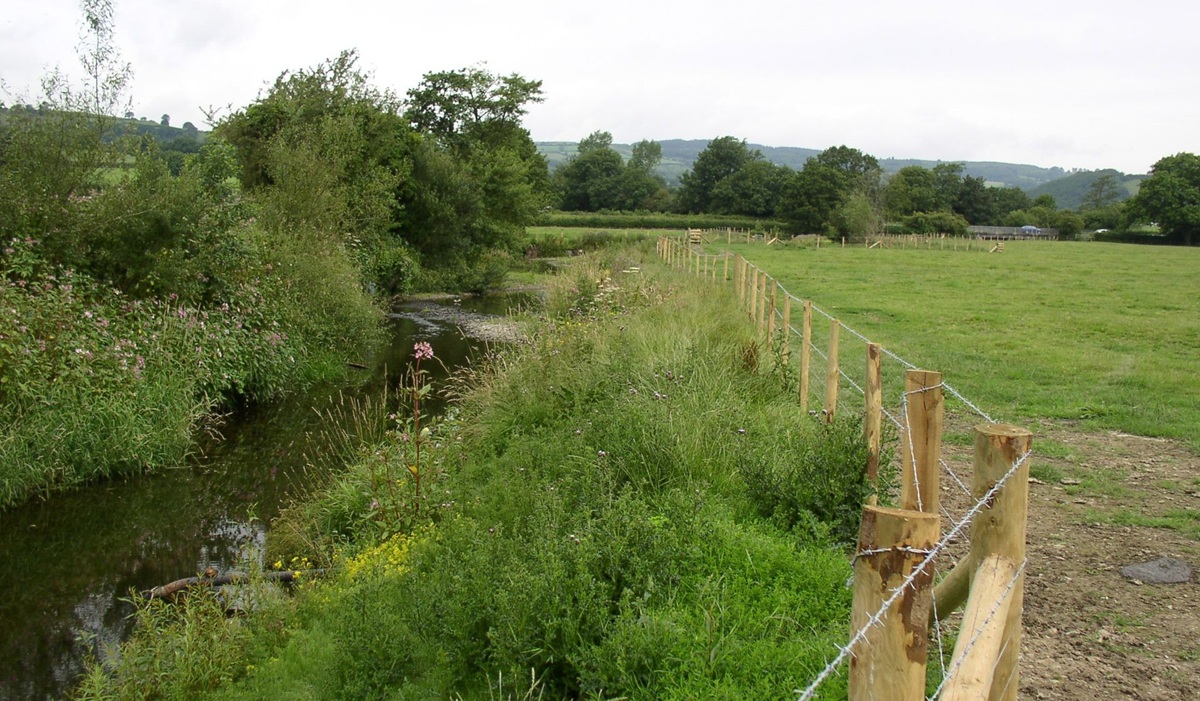
A separate habitat survey paints a similar picture. Researchers examined 28 sites across the Welsh catchment and found that the upper reaches of the Wye and tributaries such as the upper Ithon and Clywedog Brook remain largely natural, with intact riverside woodland, very little algae and few signs of human alteration.
Further downstream, however, the river becomes increasingly degraded.
Many stretches have been straightened or embanked, mature riverside trees have been lost, livestock have damaged riverbanks, and fine sediment has washed into the river from surrounding land.
Surveyors also recorded widespread invasive species including Himalayan balsam and Japanese knotweed across the middle and lower catchment.
One of the most striking findings concerns water crowfoot, an underwater flowering plant that is one of the key reasons the River Wye is internationally protected.
The plant was found at just six of the 28 survey sites, often surviving only in small isolated patches protected from grazing or strong river flows.

Extensive beds of water crowfoot, once characteristic of slower-flowing sections of the river, were largely absent.
The surveys also recorded increasing levels of filamentous algae further downstream, with the highest concentrations found between Glasbury and Monmouth, while upper parts of the catchment showed little or none.
Researchers say agricultural runoff and discharges from nearby sewage treatment works are likely to have contributed to increased algal growth in some areas.
Catchment-wide pressures
Although public debate has often focused on individual pollution sources, the biological report suggests the problems affecting the Wye are operating across the catchment as a whole.
Researchers found relatively little geographical variation in many of the biological indicators, indicating widespread nutrient pressures rather than isolated localised problems.
The report notes that nutrients can come from multiple sources, including agriculture and sewage, but says the available evidence was not sufficient to assess the impact of individual manure-spreading practices because of a lack of detailed data.
The reports recommend expanding riverside buffer strips, restoring natural riverbank vegetation, reducing sediment entering the river, tackling invasive species and improving habitats alongside continued efforts to reduce nutrient pollution.
‘Significant pressures’
Francesca Sanchez, NRW’s specialist adviser for freshwater habitat and species, said: “These reports show that the Wye faces significant pressures, but they also show that improvement is possible. Most of the sites surveyed either already meet or are close to achieving the Special Area of Conservation standards.
“That gives us a clear indication that the right actions, delivered consistently and at scale, can make a real difference.”
The reports form part of a wider programme of evidence that NRW says will contribute to a full assessment of the River Wye’s condition and help guide future restoration work.
Support our Nation today
For the price of a cup of coffee a month you can help us create an independent, not-for-profit, national news service for the people of Wales, by the people of Wales.
Get more trusted Welsh news
Choose Nation.Cymru as a preferred source in Google News to see more of our journalism.



