


Roman stones said to be Wales’ earliest portraits displayed for first time
Nation.Cymru Staff
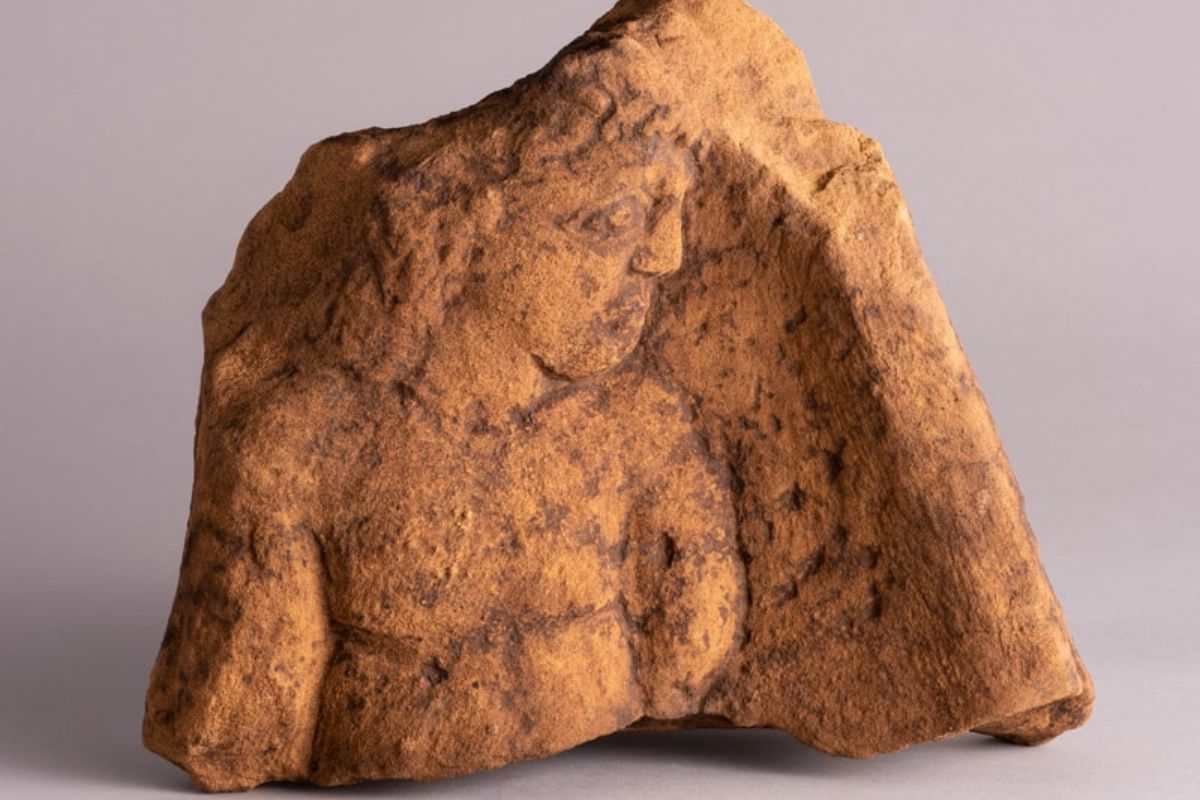
Two Roman stone carvings thought to be the earliest known portraits produced in Wales have gone on display for the first time.
The stone carvings, which depict defeated and imprisoned Celts soon after the Roman invasion of Britain, were discovered during excavations in Caerleon in 2010.
Following research and conservation work, visitors will now be able to see the artefacts as part of a permanent display at the National Roman Legion Museum in Caerleon, near where they were unearthed about 16 years ago.
One of the sculpted stones was discovered by Amgueddfa Cymru’s Senior Curator of Roman Archaeology, Dr Mark Lewis, during the 2010 Priory Field excavations, a collaborative project between Amgueddfa Cymru, Cadw, University College London (UCL) and Cardiff University.
Recalling the find, Dr Lewis said the excavation had been halted by heavy rain, leaving only himself and Professor Andrew Gardner of UCL on site.
While sorting through a pile of stone, he noticed a fragment of freestone that appeared to have been worked and, after he turned a stone over, he saw a human face carved on its surface.
The fragment portrays one of Rome’s defeated enemies, his hands tied behind his back as he leans forward, with long curly hair and a sad expression on his face.
Part of a second sculpted stone was later uncovered during the dig, portraying another defeated enemy of Rome with his hands outstretched and opened in a plea for his life or the lives of his people.
According to Dr Lewis, the panels were likely sculpted by, or for, Roman legionaries based at Caerleon, known as Isca to them, and may once have decorated a fortress building.
Believed to date from circa AD 75 to AD 150, but recovered from a later context, the fragments may represent the earliest portraits produced in Wales.
Dr Mark Lewis, Amgueddfa Cymru’s Senior Curator of Roman Archaeology, said: “As soon as I turned the stone over and saw the face staring back at me, I knew we had found something special.
“These motifs are common propaganda imagery empire wide, but as portrayals of defeated native tribesmen at the legionary fortress of Isca (modern Caerleon), they are likely to be representations of two defeated native tribesmen from this part of Britain. In south-eastern Wales, Roman sources tell us that the name of these people were the Silures. As such, these sculptures could arguably represent the earliest portraits of people from this part of the world.
“What makes these sculptures so remarkable is that they give us a direct glimpse into the relationship between the Roman army and a native people they conquered. Nearly 2,000 years later, we can still see the humanity in the figure’s expression.”
Dai Price, the Head of National Roman Legion Museum, added: “We are delighted to bring these extraordinary sculptures into our permanent display for the first time.
“They are of national significance but with a direct connection to Caerleon, having been discovered just a short distance from the museum. The display offers visitors a rare opportunity to come face-to-face with remarkable pieces of art that link the history of the Romans and the native population in Wales.”
Support our Nation today
For the price of a cup of coffee a month you can help us create an independent, not-for-profit, national news service for the people of Wales, by the people of Wales.
Get more trusted Welsh news
Choose Nation.Cymru as a preferred source in Google News to see more of our journalism.



That these people held out against the Roman Empire for over 30 years is quite incredible. What a fantastic find, it is good to know that local archeology is now taken seriously after being ignored for decades prior to the millennium.
Beautiful engraving, this will be worth a visit.
More like this please Nation.Cymru.