

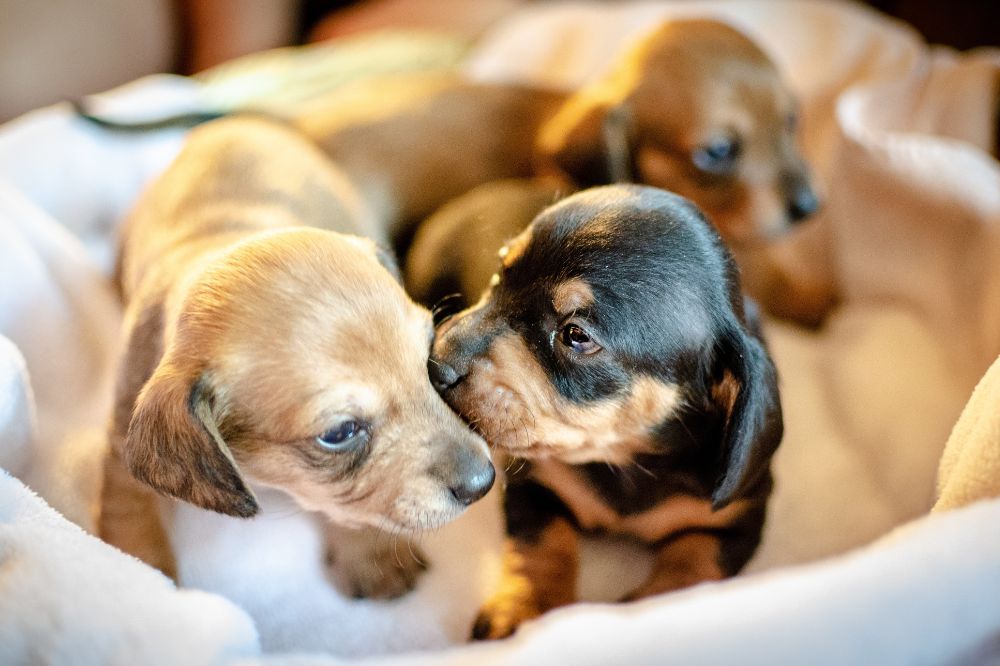
RSPCA respond to puppy breeding investigations increasing by 46% in Wales
Nation.Cymru staff
Puppy breeding investigations by local authorities in Wales rose by 46% between 2024 and 2025, new figures captured by RSPCA Cymru have revealed.
In response, the RSPCA is urging the new Welsh Government to review the nation’s dog breeding laws – and is reminding the public how to add pets to their families safely.
The animal welfare charity asked all 22* local authorities in Wales – under the Freedom of Information Act – how they deal with irresponsible dog breeding.
Local authorities are responsible for the licensing of dog breeding establishments, and ensuring that they uphold the conditions of their licences. Councils are also responsible for tackling illegal breeding and bringing perpetrators to justice.
The responses showed that there were 210 relevant investigations in 2025, compared to 144 in 2024 – demonstrating a shocking 46% increase. Last year, the three counties who undertook the highest number of investigations were Carmarthenshire (46), Ceredigion (39), and Cardiff (30).
However, prosecutions by local authorities have gone down as there were just seven in 2025 – compared to 19 in 2024.
Big concern
Billie-Jade Thomas, Senior Public Affairs Manager for RSPCA Cymru, said: “Dog breeding clearly remains a big concern across Wales.
“But while the number of investigations has increased significantly in 2025, it is encouraging to see local authorities working hard to investigate complaints made to them by members of the public.
“More investigations across Wales could suggest that the public are becoming more aware of best practices and are coming forward more often when they have concerns, but it could also demonstrate there are still significant issues with poor puppy breeding practices in Wales.
“Prosecutions are also significantly down which could suggest signs of improvement across Wales as a result of the proactive and advice-led approach that is being undertaken by many local authorities and also some of those cases from 2025 will be progressing this year.
“However, we always fear there are many underground sellers undertaking irresponsible breeding practices and providing poor care behind closed doors, therefore it is important that these efforts continue.”
The RSPCA urges anyone who has concerns about dog selling, or believes that someone is selling puppies without a licence, to contact their local trading standards team, who are responsible for the licensing of breeders. The RSPCA will assist when necessary if there is a welfare issue and also supports local authorities by rehoming animals rescued from illegal breeders.
Thomas added: “While we’d always encourage people to adopt a rescue dog instead, we know some people want to take on a puppy. To help them ensure they find a responsible breeder who prioritises the health and welfare of the dogs we believe it is incredibly important that they use free tools such as the Puppy Contract.
“Good breeding practices and care can help ensure puppies and their parents have happy and healthy lives. Meanwhile, irresponsible breeding can lead to health and behavioural problems in puppies and stress and expenses for owners – and sadly, evidence suggests this is still all too common in Wales.”
New dog breeding laws came into force in Wales in 2015 requiring those keeping three or more breeding bitches and/or breeding three or more litters of puppies a year and selling any of them to get a licence from the local council. But the RSPCA believes the “scale” of dog breeding in Wales, along with the potentially outdated nature of the relevant legislation, means the regulations require a review.
Election manifesto
In Plaid Cymru’s election manifesto, the party included a commitment to promote responsible pet ownership and breeding and to publish a new Animal Health and Welfare Plan, with it hoped that specific aims relevant to dog ownership and breeding will be included.
Thomas said: “Dog breeding continues in Wales on a tremendous scale – so it’s vital our dog breeding laws are subject to regular review to ensure they are fit for purpose.
“We welcome any commitment to further improve animal welfare in Wales, including the relevant pledges featured within Plaid’s manifesto. Plans to regulate the nation’s animal welfare establishments such as sanctuaries, rescues and rehoming centers were also included.
“Such action will help protect animal welfare, uphold standards and provide important reassurances to the public – although equipping local authorities with the resources to do the job will also be key.
“According to our Animal Kindness Index Wales has the highest proportion of animal lovers of any UK nation and we know the public in Wales will welcome decision-makers doing more to ensure dog breeding activity is responsible and prioritises welfare.”
Animal Licensing Wales, which is led by Monmouthshire County Council on behalf of Trading Standards Wales, assists local authorities enforce animal welfare legislation by helping to carry out inspections, investigate concerns, and take action, if required. The aim is to ensure there is a consistent approach across Wales.
More effective identification
Animal Licensing Wales Project Manager Zoe Phillips said: “While prosecutions have fallen, the increase in investigations shows that concerns are being identified and acted on more effectively.
“In many cases, local authorities are now intervening earlier, using advice, compliance work and targeted enforcement to improve standards before issues escalate to court.
“It’s also important to recognise that some cases may still be progressing through the courts this year which are not yet reflected in annual figures.
“We’re also seeing encouraging signs of increased public awareness, with more people coming forward where they have concerns.”
Phillips said a lot of work is being carried out. She said: “Animal Licensing Wales has supported this shift by working closely with local authorities to take a more consistent, intelligence-led approach.
“This includes robustly recording and sharing intelligence to better inform enforcement activity, as well as providing inspection support in areas such as Carmarthenshire and Ceredigion, which has helped free up local officer capacity to focus on investigations and enforcement work.
“Alongside this, the number of licensed breeders in Wales has reduced following the introduction of more robust inspection activity, which suggests that standards are being more rigorously applied and that only those able to meet licensing requirements are continuing to operate.
“The impact of this isn’t measured solely by prosecutions; it’s about improving standards, preventing poor welfare, and taking action earlier.
“Continued support for Animal Licensing Wales is vital to maintain this progress, strengthen local enforcement, and tackle ongoing challenges such as unlicensed and hidden breeding activity.
“Looking ahead, the focus of Animal Licensing Wales will be to further strengthen intelligence sharing, support enforcement, and continue building a consistent, Wales-wide approach to protecting animal welfare.”
Investigations
Carmarthenshire County Council undertook 46 relevant investigations in 2025, with the number having decreased from 59 in 2024. The authorities’ prosecutions were also down year on year – with just three in 2025, compared to 12 in 2024.
Carmarthenshire County Council’s Cabinet Member with responsibility for Trading Standards, Councillor Aled Vaughan Owen, said: “Carmarthenshire County Council remains committed in its proactive efforts to address illegal dog breeding. We consistently collaborate with local vets, licensed breeders, and the public to raise awareness and drive improvements in standards, always placing animal welfare at the forefront of our actions.
“By adopting intelligence-led enforcement and prioritising early intervention, we strive to prevent poor practices and support responsible breeders. Our robust approach to licensing and inspection, together with strong partnership working, enables us to address hidden breeding activity, safeguard animal welfare, and foster public confidence in our methods.
“The recent Task and Finish review undertaken by Carmarthenshire County Council’s Place, Sustainability, and Climate Change Scrutiny Committee has provided valuable recommendations that are shaping our local strategy. Furthermore, we are open and willing to engage with any national review of dog breeding regulations should the Welsh Government decide to advance that recommendation.”
Members of the public can find out more information about buying a puppy online. The Puppy Contract can be downloaded for free from www.puppycontract.org.uk. The Puppy Contract is a guide to how to responsibly source a puppy which can help prospective purchasers find a happy, healthy dog.
Those concerned about a breach of licensing regulation should contact their local council. Separately to this, anyone with dog welfare concerns can contact the RSPCA on 0300 1234 999 or consult the charity’s website.
Support our Nation today
For the price of a cup of coffee a month you can help us create an independent, not-for-profit, national news service for the people of Wales, by the people of Wales.
Get more trusted Welsh news
Choose Nation.Cymru as a preferred source in Google News to see more of our journalism.




No animal should be kept as a pet!