


Schools project asks pupils to consider British Empire from opposing sides
Nation.Cymru staff/ agencies
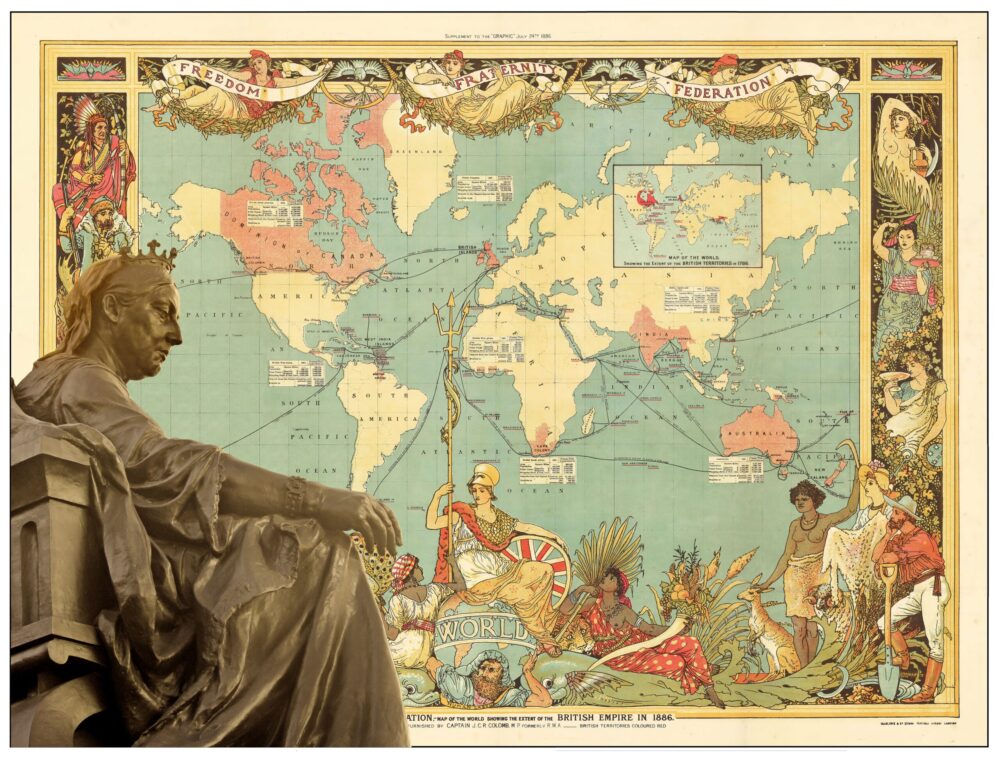
School pupils will be asked to argue both sides of some of the most contentious questions surrounding the British Empire under a new classroom project.
Students will debate whether the empire helped build the modern world or prospered through exploitation and oppression, before being required to swap sides and argue the opposing case.
The project has been developed by educational charity Parallel Histories, which works with more than 1,100 secondary schools across the UK and provides research materials presenting contrasting perspectives on contested periods of history.
Its latest free eBook, On British Empire, will be launched as pupils prepare to return to school on Tuesday.
Participants will be split into two teams and use sources in the book to construct their arguments before exchanging materials and making the case for the other side.
Debating points include:
– Empire spread the infrastructure of the modern world versus British imperial growth was built through systemic exploitation.
– Empire built modern government versus empire made exploitation and oppression lawful.
– Empire secured order through trade and alliance versus empire imposed rule by coercion.
– Empire was defended at the time as a means to reform and improvement versus empire was challenged at the time as exploitative and oppressive.
Under the heading of empire spreading infrastructure, the materials say: “Britain had profited from slavery, but empire changed direction.
“It abolished slavery, suppressed slave trading, then built railways, ports, steamships, telegraphs and public services.
“These developments drove economic development, connected regions to wider markets and made distance less of a barrier to travel, work, news, prices and opportunity.”
Under the argument that growth was built through systemic exploitation, the book says: “British imperial growth was built through systemic exploitation.
“Slavery was foundational: enslaved people were treated as property, coerced into forced labour, and converted into imperial wealth. Plantation profits helped build the infrastructure of empire: ports, banks, insurance, and manufacturing.
“Exploitation continued through extractive policies that created colonial dependency on Britain.”
‘Responsibility’
Former government minister and chief executive of Parallel Histories, Bill Rammell, said teaching the contested history of the British empire is a “responsibility”.
“The question we are asking is not whether the British empire was good or bad,” he said.
“The question is whether we trust students enough to let them decide for themselves.
“Teaching the contested history of the British empire from contrasting perspectives is not a risk. It is a responsibility.”
Support our Nation today
For the price of a cup of coffee a month you can help us create an independent, not-for-profit, national news service for the people of Wales, by the people of Wales.
Get more trusted Welsh news
Choose Nation.Cymru as a preferred source in Google News to see more of our journalism.


