


Scientists exploring how beans and lentils could help future-proof UK farming
Rebecca Speare-Cole, Press Association Sustainability Reporter
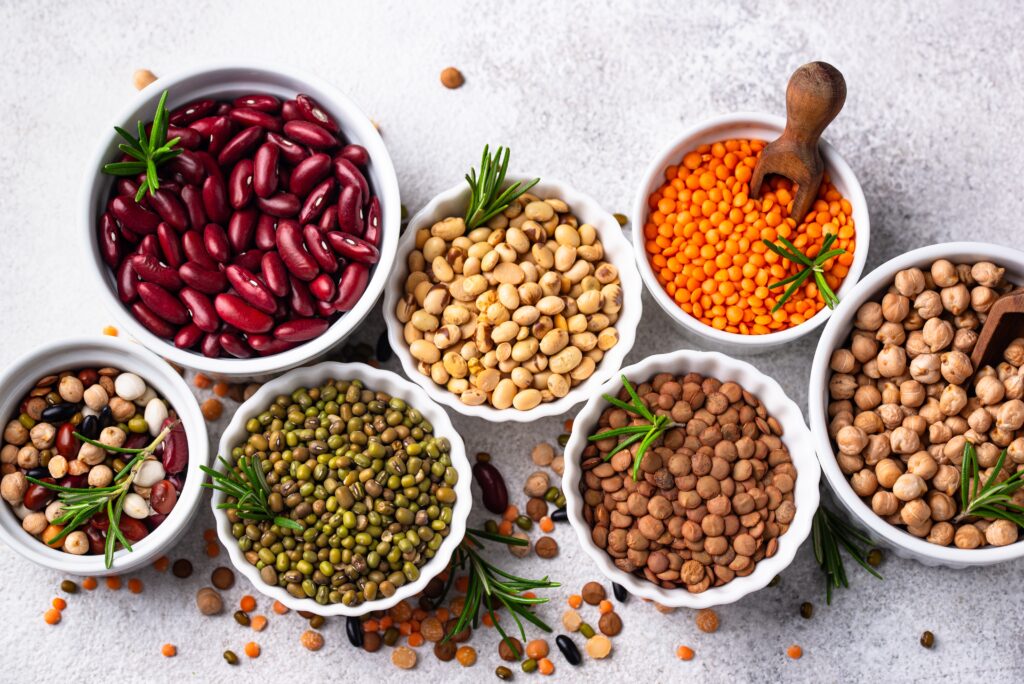
Scientists are exploring how reintroducing lentils, beans and peas into UK crop rotations could help to make farming systems more resilient to climate change.
Legumes can reduce farmers’ reliance on fertilisers, improve soil health and diversify crop rotations, according to Madalitso Mgunda, a postgraduate researcher from Malawi with extensive expertise in farming in Africa – who is studying at the University of East Anglia’s School of Global Development.
Her project aims to show the benefits of including these vegetables in rotations in Norfolk, one of England’s most productive farming regions, but will also examine the conditions needed to support their wider adoption.
Legumes were planted across UK farms in the past to fix nitrogen – a key nutrient – in the soil, but this changed in the mid-20th century when synthetic chemical fertilisers became widely available.
In many cases, edible legumes have been completely dropped from farm rotations, replacing them with continuous intensive cereal and potato cropping.
Ms Mgunda warned that the UK’s biggest crops – including wheat, barley, and potatoes – are highly vulnerable to climate change.
She said: “Extreme heat, spring drought, unseasonal flooding, together with changing disease and pest risks, pose a real threat to the agricultural heartlands of East Anglia, Norfolk and the South East – resulting in major yield fluctuations and lost revenue.
“Legumes have enormous potential to contribute to more resilient farming systems, healthier diets and lower environmental impacts – but their production remains limited.
“This research will explore the realities facing Norfolk farmers and the wider supply chain, helping to identify what changes would be needed to make legume production a more viable option in the future.”
Ms Mgunda said her research will combine interviews with farmers, processors and industry stakeholders with climate suitability data to understand both the opportunities and barriers associated with legume production.
She will also work with researchers at UEA’s Norwich Institute for Sustainable Development, contributing to wider research on climate resilience, food systems and crop diversification, and will undertake a field visit to comparable legume systems in Europe.
Nitya Rao, director of NISD, said: “Legumes offer significant opportunities to improve environmental sustainability and farm resilience, yet questions remain about how these crops can fit within existing systems.
“This project will provide valuable insights into the practical conditions needed to support wider adoption.”
Ms Mgunda is the recipient of the 2026 Norfolk International Scholarship, which is delivered in partnership with the Royal Norfolk Agricultural Association (RNAA), the Norwich Institute for Sustainable Development, and the JC Mann Charitable Trust to support research that addresses key challenges facing agriculture while delivering practical benefits for Norfolk’s farming community.
Mark Nicholas, chief executive of the RNAA, said: “Understanding how alternative crops such as legumes could contribute to resilient and profitable farming systems is highly relevant to Norfolk’s agricultural sector.
“We are proud to support research that is both academically rigorous and directly connected to the needs of our farming community.”
Support our Nation today
For the price of a cup of coffee a month you can help us create an independent, not-for-profit, national news service for the people of Wales, by the people of Wales.
Get more trusted Welsh news
Choose Nation.Cymru as a preferred source in Google News to see more of our journalism.



Perhaps Rebecca Speare-Cole should venture further than East Anglia. One of the key productive areas for potatoes is Pembrokeshire benefiting from milder winters and wetter summers. Whilst legumes are a traditional rotation for fixing nitrogen in England, that role in Wales is done by cattle. Cow slurry is a waste product of dairy husbandry and virtually free to use as a fertiliser for fields of potato. The cattle themselves also benefiting from a longer pasture window due to the climate differences. Grown spuds myself. A few bags of well rotted cow manure in the trench for planting and once they… Read more »
Was going to say don’t they already do that hopefully talking to farmers