


Scientists warn climate extremes hit poor communities hardest in 2025
Extreme weather events driven by human-induced climate change continued to disproportionately hit poorer communities in 2025, a group of international scientists found.
The last year saw devastating conditions across the world, including worsening heatwaves, droughts, storms and wildfires.
Global temperatures were so high that they made 2025 one of the hottest three years ever recorded, according to scientists behind the World Weather Attribution’s (WWA) annual report.
This came despite “La Nina” conditions – a weather phenomenon usually associated with cooler global temperatures.
The three-year global temperature average will cross the key warming threshold of 1.5C for the first time, the scientists found.
Passing 1.5C over the long term means the world could see increased climate risks, faster sea-level rise and growing chances of passing irreversible “tipping points”.
And for every extreme event, vulnerable populations are systematically the hardest hit, according to its analyses.
While adapting to the changing climate and reducing exposure can help to save lives among these communities, extreme weather events in 2025 pushed millions closer to the limit of adaptation – a point at which actions taken to offset climate risks are no longer effective, the WWA warned.
The group of scientists ultimately highlighted that reducing planet-warming fossil fuel emissions remains the key policy to avoid the deadliest impacts of climate change.
Friederike Otto, professor in climate science at Imperial College London and WWA co-founder, said: “Each year, the risks of climate change become less hypothetical and more brutal reality.
“Our report shows that despite efforts to cut carbon emissions, they have fallen short in preventing global temperature rise and the worst impacts.
“Decision-makers must face the reality that their continued reliance on fossil fuels is costing lives, billions in economic losses, and causing irreversible damage to communities worldwide.”
Humanitarian impact
For the study, the WWA identified 157 extreme weather events that met a set of criteria of humanitarian impact in 2025.
Floods and heatwaves were found to be the most frequent occurrences – at 49 events each – followed by storms (38), wildfires (11), droughts (seven) and cold spells (three).
Of the 22 that the team studied in depth, they concluded that 17 were made more severe or more likely due to climate change.
Five had inconclusive results, mostly due to lack of weather data and limitations in climate models.
The scientists also revisited six previous heat events for a report looking at how extreme heat has become more frequent and intense since the UN Paris Agreement was signed in 2015.
The group found that some events are now up to 10 times more likely to happen compared to 10 years ago.
Other WWA studies published in 2025 showed that human-induced climate change intensified heatwaves in South Sudan, Burkina Faso, Norway, Sweden, Mexico, Argentina and England.
And while most heat-related deaths remain unreported, one study estimated that 24,400 died from a single summer heatwave in Europe this year.
Tropical cyclones
Elsewhere, tropical cyclones and storms were found to be among the deadliest events of the year, including several simultaneous storms that hit Asia and Southeast Asia, killing more than 1,700 people and causing billions in damage.
This came just a few weeks after Hurricane Melissa left a trail of destruction in Jamaica.
Many regions also experienced some of their driest years on record, including central Africa, western Australia, central Brazil, Canada and large parts of the Middle East, the WWA said.
Extreme droughts led to water shortages, crop failures and the worsening of wildfire conditions.
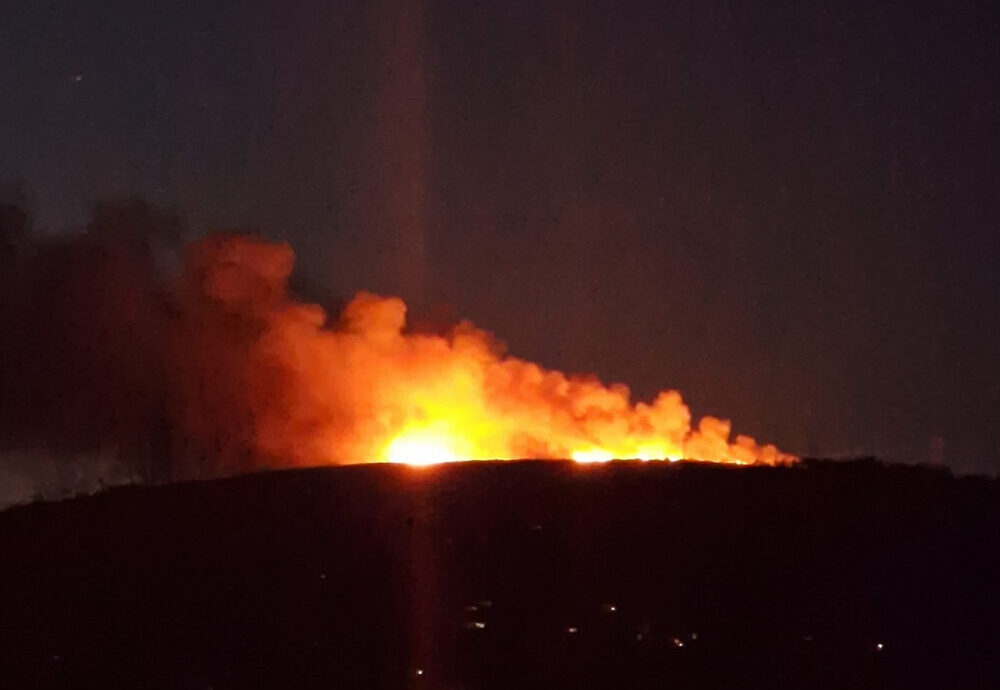
And the likelihood of major wildfires, such as those in Palisades, Los Angeles and Southern Spain, was found to be significantly increased by climate change.
These extreme weather events have affected vulnerable groups of people and marginalised communities the most in the last year, according to the report.
However, this inequality can also be seen in climate science, where there is a lack of data and limitations in modelling for the Global South, the WWA said.
Theodore Keeping, researcher at Imperial College London, said: “This year we have also seen a slide into climate inaction, and the defunding of important climate information initiatives.
“In 2026, every country needs to do more to prepare for the escalating threat of extreme weather and to commit to the swift replacement of fossil fuels and avoid further devastation.”
Support our Nation today
For the price of a cup of coffee a month you can help us create an independent, not-for-profit, national news service for the people of Wales, by the people of Wales.


