


Senedd committee calls for stronger Welsh Food Sector
Adam Johannes
A Senedd committee is calling for a “stronger, more self-reliant Welsh food sector.”
In his introduction to the Bringing Home the Harvest – Supporting the Welsh Food Processing Industry report, Andrew RT Davies MS, Chair of the Economy, Trade and Rural Affairs Committee, writes:
“In Wales, we make excellent food. From Halen Môn to Gower Salt Marsh Lamb, or from Denbigh Plum to Caerphilly Cheese, the Welsh food sector is something we can be truly proud of. It is big business too. Nearly one in five Welsh jobs are in the food and drink supply chain”.
Food processing contributes £7 billion to the Welsh economy. It anchors communities, provides thousands of jobs, and shapes the food that reaches our plates. But the report warns that without a clear Welsh Government plan, the industry could stall just when Wales needs it to grow and become more resilient.
Clash
At the heart of the report is a clash that runs through much of food policy. On one side, the UK Climate Change Committee urges the Welsh Government to help farmers shift some income away from livestock and towards woodland creation and peatland restoration, as part of a managed reduction in meat consumption to hit climate targets.
On the other side is the Farmers’ Union of Wales, Kepak — one of Europe’s biggest meat processors — and Hybu Cig Cymru, the Welsh Government-sponsored body promoting red meat. Their claim is cutting stock numbers in Wales will not cut emissions, it will simply shift them abroad.
The report leans toward the latter view. It warns that “the decline in Welsh livestock numbers could threaten the viability of our red meat industry,” and that “growth in the Welsh food processing sector is being limited by the importing of meat from countries that do not comply with the high environmental and welfare standards that Welsh farmers and processors are governed by.”
It also points to the decline of abattoirs, arguing this is bad for the sector and for animal welfare as “they will need to be taken on a longer journey to slaughter.”
To boost domestic beef production, it suggests the next Welsh Government consider “a headage payment similar to the Scottish Government’s suckler calf premium.”
Procurement
Public procurement is highlighted as one of Wales’s most overlooked tools. Schools, hospitals, and councils buy huge volumes of food. Harnessed strategically, this spending could give Welsh producers the stability they need to invest and expand.
The Welsh Veg in Schools project is presented as proof, “increasing the supply of locally produced organic vegetables in primary school meals,” helped by the demand created through universal free school meals.
Dr Siobhan Maderson of the Soil Association called the project “exemplary,” arguing that with government backing, it could meet its target of 25% of primary school food being locally and organically sourced by 2030.
Vegetables
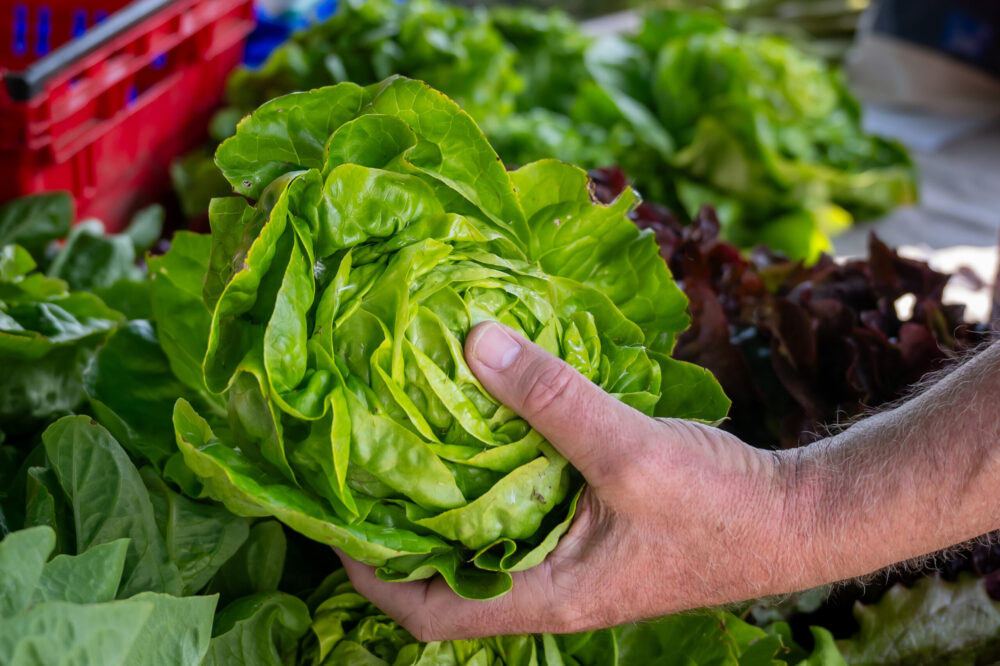
Horticulture emerges as a key weakness in Wales’ food system. To improve food security, the Committee supports the Food Policy Alliance Cymru proposal that 75% of vegetables eaten in Wales should be grown in Wales. But it stresses that no such target is achievable without “significant investment… including polytunnels, washing, cutting and storage facilities.”
Another challenge explored is that “the seafood caught off the coast of Wales is largely not eaten in Wales.”
At the heart of the report is a call for coherence. Andrew RT Davies argues that Wales needs “an overarching and holistic strategy for the whole food system,” one that can “align Government food policy, support the food processing sector, and prioritize sustainability and food security.”
Support our Nation today
For the price of a cup of coffee a month you can help us create an independent, not-for-profit, national news service for the people of Wales, by the people of Wales.


