


Senedd demands tougher fly-tipping penalties
Ella Groves
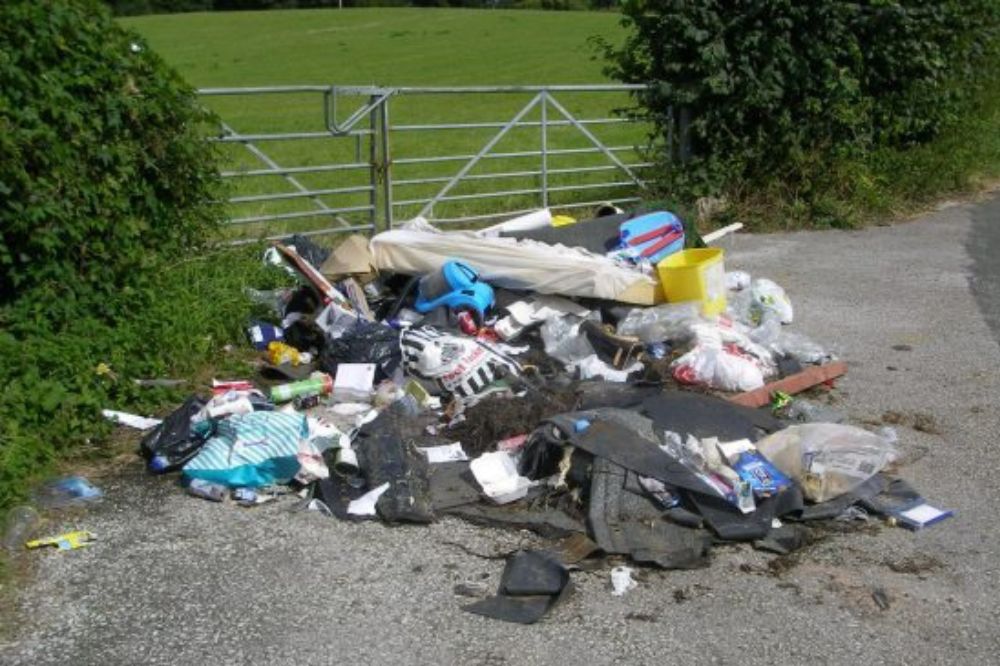
Senedd members have demanded a crackdown on fly-tipping, with 42,000 incidents last year – a number that is rapidly rising while prosecution rates remain relatively low.
Mick Antoniw led a debate on a cross-party legislative proposal that would see vehicles confiscated for convicted offenders and force polluters to cover the full clean-up costs.
He told the Senedd: “In Wales, you are very unlikely to be reported for fly-tipping and almost guaranteed not to be prosecuted – this means fly-tippers act with near impunity.”
The Labour politician warned it is “open season” for fly-tipping, with 115 illegal instances every day during 2023/24 – up 20% on pre-pandemic levels and 31% on a decade ago.
Mr Antoniw, a former minister, pointed to the Welsh Government’s 2015 fly-tipping strategy promising a future free from such “unacceptable social, economic and environmental harm”.
‘Smack’
During the debate on October 1, the former lawyer warned: “A decade later, it appears that the number of fly-tipping instances isn’t the only metric going in the wrong direction.
“The prosecution rate, already minuscule in 2015, has fallen from 0.3% to below 0.25%.”
Mr Antoniw’s proposal received cross-party support from the Conservatives, Liberal Democrats, Plaid Cymru and Labour – though ministers abstained in the vote.
Janet Finch-Saunders, the Tory shadow climate secretary, decried the £2m-a-year clean-up costs and described 102 prosecutions for 40,000 incidents as “nowhere near enough”.
She said: “I would have had a smack on my legs if I’d dropped an ice lolly wrapper. Society needs to do better than this now. We need to return to that way of discipline.”
‘Epidemic’
Plaid Cymru’s Delyth Jewell said much of the rubbish dumped in her South Wales East region is commercial, so people are probably being paid to pollute the mountainsides.
She highlighted the “industrial scale” of waste on Gelligaer and Merthyr common.
Labour’s Carolyn Thomas warned of fly-tipping reaching “epidemic levels” in Wales – “blighting our communities, destroying wildlife, and harming our health and well-being”.
She described the proposal as a “real opportunity to clean up our streets, protect our countryside and send a clear message to offenders that fly-tipping will not be tolerated”.
Huw Irranca-Davies, Wales’ climate secretary and deputy first minister, described the Welsh Government’s work on fly-tipping as “unparalleled” compared with other parts of the UK.
‘Highly unlikely’
Mr Irranca-Davies pointed to £1.6m for the Fly-tipping Action Wales scheme which provides practical support for councils including searching through waste and stop checks.
“The funding has allowed Fly-tipping Action Wales to employ enforcement officers on the ground in north and south-east Wales,” he explained.
He largely supported the proposal, sympathising with frustration aimed at the criminal justice system, but he expressed hesitation about more strident measures like seizing vehicles.
The deputy first minister stressed the need to strike a balance, warning of the potential to undermine the independence of the courts to hand out proportionate sentences.
Mr Irranca-Davies warned it is “highly unlikely, in the extreme” that the Welsh Government will be able to find time to legislate during this Senedd term which ends in May.
Support our Nation today
For the price of a cup of coffee a month you can help us create an independent, not-for-profit, national news service for the people of Wales, by the people of Wales.



There needs to be an appropriate photo linked id registration system in order to dispose of someone else’s waste. Otherwise penalties are difficult to impose.
Anyone found guilty of this horrible offence should a) lose their vehicle b) get a large fine c) pay the entire cost of the cleanup (including, if necessary, loss of their house, if they have one, in order to pay up) and d) have to do serious unpaid work, say 500 hours of street cleaning or similar.