


Senedd Member brands council’s £199m debt ‘deeply concerning’
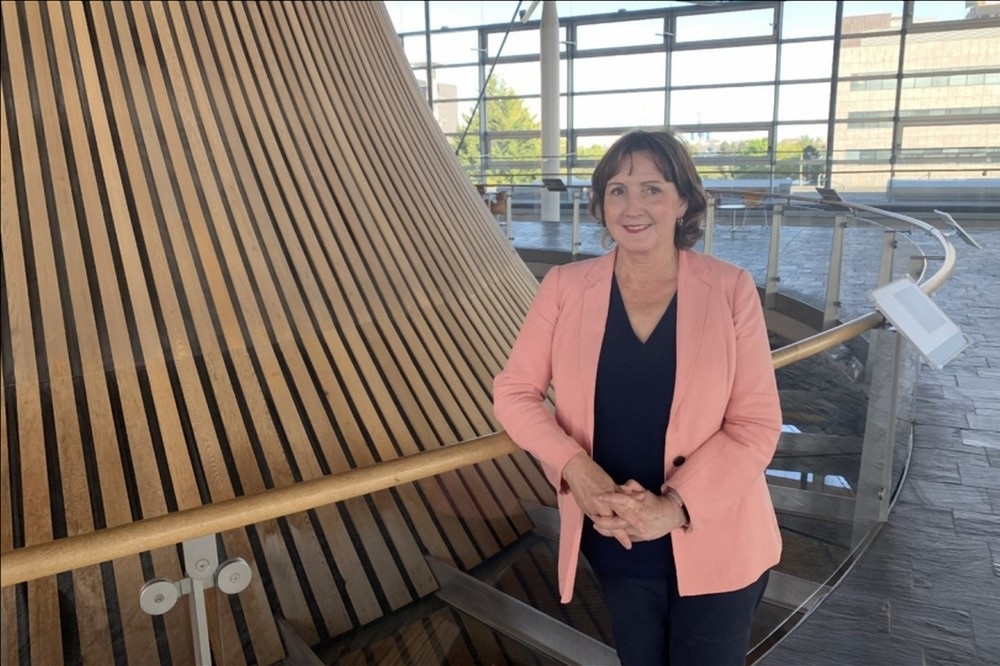
Richard Evans, Local Democracy Reporter
A Senedd Member has criticised a county council, describing the authority’s £199m of debt as “deeply concerning” and questioning the quality of its leadership.
The data on Conwy County Council’s level of debt – which stands at around £198.8m – was contained in a Freedom of Information (FOI) response to an enquiry sent by the Senedd Member for Bangor Conwy Môn, Janet Finch-Saunders.
But the council says that, “like all councils in Wales, Conwy borrows to pay for long-term capital investment” and it is “not used to fund day-to-day services”.
Ms Finch-Saunders asked for a breakdown of outstanding loans, lenders, interest rates, maturity dates, and annual financing costs from Conwy County Council.
The FOI response shows the local authority owes the sum across 56 individual borrowing deals.
The response details borrowing from a range of financial sources, including the Public Works Loan Board (PWLB), commercial banking, and other UK local authorities.
The vast majority of the council’s borrowing is held with the Public Works Loan Board (PWLB), which accounts for 49 separate loans totalling £158,809,968.66.
Interest rates on the PWLB loans range from 2.30% to as high as 9.50%, with maturity dates stretching between 2027 and 2067.
The portfolio also includes £30 million borrowed from other UK local and regional authorities:
These include:
• West Midlands Combined Authority: £15m across two deals maturing in October 2026 (£5m at 4.90%) and March 2027 (£10m at 4.55%)
• Ashfield District Council: £5m maturing in May 2027 at an interest rate of 5.50%.
• Halton Borough Council: £5m maturing in November 2026 at an interest rate of 5.30%.
• Powys County Council: £5m maturing in November 2026 at an interest rate of 4.25%.
In addition, two long-term loans totalling £10m are held with Barclays Bank PLC Local Authority Unit.
These comprise a £4m loan at 4.96% interest and a £6m loan at 4.90% interest, both carrying a maturity date of 11 January 2077.
Responding to the figures, Janet Finch-Saunders MS raised concerns over the scale of the debt, long-term interest commitments, and council leadership.
Ms Finch-Saunders said: “The figures in this freedom of information request are deeply concerning. Especially with money going via loans to English councils and Authorities. Serious questions must be answered on this spend.”
‘Overall leadership’
A council spokesperson said: “The figures released in response to the Freedom of Information request show the council’s borrowing i.e. loans from other bodies, including English Councils, to Conwy County Borough Council, not loans from Conwy to bodies including English Councils.”
Ms Finch-Saunders added: “At a time when many hard-working families and cash-strapped pensioners are seeing huge increases annually in council tax, yet receiving less and less delivery of essential services, one must question as to just how good the overall leadership of the council is when considering these vast sums of money yet to be repaid by the tax payer.
“I shall be writing to the leader and council cabinet, to establish the full facts around this particular spend and will keep all residents updated.
“I am also concerned about the maturity date of the Barclays Bank Local Authority Unit loans, as combined £10m is owed at an interest rate of 4.9% that must be paid back by November 2077. This is extremely far into the future, and the impacts will need to be assessed.”
A council spokesperson clarified: “For accuracy, the two Barclays loans mature in January 2077, not November, at rates of 4.96% and 4.90%.”
They added: “Like all councils in Wales, Conwy borrows to pay for long-term capital investment, such as schools, highways, flood defences, other community buildings, its fleet and IT infrastructure, and equipment.
“This borrowing is not used to fund day-to-day services. Capital assets serve residents for decades, so it is normal and prudent to repay the cost over a similar period. That is why some loans have long repayment dates. The council’s revenue budget includes a ‘minimum revenue provision’ for the repayment of debt.
“All borrowing is carried out in line with the council’s Treasury Management Strategy, approved each year by full council, and with the CIPFA Prudential Code, which requires borrowing to be affordable, prudent, and sustainable.”
“Each loan was taken out at the most competitive rate available at the time. The long-term loans are mainly from the Public Works Loan Board, the government lending facility used by councils across the UK. Short-term loans from other local authorities are a routine and cost-effective way for councils to manage cash flow, and they are repaid when due.”
Support our Nation today
For the price of a cup of coffee a month you can help us create an independent, not-for-profit, national news service for the people of Wales, by the people of Wales.
Get more trusted Welsh news
Choose Nation.Cymru as a preferred source in Google News to see more of our journalism.


Audit Wales exists to keep an eye on this sort of thing. Unlike in England where her party abolished the Audit Commission to “save money” instead asking councils to mark their own homework which is why English councils are going bankrupt.