


Senedd member raises questions over carbon capture project
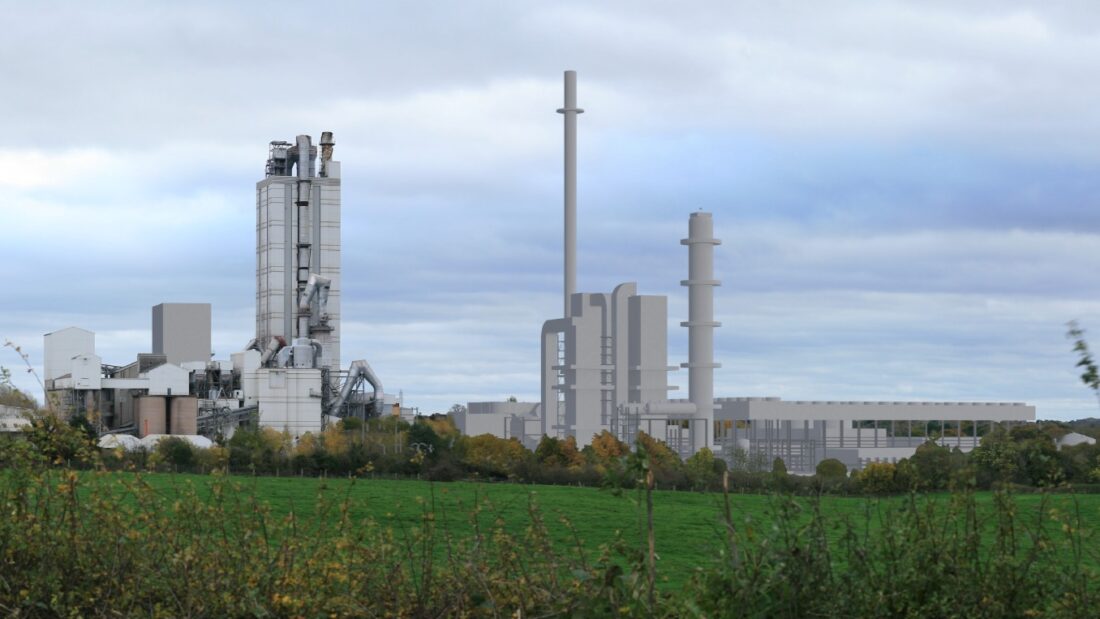
Alec Doyle, Local Democracy Reporter
The benefits of the Hynet carbon capture pipeline being built in Flintshire and Cheshire have been challenged by Senedd member Carolyn Thomas.
But three major firms linked to the pipeline have defended the project, saying it is vital to delivering lower carbon manufacturing in the region in industries where lowering carbon is particularly difficult to achieve.
With infrastructure works for Hynet – also known as the Liverpool Bay Carbon Capture Storage Project- now taking place in Talacre, Sandycroft and elsewhere through the county, Mrs Thomas has raised a number of concerns around its operation.
Safety and effectiveness
The Hynet project is a major new pipeline running from Stanlow Oil Refinery in Ellesmere Port, Cheshire through Flintshire to Point of Ayr where it will head out into Liverpool Bay in the Irish Sea.
The pipeline will carry industrial carbon dioxide captured from a number of industrial sites – including Heidelberg’s cement works in Padeswood and the proposed new low carbon power station in Connah’s Quay – and carry it out into the Irish sea to be stored in empty gas wells beneath the sea bed.
But Mrs Thomas says what she has seen during the public consultation coupled with her own conversations with geological experts has left her unconvinced that the project is the right solution.
“We have been told that this is a transitional phase to bridge the gap for manufacturing between high carbon and low carbon,” she said. “But installing this massive pipeline, building these new factories, you don’t make that sort of investment for a short time period.
“All this new construction, Hynet, Heidelberg cement’s carbon capture facility at Padeswood, the new power station planned for Connah’s Quay which will dwarf the buildings around it in its scale, will all create carbon through the amount of concrete and work vehicles used.
“When Hynet was first talked about I went to drop in events. At one of those a geologist told me the nature of CO2 is still relatively unknown and they’re not sure whether the geology would contain it over many years.
“They went on to say if it leaks, it could acidify the sea.
“CO2 is different to natural gas or water in its captured form. In 2023 a pipeline was ruptured in Satartia, Mississippi. It caused asphyxiation and seizures – 45 people were hospitalised and emergency services couldn’t get to people because the combustion engines in the ambulances need oxygen to operate and the CO2 had taken it away.
“This pipeline is going to be really close to communities, it will run through areas that flood, where the land is unstable. These are all concerns that I’ve been asking about for a long time.”
The case for carbon capture storage
A spokesperson for Eni, the company behind Hynet, said: “Carbon capture storage (CCS) is one of the key levers for the energy transition which relies on efficient, mature, proven, and safe technologies. It is particularly suited for the industrial applications and is essential for the so‑called Hard‑to‑Abate (HtA) sectors.
“The Ravenna CCS project in Italy has achieved an efficiency exceeding 90% obtained under the most challenging industrial conditions.
“The Hynet pipeline has been purposely routed so that it does not cross any residential property, avoiding any impact on homes. Regarding agricultural land, the pipeline construction involves only temporary and very limited excavation. Once completed, the land will be fully reinstated, and farmers can return to the same practices as before.
“The UK has one of the strongest and most experienced pipeline safety regimes in the world. The Liverpool Bay CCS project utilises materials that guarantee CO2 containment and state-of-the-art monitoring technologies to ensure the integrity of the infrastructure and pipelines.
“There is no record known to Eni of technical incidents related to CO2 pipeline transport operations, nor records of incidents that caused threats to human life.
“The safety of CO2 storage in Liverpool Bay has been evaluated through advanced specialist studies and reviewed by the UK regulator, the North Sea Transition Authority.”
Heidelberg Materials said that it was investing in lower carbon cement manufacturing processes at Padeswood, but carbon capture was critical to offset those areas where this was not possible.
“We have already invested in cutting emissions at Padeswood through the use of alternative fuels to power the kilns: around three quarters of our fuel now comes from low‑carbon sources,” they said. “Carbon capture is needed in addition to this to deal with the unavoidable process emissions from making cement.
“Together, these investments will allow Padeswood to produce evoZero near-zero cement at scale, which will help the UK construction industry reach its decarbonisation goals.”
Offsetting impact
Uniper, the firm behind plans for the new Connah’s Quay Low Carbon Power Station, said the new infrastructure would offset the carbon impact of building it.
“Construction of the low carbon power station will use a substantial volume of concrete, but once operational, Connah’s Quay Low Carbon Power will emit around 95% less carbon from the chimney compared to a standard gas plant,” they said.
“That will bring the benefit of reliable low carbon electricity generation in the region for potentially 30 years.
“The development would result in some temporary loss of saltmarsh and a small impact through operation. To manage any impact, Uniper has submitted a dedicated Saltmarsh Creation Strategy as part of the DCO application (Development Consent Order).
“This sets out specific land management measures that will allow for the existing area of saltmarsh to naturally expand inland. The implementation of these measures will be closely monitored throughout the construction and operation of the carbon capture power station.”
Support our Nation today
For the price of a cup of coffee a month you can help us create an independent, not-for-profit, national news service for the people of Wales, by the people of Wales.


