


Severn Bridge closure for HGVs a ‘threat’ to Welsh economy
Twm Owen Local Democracy Reporter
The closure of the Severn Bridge to heavy goods vehicles is a threat to the economy of south Wales according to councillors from across the region.
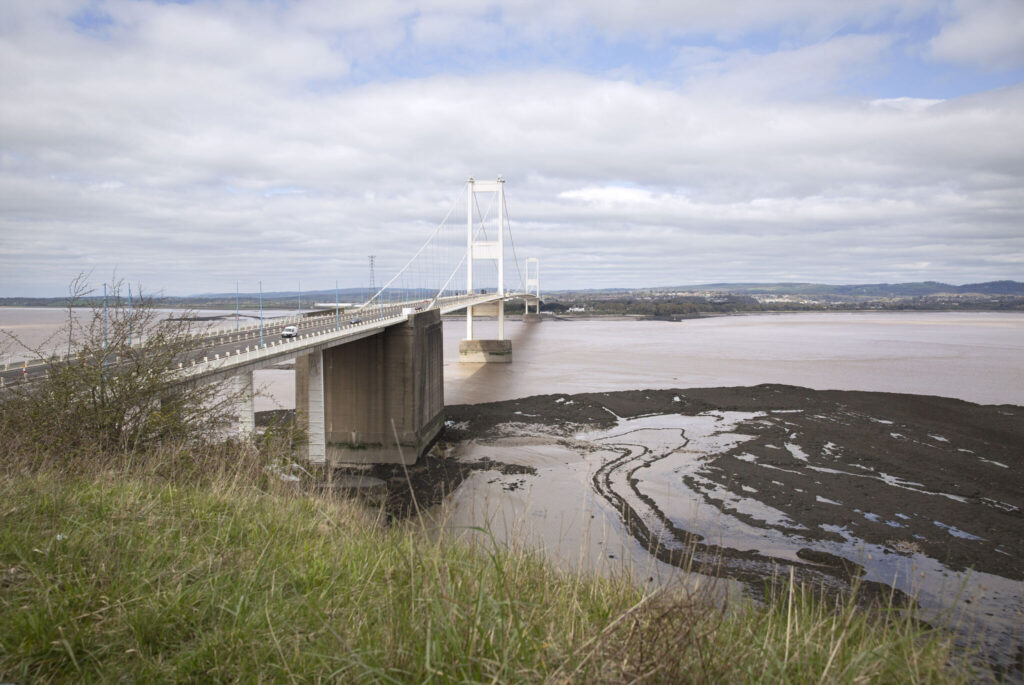
Vehicles weighing 7.5 tonnes and more have been barred from crossing the bridge, that spans the Severn from Aust to Chepstow, since Tuesday, May 27 and Monmouthshire County Council has warned it fears firms could relocate from Chepstow without continued easy access to the motorway network.
Now members of the Cardiff Captial Region, which is the joint committee for the 10 unitary authorities in South East Wales, say they will look to support Monmouthshire’s calls for a solution.
Councillor Robert Bevan, who chairs its overview and scrutiny committee, promised to “take the issue up” after it was raised at its meeting this week.
The Labour member of Rhondda Cynon Taf Council said: “Time is of the essence, we can’t wait. I can certainly say I will take this up further and see what we can do.”
Vital
He said the M48 bridge, at Chepstow, as well as the M4 and the Prince of Wales Bridge is a vital connection for region’s economy and key industries: “We must emphasise it’s not just Monmouthshire that will feel the impact but the rest of South Wales will feel it as well.
“We have deliveries come from the Midlands area, there’s lots of companies in the automotive sector and aerospace which is built around Severnside and Filton.”
Simon Griffiths, Labour councillor for Bridgend, noted the long term solution to strengthen the 1960s built suspension bridge’s cables is estimated to cost between £300 million to £600m.
He said it needed to be the “top regional transport priority” for the body whose main functions are planning transport across the region and how land is used as well as growing the economy, including the Western Gateway project that involves councils across South Wales and the south west of England.
Cllr Griffiths said: “This really could damage any growth we see in South Wales.”
Impact
Monmouthshire council’s Labour representative on the body, Chepstow member Armand Watts who raised the bridge restriction at the meeting, said it’s estimated up to 2,500 jobs in the town could be impacted.
He also said the weight limit has scuppered plans for the Severnside area in Wales to rival the economic growth seen on the English bank.
“We had the opportunity to replicate what they’ve done in South Gloucestershire and Bristol where there are 9,000 jobs. I would say that’s an economic hotspot.”
Cllr Watts also complained the South East Wales Trunk Road Agency has “not said anything publicly” about the weight limit and said it has been down to Monmouthshire to argue its case with the UK Government, which is responsible for both bridges over the Severn via National Highways.
“Our cabinet member was given 15 minutes with the junior minister, the minister for future highways, and that’s it,” said Cllr Watts who also complained a working group has been set up “without any elected members to decide our future.”
Cllr Watts, who represents Bulwark and Thornwell, said his ward is only nine miles from the M4/M5 interchange, north of Bristol, which he said should allow it to benefit from the city’s economic grownth and said: “I really hope you can show some solidarity with poor old Monmouthshire on this.”
National Highways has previously said it is anticipated the weight restriction is expected to be in place for 12 to 18 months as a short term measure while it considers how it could allow vehicles over 7.5 tonnes to cross the bridge in a managed system as a medium-term solution.
Support our Nation today
For the price of a cup of coffee a month you can help us create an independent, not-for-profit, national news service for the people of Wales, by the people of Wales.



Could it be an opportunity for more firms to be based in Wales?
really ,have you seen how avonmouth has grown since the m4 relief road was cancelled ,?
Avonmouth’s growth is all warehouses built since Brexit broke the just-in-time delivery model. We now need to stockpile and we’re all paying the price for that at the tills.
Really!! Only a short diversion needed.
The diversion will be about an extra 13 miles each way, 26 miles on a round trip, as trucks have to go back to the Magor junction before there is a roundabout enabling them to use the Second Severn Crossing. That is half an hours driving time for a HGV driver on limited driving hours per day. Certainly enough to persuade potential employers that there is a negative but whether that outweighs positives, cheaper rents(?), I have no idea.
Why should English Nationalist Highways, created by Johnson’s Muscular Unionism Unit, worry about the economy in Wales if they have an opportunity to boost the economy in England?