


Shocking’ numbers of birds, dolphins and seals killed in fisheries – study
Emily Beament, Press Association Environment Correspondent
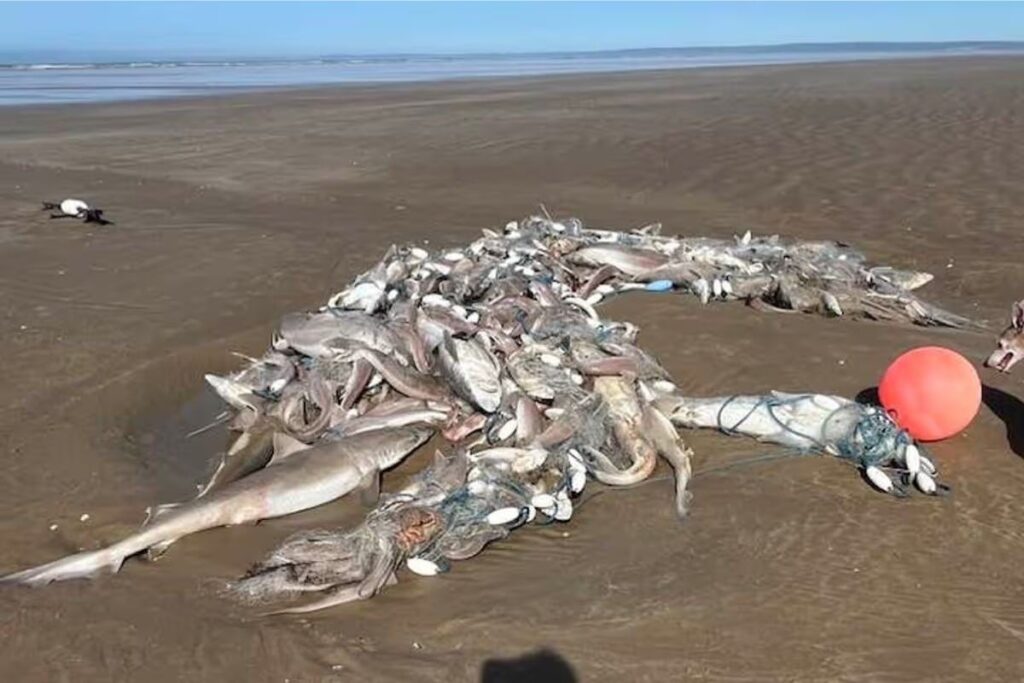
More than 10,000 seabirds, 1,000 dolphins and whales and hundreds of seals are accidentally killed by commercial fishing in UK waters each year, a report has warned.
The analysis finds that protected species including humpback whales, sharks and Atlantic salmon are among those killed each year as “bycatch” – the accidental killing of wildlife by fishing boats when they get tangled up or caught in gear targeting fish stocks.
And the report, which draws on assessments from data monitoring programmes and research studies, warns the true scale of the problem could be much worse due to under-reporting and a lack of monitoring across much of the fleet fishing UK waters.
Richard Benwell, chief executive of the Wildlife and Countryside Link (WCL) coalition of conservation groups behind the report, said its findings were “shocking” and called on the Government to take action to prevent the “terrible” losses.
WCL said wildlife species can be snagged in nets that are dragged through the water or hang like static curtains in the sea, where mammals and seabirds drown when they cannot escape, or can be caught on long lines of hooks that are targeting fish.
The conservationists warn it is an animal welfare issue, as the animals suffer as they struggle to free themselves, and is also at such high levels for some species that it is pushing them closer to extinction.
They want to see the Government urgently introduce strong bycatch action plans for fisheries to reduce the problem.
And officials must require remote electronic monitoring on all fishing vessels in English waters, including those under 10 metres long which are responsible for much of the static net fishing that has a high risk of bycatch, to properly assess the problem and target action, they urged.
The report sets out best estimates for levels of bycatch of wildlife – none of which can be legally be fished commercially but which are being caught and killed in large numbers accidentally – though it warns that they are likely underestimates due to a “severe” lack of reporting, monitoring and recording.
It finds that more than 10,000 seabirds are being killed each year in UK waters, along with more than 1,000 harbour porpoises and common dolphins.
About six humpback whales and 30 minke whales are killed each year in the Scottish creel fishery, while about 500 seals die as bycatch across UK waters.
More than 120 tonnes of critically endangered blue skate, porbeagle and white skate are caught each year in UK waters, while more than 1,000 endangered Atlantic salmon are caught by UK boats in the north east mackerel fishery, along with one salmon per 1.25km length of coastal gillnet.
But the report also highlights some cause for hope, with successful solutions already being used in UK fisheries.
These include a collaboration between fishers and conservationists in Filey Bay on the Yorkshire coast, just three miles from Bempton Cliffs, the largest mainland colony of seabirds in the UK including gannets, puffins, guillemots and razorbills, to reduce the number of seabirds dying in gillnets.
They have managed to come up with measures, including adopting heavier nets, that have cut the number of seabird deaths from 700 a year to just a handful.
And, in Scotland, early trials of weighted ropes in the creel fishery – where minke and humpback whales are caught in the loops of floating rope in the lines between the creels, or fishing pots, have been successful and welcomed by those fishers using them.
The report called for the weighted ropes to be rolled out fleet-wide with Government support through a universal subsidy for fishers to make the switch.
Mr Benwell said: “Thousands of animals die every year in UK waters because of avoidable fishing deaths.
“From razorbills and dolphins to endangered salmon and sharks, the scale of destruction exposed in this report is shocking, with animals dying in awful and unnecessary ways.
“The Government mustn’t let these terrible losses continue.
“To protect marine wildlife, ministers must finally deliver strong bycatch action plans, backed by strict mandatory monitoring and enforcement, before more wildlife is pushed closer to extinction,” he said.
Ruth Williams, head of marine conservation at the Wildlife Trusts, said: “For many in the fishing industry, bycatch is a distressing and unwanted outcome – these species are critical to the health of our seas, and their deaths will have serious consequences on marine ecosystems.
“Despite there being solutions available, successive Governments have failed to address this silent and largely unseen crisis.
“Many of our much-loved marine species are already facing a cocktail of threats at sea, and so the first step in reversing their decline must be urgent Government action to implement, innovate and monitor solutions that protect marine life from these preventable deaths.”
Support our Nation today
For the price of a cup of coffee a month you can help us create an independent, not-for-profit, national news service for the people of Wales, by the people of Wales.
Get more trusted Welsh news
Choose Nation.Cymru as a preferred source in Google News to see more of our journalism.


