


‘Shovel-ready’ clean energy projects jump to front of grid connection queue
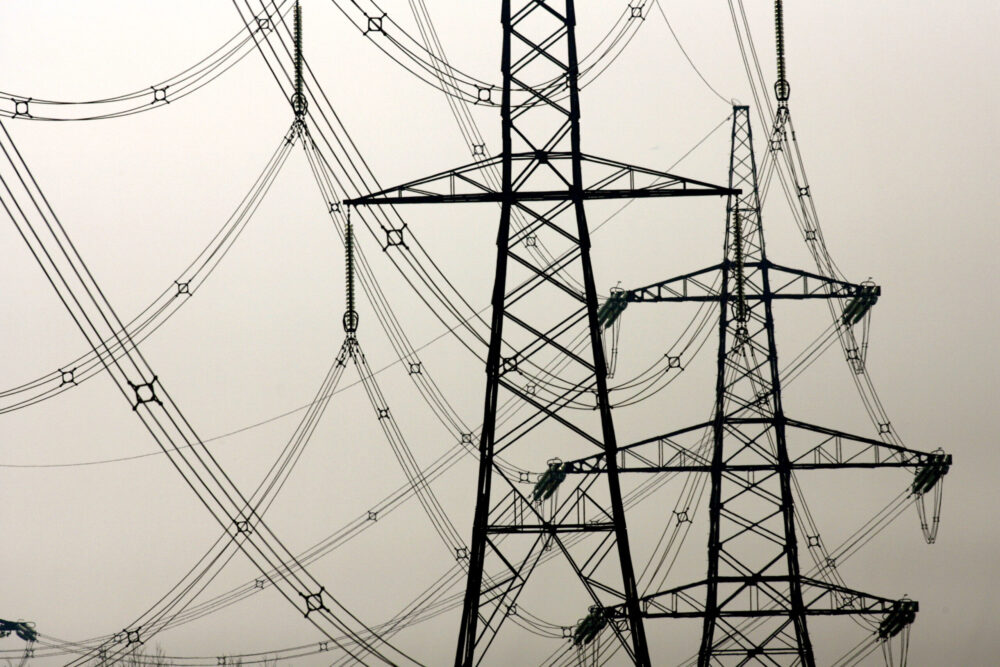
New “shovel-ready” wind, solar and battery power projects are jumping to the front of the queue to connect to Britain’s electricity grid, operators said as they unveiled the biggest shake-up of the system to date.
The existing first-come, first-served approach to the grid connections queue, which operators say has led to unviable and speculative schemes holding up clean energy projects that are ready to plug in, has been scrapped.
The new system will prioritise clean energy projects that can be up and running in the next few years as part of efforts to help Labour hit its target to near-fully power the country with clean electricity by 2030, and to boost economic growth.
The National Energy System Operator (Neso) said projects will start being informed of their status in the new queue from Monday.
But the reforms also mean hundreds of projects in the old queue will be pushed back and will no longer be given a connection date.
The announcement comes after Neso spent 18 months collaborating with network companies, industry, regulators and ministers to transform the process and give more confidence to clean energy investors.
Kayte O’Neill, Neso’s chief operating officer, said: “Transforming the grid connections process is a vital first step in unlocking the capacity needs for a secure, affordable energy transition.
“These changes will cut grid bottlenecks by prioritising ready-to-build projects, giving certainty about when and where they can connect and unlocking billions in clean energy investment.
“Together, we’re laying the foundations for a resilient, efficient and future-ready energy system that delivers for British consumers and the economy.”
Previous rules meant that every project, whether it was ready or not, took up space in the queue.
This led to the line growing tenfold in the last five years, with more than 700 gigawatts (GW) of generation and storage projects waiting for grid access, which is around four times greater than what is needed to meet the clean power by 2030 target.
Prioritised
Under the new process, projects are prioritised if they are aligned to national energy targets and are ready to build – such as those with planning permission or land rights.
Energy Secretary Ed Miliband said: “We inherited a broken system where zombie projects were allowed to hold up grid connections for viable projects that will bring investment, jobs and economic growth.
“To fix this we embarked on ambitious, once-in-a-generation reforms to clean up the queue and prioritise the projects that are ready to help us deliver clean power by 2030.
“Every solar farm, wind farm or battery storage facility we connect to the electricity grid brings us closer to clean, homegrown power that we control – so we can get bills down for good.”
Around 3,000 energy generation and demand projects – such as offshore and onshore wind, solar, battery storage and hydrogen – were assessed for the new queue after submitting evidence during an application window in the summer.
Those that meet the criteria have now been placed in a “gate 2” queue and together have the capacity to provide 283GW to the grid by 2035, Neso said.
These will receive an updated connection offer, prioritising those due to connect in 2026 and 2027.
Of these, the highest capacity will be provided by battery projects at 82GW followed by offshore wind at 70GW, solar projects at 59GW and onshore wind at 18GW.
Smaller amounts of capacity will come from other types of projects such as long-duration electricity storage, interconnectors, nuclear, tidal and unabated gas.
Not aligned
On the other hand, more than 300GW of projects in the old queue will not move forward to the next stage at this time, with the operator saying some were not found to be ready or were not aligned to national targets and others were submitted more recently.
These will get a “gate 1” offer, remaining in the system but without a connection date.
They can reapply in future application windows or if further space becomes available in the queue, subject to their readiness and alignment to national targets.
Elsewhere, 99GW of projects that will take power from the grid such as data centres, industrial sites and EV charging hubs by 2035 have been offered a connection offer after the Government asked no limits to be set on the demand side.
It is understood the Government will then work through which projects are feasible and how much of this new demand is realistic to meet with the additional supply after the fact.
Chris Stark, head of mission control for Clean Power 2030, said: “Queuing is a very British tradition, but the queue to connect to Britain’s grid has held back our economy.
“This overhaul of the connections process is the single most important step we will take towards a clean power system.”
As part of the 283GW total, generation and storage projects providing 132GW have been identified to help to reach the Government’s clean power by 2030 target, meaning they should be built and operating in the next few years.
A further 151GW of projects have then been selected for meeting Britain’s energy needs by 2035.
They add to the roughly 111GW of existing generation and storage capacity already connected to the grid.
Beyond the queue shake-up, Neso said thousands of kilometres of new electricity lines and cables will be needed to deliver power to homes and businesses alongside planning reforms to speed up decision making.
Support our Nation today
For the price of a cup of coffee a month you can help us create an independent, not-for-profit, national news service for the people of Wales, by the people of Wales.



It is not about building quickly, but building efficiently – we want the designers based in Wales, construction companies based in Wales where 10% of the staff are apprentices; then a legacy of staff experienced in design / construction remains in Wales.
And the hill tops and the transmission routes to be elsewhere…
Mab, a lot of the utilities distribution networks are very inefficient. For example. some of Liverpools water comes from Wales. Surely new houses in Liverpool could be designed to collect water that falls on the roof, purify the water and then use the water for the toilet system / maybe drinking water? We need a decent University such as https://cat.org.uk/ to partner with Tata (then reduce redundancies in Port Talbot) to start designing homes where the water is 100% purified and the heating is 100% from solar / on-site wind turbine. These types of properties would then be popular in… Read more »