

Shwmae! Oxford English Dictionary adds new words from Wales in latest update
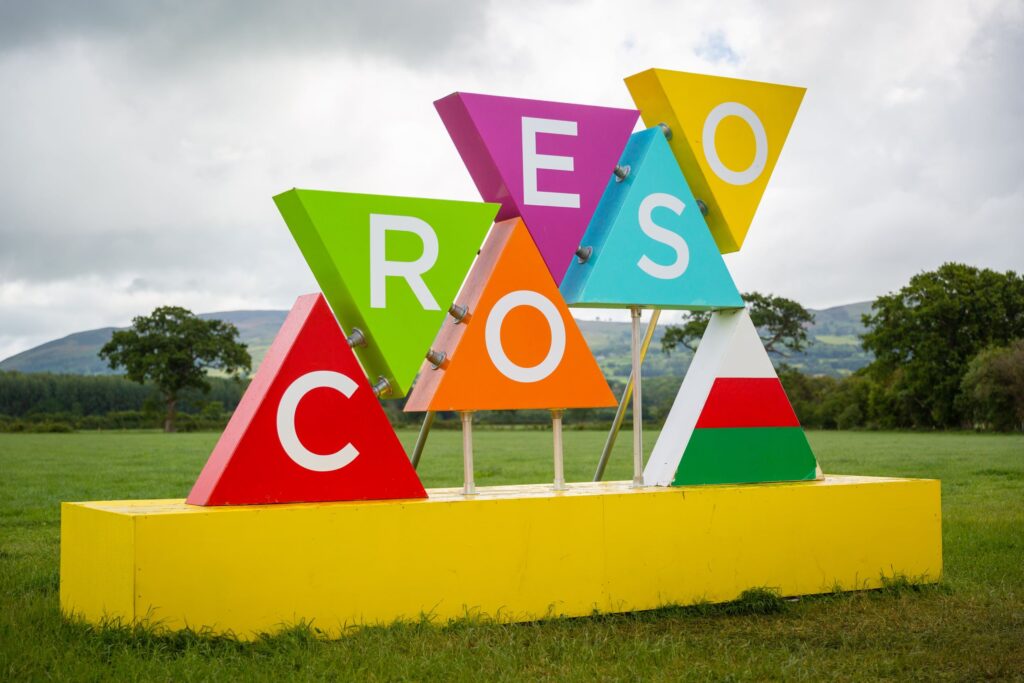
The Oxford English Dictionary has received an update this September, with new words added from Wales including ‘scram’ and ‘nobbling’, as well as a number of Welsh loan words such as ‘shwmae’, ‘nos da’ and ‘croeso’
In its September update last year, the OED took a significant stride in tracking the growth of English vocabulary worldwide by publishing the first of a new series of quarterly updates for World Englishes.
These included new and revised entries for words from the Caribbean, East Africa, New Zealand, and Wales. Since then, the OED has released three further updates, all featuring a colourful assortment of distinctive words and phrases used by English speakers across the globe.
In this year’s September update, the dictionary goes back to where its journey started as the OED present a new batch of Caribbean, East African, New Zealand, and Welsh additions and revisions to the dictionary, now also joined by recent inclusions from the Isle of Man.
Poody
Earlier this year, an episode of the BBC competition programme Race Across the World brought new attention to one of several new Welsh English additions in this update—the word poody.
When two of the show’s contestants used poody in an interview, they were astonished when the producer didn’t recognise the term.
This exchange illustrated a common experience—sometimes we need to go outside of our own linguistic circle to realize that words that we thought were universally understood are unique to the language variety that we speak.
Our earliest example of poody dates from 1986, when it is used colloquially with the meaning ‘to have a fit of sullen or petulant ill temper; to sulk’. It is an example of a reborrowing, or ‘boomerang word’—a word that has been borrowed from English into another language and then borrowed back into English.
Poody comes from the Welsh pwdu ‘to sulk’, which itself comes from the English word pout combined with the Welsh verb-forming suffix -u. A later noun form, referring to a fit of sullen or petulant ill temper or a childish sulk, is now used chiefly in the phrases in a poody and to have a poody.
Also forming part of this update are distinctively Welsh uses of English words. If a Welsh person advises you to wrap up warm because it’s nobbling (1998), then they are letting you know that it’s very cold outside.
Scram is an 18th and 19th-century northern English verb meaning ‘to scrape, rake, or pull together with the hands’. This sense is now obsolete, but the verb survives in Welsh English in the sense ‘to scratch, especially with claws or fingernails’ (1851), along with a noun use (1879): a scratch, especially one made with claws or fingernails.
Additional loan words from Welsh in this update include various greetings and polite expressions.
From the 19th century we have diolch (1856) ‘thank you’ and nos da (1862) ‘good night’, and from the 20th century we have croeso (1942) ‘welcome’, and shwmae, (1926) ‘hello, hi’.
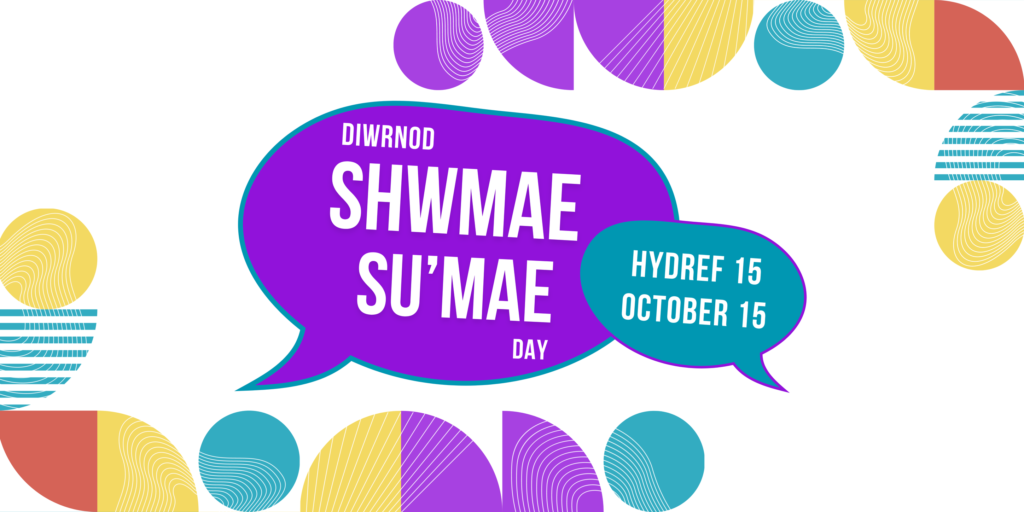
Shwmae comes from the Welsh siwmae or s’ma’i, colloquial contractions of the greeting siẁd mae hi or sut mae hi, with the literal meaning ‘how is it?’.
This phrase has variable pronunciation in current Welsh according to whether the speakers are from north or south Wales.
This difference is reflected in the spelling and pronunciation of shwmae in Welsh and Welsh English: those from south Wales write shwmae, sh’mae, or siwmae and say /ʃᵿˈmai/ or /ʃᵻˈmai/), while those from north Wales write su’mae and say /sᵿˈmai/ or /sᵻˈmai/, showing the fascinating variation that can exist even within a single variety of English.
The full list of Welsh English words added in this update is as follows:
New words
- croeso, int. and n.
- diolch, int.
- nobbling, adj.2
- nos da, n. and int.
- poody, n.
- poody, v.
- scram, n.2
- scram, v.2
- shwmae, int.
- Welsh hat, n.
Revised words
- bach, adj. and n.3
- commorth, n.
- commot, n.
- gwely, n.
- hafod, n.
- laver, n.1
- laverbread, n.
- siot, n.
- tref, n.
- twnc, n.
- van, n.3
You can find out more about the new additions from East Africa, the Caribbean, New Zealand, the Isle of Man, and Wales in these World English release notes.
For more information on World Englishes generally, visit the OED World English Hub.
For further detail on the broader OED update, check out these new words notes, and OED’s revision notes on ‘detective’, and this article on the OED’s new multiple audio feature.
Support our Nation today
For the price of a cup of coffee a month you can help us create an independent, not-for-profit, national news service for the people of Wales, by the people of Wales.


