


South Wales Metro architect brands new railway Bill ‘not good enough’
Emily Price
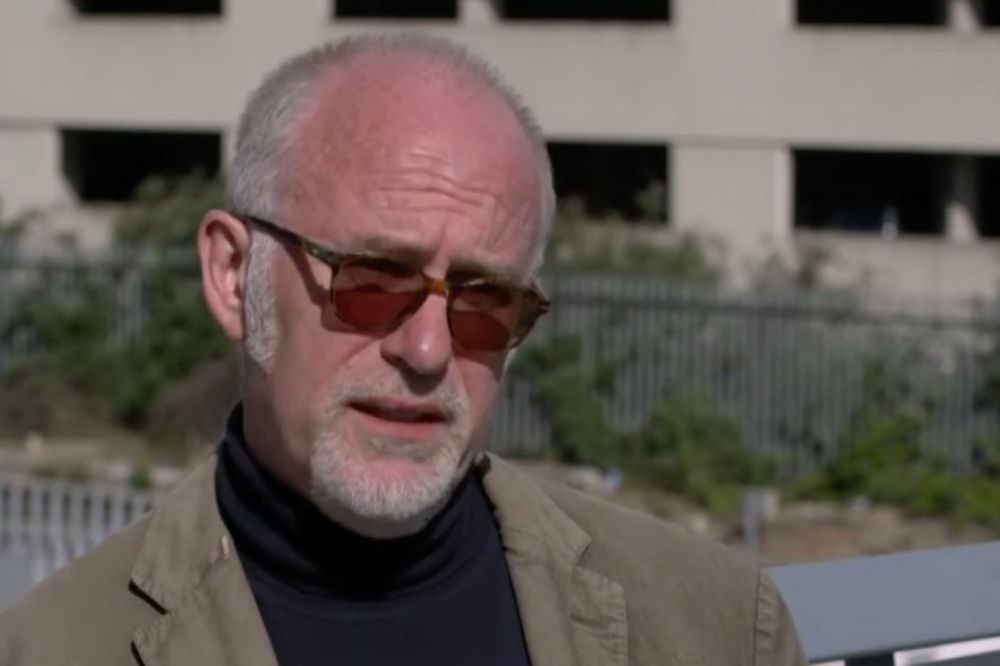
The principal architect behind the South Wales Metro has described the UK Government’s plan to reform the rail sector as “not good enough” in a strongly worded analysis.
Professor Mark Barry was the key leader in conceiving and developing the Welsh Government’s mammoth £1bn tram train network in the South Wales Valleys.
In a lengthy blog published online and submitted to Westminister, Prof Barry warned that the new Great British Railway (GBR) Bill does not address “the fundamental issues” impacting the rail network in Wales.
The new legislation – expected to receive royal assent next summer – will fundamentally reform Britain’s railways by creating a single public body to run infrastructure and passenger services under one entity.
However, Prof Barry has warned that for Wales, much of the Bill needs to change.
He hopes the flaws in the UK Government legislation will become a political issue in advance of the Senedd elections in May 2026.
In his blog, Prof Barry wrote that although the Bill is good on overall rail industry ecosystem simplification and vertical integration – it will not tackle the Welsh Government’s lack of control over its own network nor will it address decades of underfunding.
Last month, the Professor of Practice in Connectivity at Cardiff University attended an event in Taffs Well to formally mark the opening of the South Wales Metro tram-train depot – a huge milestone since the spark of his idea in 2011.
In his blog, Prof Barry praised senior Welsh Government officials and Ministers highlighting how Carwyn Jones, Mark Drakeford, Ken Skates, Eluned Morgan, Edwina Hart, Rebecca Evans, Lee Waters and Julie Morgan “held their nerve” on the challenging project.
The Metro architect said the scheme would not have happened without the existence of a Welsh Government and Senedd.
He wrote: “The UK Government had no interest in such, often seeing Wales as a peripheral distraction from more important and bigger shiny projects in England.”
Devolved
All rail infrastructure in Wales, apart from the Core Valley lines, remains the responsibility of the UK Government Department for Transport and is managed through Network Rail.
Prof Barry explained that because rail in Wales is not devolved, the Welsh Government funding for the Metro had to come from funds intended for devolved areas like health and education.
He wrote: “When you add this often-unnoticed feature to the long-term UK Government underspend, one has to ask why Westminster/Whitehall has allowed this funding double whammy to persist.
“Surely, the advent of GBR would see this constitutional and funding anomaly addressed?”
Prof Barry raised the issue of this dysfunction to the Westminster Transport committee for the Cardiff Business Partnership in 2011 during a presentation.
Fair share
In 2019, when the Conservatives were in power in Westminister, he also helped Cabinet Secretary for Transport Ken Skates pen a vision for full rail devolution.
Skates wrote: “The importance of rail devolution and a fair funding settlement for Wales can not be underestimated.”
He added: “For too long Wales has been denied its fair share of rail infrastructure funding and the Welsh Government has had little choice but to divert our own funding from our devolved responsibilities like health and education in order to make essential investments in our rail network, despite it being under the control of the UK Government.”
Last month however, Skates appeared to U-turn on this.
A press release issued by the UK Government included comments from the Welsh minister welcoming the introduction of the UK Railways Bill, describing it as a “significant step forward” in the Welsh Government’s collaborative approach to rail reform.
Powers
Prof Barry warned that excerpts from the Bill exemplify the difference between the powers and influence of Scottish ministers versus Welsh ministers.
He wrote: “Scottish ministers have their statutory powers laid out in the Bill, Welsh ministers and Welsh Government have none, and are just consultees – their ‘powers of direction’ are subsumed into those deployed by the London Westminster Secretary State for Transport. We know, after 30 years of underfunding, what that looks like!
“The Bill is in reality limited to requiring the UK Government and Department for Transport minsters to consult Wales (we have had 30 years of that to little effect).
“However, without substantive statutory underpinning, this is just empty and leaves Wales short changed and without sufficient levers to fund and implement its own transport policy.”
The Metro creator also warned that the legislation leaves Wales exposed if the 2029 general election sees a party come to power in Westminister that has little interest in Wales and “even less in public transport”.
Risk
Prof Barry wrote: “This is an unacceptable risk that can only be mitigated by a more substantive constitutional change.”
Recent polling suggests that Nigel Farage’s party, Reform UK, could win an outright majority at next general election with Labour predicted to lose over 250 of the seats the party won in 2024.
Prof Barry noted that the UK Government’s rail Bill would include some “welcome tinkering” regarding the role of Welsh Government, the Wales Rail Board, and it oversight of enhancements in Wales – but said it wasn’t an “effective statutory basis to progress”.
The former Transport for Wales advisor wrote: “Anything in a memorandum of understanding or a partnership agreement can be ignored and does not address the long-term funding issue.
“Furthermore, we don’t want a GBR in Wales that is just a small business unit lost and marginalised in a much bigger England focussed organisation.”
HS2
The Bill comes following political rows over the designation of several English rail links as “England and Wales” projects such as HS2 and the Oxford to Cambridge rail line.
Plaid Cymru, the Liberal Democrats and the Welsh Tories say this classification blocks Wales from receiving funding via the Barnett Formula as is the case in Scotland.
The UK Government argues it has allocated £445 million for rail enhancements in Wales over the next decade.
Prof Barry has calculated that the amount owed to Wales in rail funding has spiralled to billions of pounds – but that “evidenced argument” presented to Whitehall and Westminster continues to “fall on deaf ears”.
He wrote: “The UK needs a fair method of dealing with the historic liabilities associated with economic infrastructure, including the rail network – and coal tips, which pre-date devolution and go back decades, if not centuries and which are therefore a UK Government issue.
“Treatment of historic liabilities should not be conflated with discussion of where powers and funding over rail enhancement investment reside.”
Tsunami
He added: “It seems to me that Welsh Labour is stuck between a rock and hard place and has no leverage to address this ongoing constitutional dysfunction. The Conservatives are even less interested, and I am pretty sure Reform are not even aware there is a problem.
“This persistent and festering issue, and Westminster indifference to it, will ensure that Wales continues to be sub optimally treated and funded in respect of rail. This can’t continue, can it?
“What was a trickle in Caerphilly will become a tsunami at next May’s Senedd election….and this is one the reasons why.”
You can read Professor Mark Barry’s full analysis here.
Support our Nation today
For the price of a cup of coffee a month you can help us create an independent, not-for-profit, national news service for the people of Wales, by the people of Wales.



All eyes on the manifestos. Who will commit to devolving rail?
Rail is already devolved in Wales.
TfW is run by ‘Welsh Ministers’. As is the rail infrastructure of ‘core valley lines’. What the Labour Party is doing is starving railways in Wales of support by designating rail investment wholly in England as England&Wales projects. Labour are now seeking to snatch away that ownership.
Branding and control to be removed from the people of Wales.
Years of underfunding in Cymru has left us with the country we see today. Poorer rail services, one third of our children in poverty, unstable coal tips, run down communities in north Wales and the south Wales valleys and a struggling NHS and social services (yes, a responsibility of the Welsh government but via bad funding from Westminster). It can not go on. We are not some distant outpost and deserve better – we will never get it while in the ‘Union’. It’s time for independence.