


Starmer to chair ministerial meeting focused on economic impact of Iran war
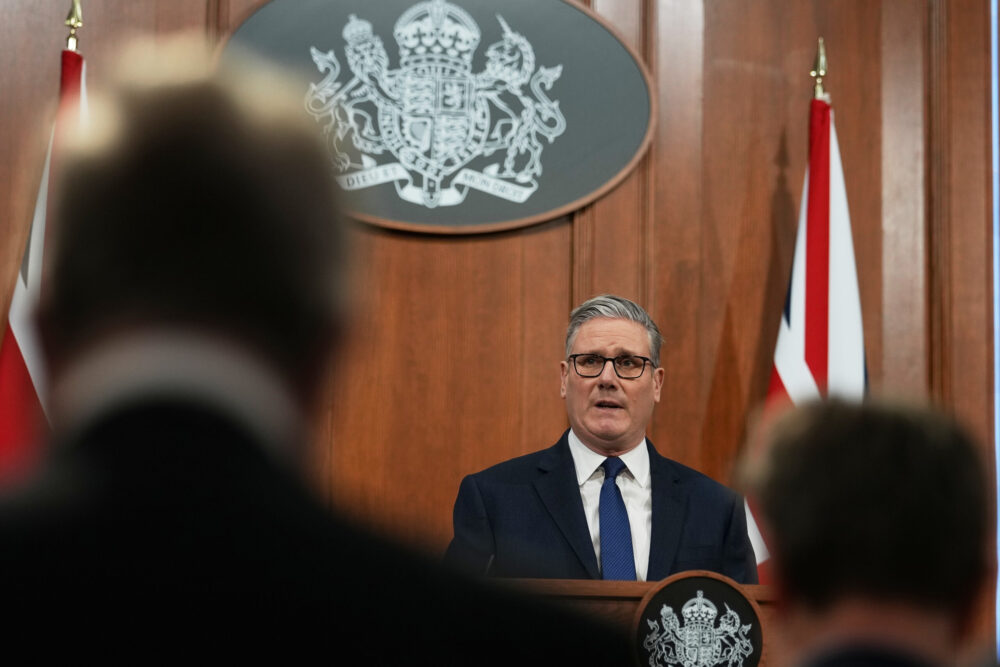
Sir Keir Starmer will lead a meeting of the Iran crisis committee on Tuesday as he warned the impact of the Iran war could continue “for some time”.
The Prime Minister will convene the meeting with representatives from the Bank of England to discuss the war’s economic impact in the shadow of rising oil prices.
He told the Usdaw union’s conference in Lancashire that he had called the meeting “so you can be sure we will stand by working people in this crisis”.
The meeting of the Middle East Response Committee (MERC), the panel set up to deal with the fallout from the conflict, will take place after the Government warned the economic impact could last for eight months beyond the end of the war.
Sir Keir said: “I have to level with you about Iran.
“The truth is the economic consequences could still be with us for some time.
“You don’t need to be a politician to know that, you can see it on every petrol forecourt across the country.”
The MERC was set up to hold regular meetings and the ministers will gather in one of the Cabinet Office briefing rooms.
But it is not a Cobra meeting – the MERC was established to deal with the ongoing crisis rather than responding to emergencies.
The Prime Minister said the response to the economic and political shock from the war, which has strained transatlantic relations with the US, “will define not just this Government but arguably this generation”.
Sir Keir said: “The world has changed. It is more volatile and dangerous now than at any other point in my lifetime.”
The meeting comes as oil prices hit a near three-week high on Monday, as hopes of progress on peace talks between the US and Iran were once again dashed.
Negotiations had been expected to take place in Pakistan before US President Donald Trump declared over the weekend that envoys from Washington would no longer be travelling to Islamabad because of a lack of progress with Iran.
Mr Trump told Fox News on Sunday: “If they want, we can talk but we’re not sending people.”
He last week indefinitely extended the ceasefire between the US and Iran, which was agreed on April 7 and which has largely halted the fighting that began with joint US and Israeli strikes on February 28.
But a permanent resolution has yet to be agreed and the crucial Strait of Hormuz, through which a fifth of the world’s oil supplies are carried, remains effectively blocked.
Oil prices fell in mid-April when it appeared that progress was being made towards reopening the strait, but Mr Trump’s announcement at the weekend has sent prices soaring again.
The cost of benchmark Brent crude continued its ascent, rising 2% to just under 108 US dollars a barrel in early morning trading on Monday, rising back up to levels seen before the first round of peace talks began in early April.
At the Usdaw conference, Sir Keir reiterated that the Government had capped household energy costs until July, regardless of what happens in Iran, while fuel duty is scheduled to remain frozen until September.
Fuel duty is then scheduled to rise gradually, unwinding a 5p cut introduced as a temporary measure after Russia’s invasion of Ukraine in 2022.
But ministers have come under significant pressure to maintain the cut in light of rising petrol prices, and senior Reform UK politicians staged a protest in Westminster on Monday to “demand action” on fuel costs.
Support our Nation today
For the price of a cup of coffee a month you can help us create an independent, not-for-profit, national news service for the people of Wales, by the people of Wales.
Get more trusted Welsh news
Choose Nation.Cymru as a preferred source in Google News to see more of our journalism.


