


Stop smoke and mirrors on assisted dying Bill, key supporter urges opponents
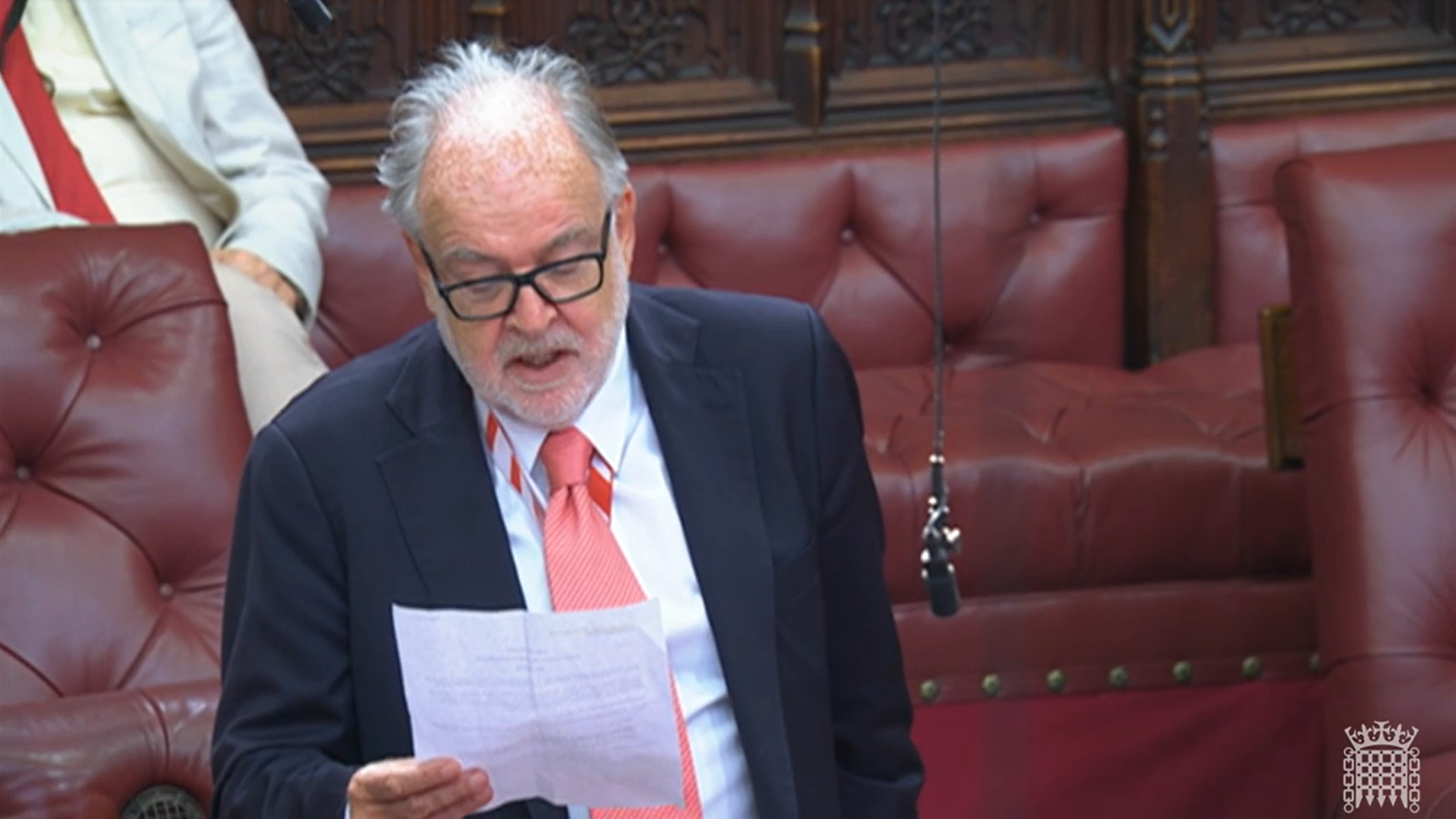
A key supporter of legalising assisted dying has urged opponents to “stop all this smoke and mirrors”, as he suggested a rare parliamentary procedure could be used to get the contentious legislation through.
Former justice secretary Lord Charlie Falconer, who is sponsoring the Bill in the House of Lords, accused a minority of peers of trying to talk the Bill out of time, saying they “will not engage in detail” with the consequence that it is making slow progress through the upper chamber.
Peers have been scrutinising the Terminally Ill Adults (End of Life) Bill, which was voted through by MPs in the Commons in June.
Members of the Lords have tabled more than 1,000 amendments – a record number for a private member’s Bill.
The Bill would only become law if the House of Commons and the Lords agree on its final drafting, with approval needed before spring when the current session of Parliament ends.
Supporters of the legislation have now said the Parliament Act could be invoked to override objections from peers if the draft law is not approved before the King’s Speech in May.
Backers have insisted they are confident the Parliament Act would apply if the Bill was taken through a second time.
The rarely-used legislation allows for Bills that have been backed by the Commons in two successive sessions but rejected by peers to pass into law without Lords approval.
Supporters of the assisted dying legislation say there are precedents for the Act being used in relation to so-called “conscience issues”.
Only seven Bills have been passed using the powers under section 2 of the law, including the Hunting Act 2004.
Asked why he felt it might be necessary to use the Parliament Act, Lord Falconer told BBC Radio 4’s Today programme: “The constitution says if the Commons passes something, and the Lords block it – which is what’s happening – then the way the Commons, who are elected, get their way is if they pass it again, second time in the same form, then it gets through without the Lords.
“’Don’t do that’, I’m saying to the Lords.
“If you want to make changes to make it better, start engaging with the detail. The majority (of peers) are trying to do that.”
A source close to Labour MPs and peers opposed to the Bill said threats to use the “nuclear option” of the Parliament Act to force it through were “the act of a bully who knows they are losing the argument on the substance”.
Meanwhile, an ex-director of legislative affairs for two previous prime ministers has insisted peers are simply “doing their best to patch these holes” in the Bill and “responding to external concerns”.
Nikki da Costa, a vocal critic of the Bill, said: “This Bill managed to provoke two royal colleges – psychiatrists and physicians – from four years of neutrality to saying that this Bill, while they’re neutral on principle, that this Bill is unsafe.
“This Bill is dangerous for the vulnerable and people will be failed. So, you’ve got a situation where Lord Falconer wants the Lords as a scrutinising chamber to stop doing the work and just wave it through.”
Lord Falconer rejected this, saying while he does not believe it is a “defective Bill”, he accepts “it can be improved”.
He said: “If there are defects in this Bill, and I accept it can be improved but I don’t think it’s a defective Bill, then make the changes. If I resist the changes, then vote them through.
“The Lords is a sensible place. What the Lords does well is look at things and change them if they’re wrong.
“Stop all this smoke and mirrors that we got from Nikki da Costa. Focus on making the Bill better if you say that’s what’s wrong with it.”
Opponents maintain they are simply doing their job of scrutinising a Bill, which they argue is not safe in its current form and needs to be strengthened.
A source close to Labour MPs and peers opposed to the Bill said: “Nearly all the professional and expert groups consulted on this have raised massive concerns about the danger it poses to vulnerable people, none will say it is safe.
“MPs who passed this Bill in the Commons knew this, with many asking the Lords to fix the problems.
“People need to be very clear, using the Parliament Act to force this through would mean that none of the known issues with the Bill would be fixed.
“Every MP who voted to force it though would bear responsibility for the inevitable suffering and deaths of vulnerable people.”
Lord Falconer has written to peers setting out where he intends to propose amendments to strengthen and improve the Bill, including a tighter definition of the protections for people with eating disorders; an explanation of how a ban on advertising assisted dying services would operate; a clarification that medical practitioners would have to opt-in to take part in such a service; and extra protections for people aged 18-25.
Commons Leader Sir Alan Campbell said he hopes peers scrutinise the Bill in a “responsible way” and the Parliament Act does not have to be invoked.
During business questions in Commons, Dame Harriett Baldwin, Conservative MP for West Worcestershire, asked for assurance that Government time would not be allocated for the Act.
Sir Alan responded: “Obviously, when there is what looks like an impasse or a slowdown, people will be looking for a quick route around that, or any route round that, to be honest.
“But the Government position hasn’t changed, which is, once the Lords have completed their scrutiny, if necessary, we will find time in this place to debate those amendments, because the will of this House was very clear, and I hope, without having to go down the avenues that have been described, that we will be able to resolve this matter.”
Support our Nation today
For the price of a cup of coffee a month you can help us create an independent, not-for-profit, national news service for the people of Wales, by the people of Wales.



This bill draws attention to the fact that the Upper House is needed and needs to be elected likely for a term of 11 years on specialised system to make it less party political than the commons and more expert orientated. That should remove the constant tag of “The unelected house”. This bill covers an extremely difficult subject. The number of people actually requiring euthanasia should be minimal if palliative care is good. Currently the NHS ignores dementia as a chronic neurological disease and doesn’t adequately fund hospices which are folding because of lack of funds donated and granted. If… Read more »