


Study finds major decline in Britain’s bumblebees
Nation.Cymru staff
A new study reveals that an important pollinator is rapidly losing genetic diversity in Britain.
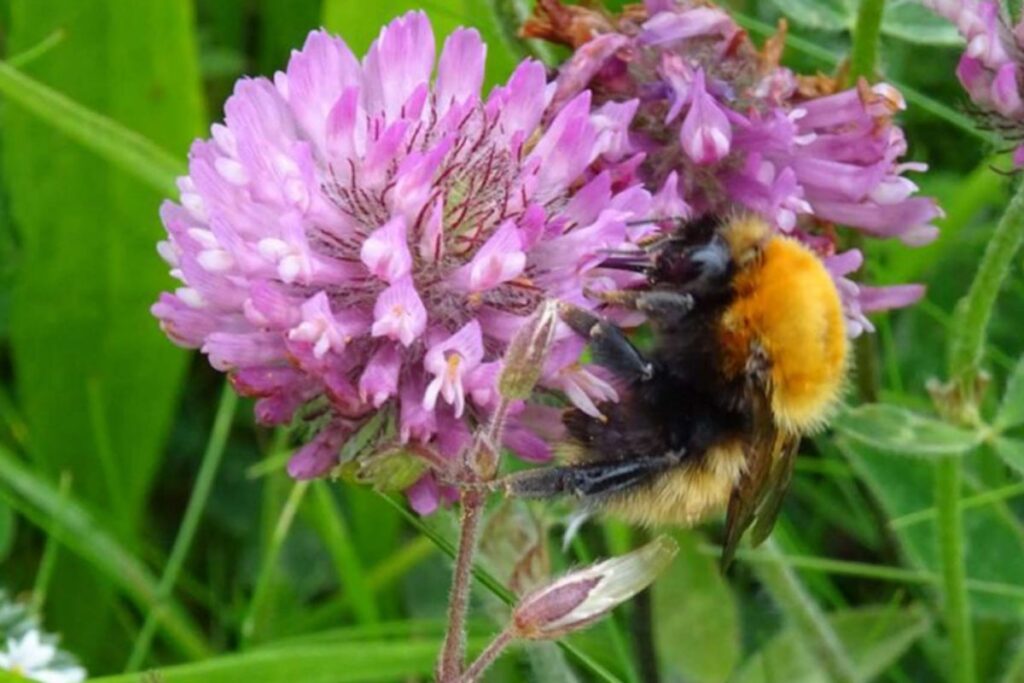
Moss carder bumblebees were once widespread across the UK, living in flower-rich meadows, marshes and heathland where they pollinated a wide variety of plants. However, the loss of these habitats has seen the species retreat into strongholds along the country’s coasts and islands.
As populations shrink and become disconnected from each other, they lose genetic diversity as individuals become more inbred. But to understand the impact of these changes, scientists need a baseline – and museum specimens hold the answer.
By examining the DNA of more than 100 moss carder bumblebee specimens stored at the Natural History Museum and other institutions across the UK, the researchers saw dramatic changes in the genetic diversity of these insects.
Across Britain as a whole, the genetic diversity of moss carder bumblebees has declined steadily since the late nineteenth century, falling by around a quarter over the past 100 years. In England and Wales, this has been accompanied by an almost three-fold increase in the proportion of the genome affected by inbreeding – a sign that populations in these nations have become smaller and more isolated.
The researchers described the rate of genetic diversity loss as “unexpectedly high”, emphasising the speed at which these pollinators are being affected by wetland drainage, the loss of meadows and pesticide use.
In contrast, while populations of the bumblebees in the Scottish Highlands also seem to be in decline, they appear to be less impacted by habitat fragmentation. This is possibly because their habitats still retain the connectivity that allows bees from different populations to mix.
While introducing Scottish individuals to English and Welsh populations could help to restore their genetic diversity as part of carefully planned conservation projects, this would first require tackling the root causes of the bumblebee’s decline.
Genetic diversity eroding
Dr Victoria Mullin, Assistant Professor at Trinity College Dublin and co-author of the study says, “This research confirms what we’ve suspected for some time – the declining population of the moss carder bee is eroding its genetic diversity.
“As the genome is like a toolkit, containing all the different ways a species can adapt, these bees now have fewer tools available to them in their response to climate change, pollution and habitat degradation.”
Research such as this has been made possible by projects such as Darwin Tree of Life, which aims to sequence the genome of more than 70,000 species that live in the UK. This proved especially useful for the team studying the moss carder bumblebee, which is notoriously difficult to identify even by trained experts.
Using this genome as a reference, the researchers were able to identify 29 museum specimens previously identified as moss carder bumblebees that actually belonged to its close relatives.
By enhancing the quality of data held by the Natural History Museum and other institutions, it opens up further applications for species discovery, biodiversity research and much more.
Professor Ian Barnes, Merit Researcher at the Natural History Museum and co-author of the study, says, “To understand these changes, museum collections are key.
“We have around 30 million insects at the Natural History Museum, and millions more in other UK museums, which provide the scale needed to answer some of the most important questions humanity faces today.”
Support our Nation today
For the price of a cup of coffee a month you can help us create an independent, not-for-profit, national news service for the people of Wales, by the people of Wales.
Get more trusted Welsh news
Choose Nation.Cymru as a preferred source in Google News to see more of our journalism.


