


Study reveals how repairing severed hand nerves changes the brain
Nation.Cymru staff
Scientists in Wales have discovered that repairing a severed nerve in the hand can change the way the brain responds to touch.
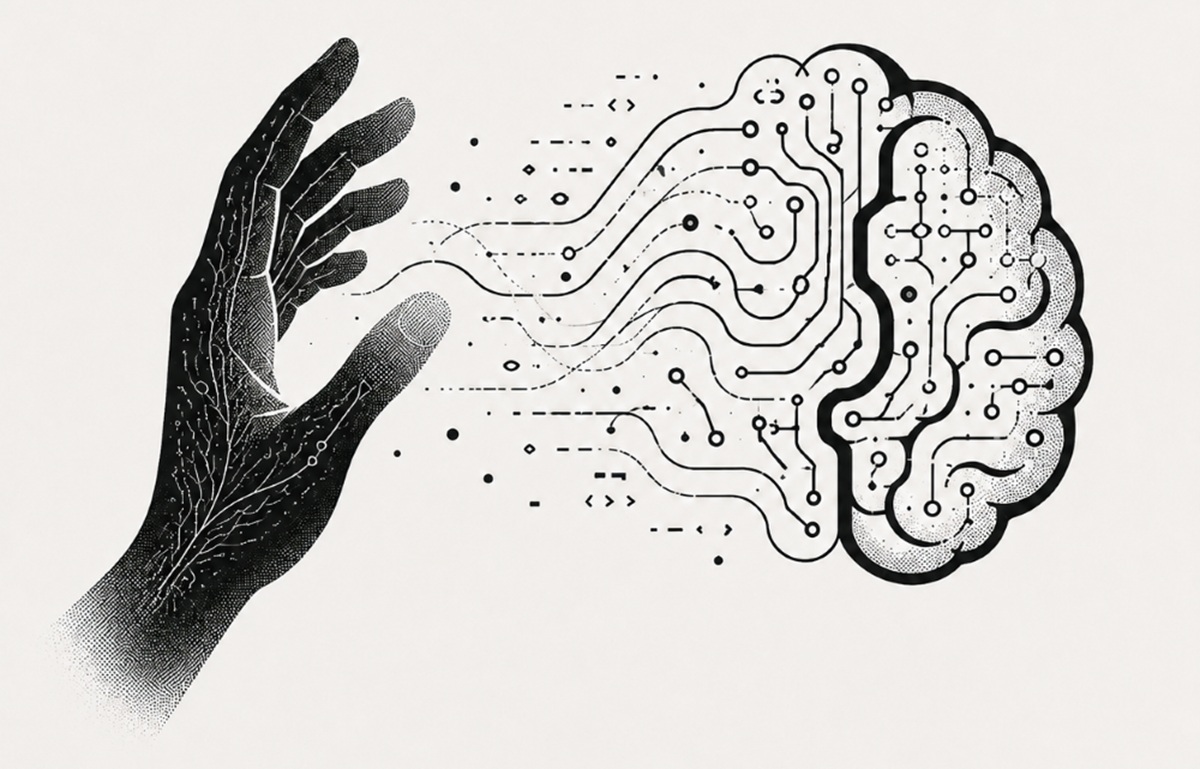
Researchers at Bangor University found that the brain’s normal “map” of individual fingers was altered in people who had undergone surgery to reconnect major nerves in their hands.
The findings, published in Nature Human Behaviour, could help scientists investigate why patients do not always fully recover movement and sensation following serious nerve injuries and whether changes in the brain have a role in rehabilitation.
The brain represents different parts of the body in an organised way, with individual fingers occupying characteristic locations within what researchers describe as a map.
When a major nerve in the hand is severed, communication between the hand and brain is disrupted, potentially resulting in loss of movement and sensation.
Surgeons can reconnect the ends of a damaged nerve, allowing nerve fibres to grow back into the hand and communication with the brain gradually to return.
However, the regenerating fibres do not necessarily reconnect with the same parts of the hand they supplied before the injury.
Researchers have suspected that this altered wiring could change the brain’s representation of the hand, but much of the previous evidence has come from studies involving animals.
The Bangor study, led by Dr Ken Valyear, senior lecturer in psychology, examined whether the same changes occur in humans.
Using functional MRI at the Bangor Imaging Unit, researchers mapped the brain’s responses to touch in 21 people who had undergone surgical repair of one or more major nerves in their hands.
Their results were compared with those from 30 people without nerve injuries.
Researchers found that the characteristic pattern representing individual fingers in the brain had changed following nerve repair.
The differences were not simply the result of weaker responses to touch. Instead, touching the repaired hand produced unusually strong activity in the same area of the brain where the altered finger maps were detected.
Dr Valyear said: “When a severed nerve in the hand is surgically repaired, the communication lines between the hand and brain are restored, but the new connections are not necessarily organised in the same way as before.
“The map alterations we observe in patients may reflect altered connections in the hand and, in turn, a changed pattern of information reaching the brain.”
However, he cautioned that the researchers had not directly measured how nerves had rewired within patients’ hands.
He added: “We also found unusually strong brain responses to touch of the repaired hand, suggesting that the brain itself is undergoing functional changes following the injury.”
The findings could eventually have implications for rehabilitation because recovery from serious nerve damage is often incomplete, with some patients experiencing continuing problems with movement, sensation and pain.
But researchers did not find a clear relationship between the extent of the changes detected in the brain and the severity of patients’ sensory or movement difficulties.
Dr Valyear said: “We found clear changes in the brain, but no clear relationship between the extent of those changes and patients’ sensory or motor impairments.
“So we now know that the maps change, but we still do not know what those changes mean for recovery.”
Nerve regrowth
Researchers now want to follow patients from shortly after surgery through nerve regrowth, rehabilitation and recovery.
Dr Valyear said combining brain imaging with measurements of how nerves reconnect and how patients use their hands in everyday life could help establish why the brain changes and whether those changes affect recovery.
He added: “Ultimately, the major clinical question is whether and how these brain changes – including the unusually strong responses we see after nerve repair – interact with rehabilitation and contribute to meaningful functional recovery.”
Support our Nation today
For the price of a cup of coffee a month you can help us create an independent, not-for-profit, national news service for the people of Wales, by the people of Wales.
Get more trusted Welsh news
Choose Nation.Cymru as a preferred source in Google News to see more of our journalism.


