


Study reveals stark impact of deindustrialisation on mental health in Wales
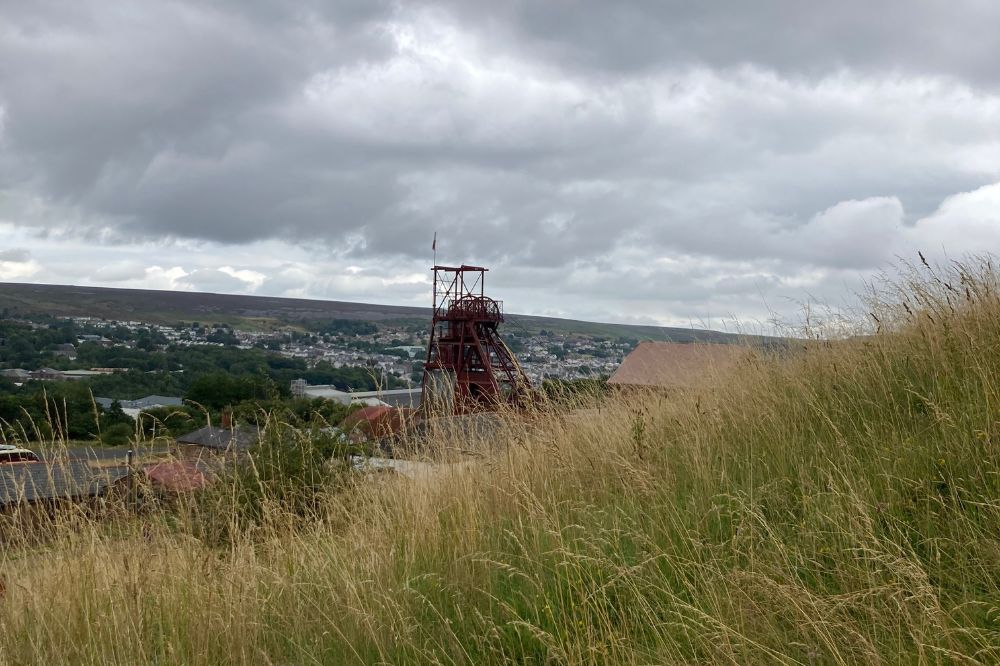
A study from a Welsh university has shed new light on the stark legacy of deindustrialisation in Wales and its impact on the mental health of the population.
The paper, by Dr Christopher Saville of Bangor University, was published in the Journal of Epidemiology & Community Health and found that residents of areas of Wales with greater mining extent reported worse mental health.
It also found that mental health outcomes differed between age groups, with the link strongest in generations who lived through the decline of the mining industry.
The study also suggests that the mental health consequences of deindustrialisation’s health affect women at least as much as men, despite mining being a male-dominated industry.
Taken together, the findings suggest that people exposed to the end of the coal industry in adulthood have long-term increased risk of poor mental health.
In light of the findings, Dr Saville, a Clinical Senior Lecturer at Bangor University’s School of Psychology and Sport Science warns that rapid deindustrialisation has enduring costs for human health.
He adds that policymakers should prioritise mitigating these consequences in future economic transitions, such as the disruption to labour markets due to developments in artificial intelligence and automation, and the rapid decarbonisation of energy in response to climate change demands.
The study uses two large-scale national survey series, with a combined sample size of over 7% of the Welsh population, and links these to data on historical coal mining to assess how mining history predicts mental health, and if this is affected by age and gender.
The findings are based on a vast trove of data, which includes 180,462 respondents to the Welsh Health Survey between 2003 and 2015, and 57,331 respondents to the National Survey for Wales between 2016 and 2023. These were linked to geographic data on historical coal mining activity.
Dr Christopher Saville, Clinical Senior Lecturer at Bangor University’s School of Psychology and Sport Science said: “Deindustrialisation is associated with poorer health outcomes, but the extent to which this is due to direct effects of job losses, as opposed to longer term indirect pathways, is unclear.
“This study shows that coalfield exposure predicts worse mental health across multiple age ranges. The pattern suggests indirect, long-term effects on community networks, rather than individual job loss alone, with the youngest age groups appearing to be less affected less affected than the older generations.
“The findings highlight the long-lasting mental health impacts of deindustrialisation. Because of this policy responses to the industrial transitions we’re facing today— including automation and decarbonisation — should prioritise mental health mitigation alongside economic redevelopment. Future economic transitions have the potential to replicate historical patterns of deindustrialisation.
“It is important to understand the health consequences of deindustrialisation to help us prevent the long-term health legacies we see in post-industrial communities. This paper presents the case of mental health on the Welsh coalfields as an example of how these health legacies can manifest.”
History
Wales contains one of the UK’s largest coalfields, the South Wales Coalfield, and the smaller North Wales Coalfield. By 1921, a third of Wales’ male workforce worked in coal mining. The pits were nationalised after World War Two but struggled to compete with imported coal.
In the late 20th century, the Conservative UK government proposed a programme of pit closures and privatisation, leading to confrontation with the miners’ union. This culminated in the 1984-5 strike, a socially tumultuous period, with Prime Minister Margaret Thatcher famously describing striking miners as ‘the enemy within’.
The strike is viewed as watershed moment in British history, symbolic of the defeat of organised labour. More closures followed, and a handful of pits remained by the new millennium
Coal’s decline had a devastating impact on communities. The loss of mining jobs between 1981 (after substantial prior job losses) and 2004 represented 21% and 39% of all male jobs in the southern and northern coalfields respectively.
Transition
The South Wales Coalfield has struggled to transition to other industries, instead relying on nearby Cardiff for jobs; however, due to commuting logistics and the substantial population of the Valleys, shortfalls in jobs remain.
The legacy of this is that today, coalfield communities are over-represented among Wales’ most disadvantaged, economically and on health indicators.
‘Industrial legacies: a population survey study of mental health disparities across generations in post-coal Wales’ by Christopher W N Saville is available to read here.
Support our Nation today
For the price of a cup of coffee a month you can help us create an independent, not-for-profit, national news service for the people of Wales, by the people of Wales.


