

Suffragettes could have been banned as a terror group, High Court told
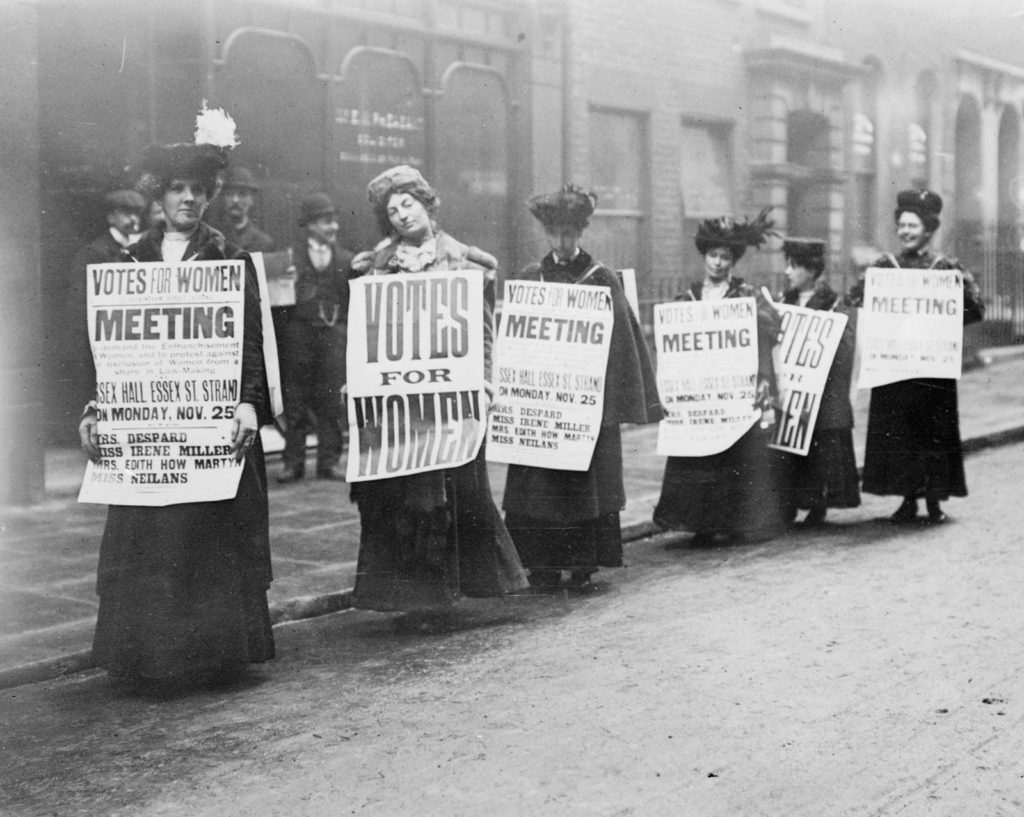
The suffragettes could have faced a ban as a terror group if current laws were in place at the start of the 20th century, the High Court has heard in a challenge against the ban on Palestine Action.
Palestine Action’s co-founder Huda Ammori is taking legal action against the Home Office over then-home secretary Yvette Cooper’s decision to proscribe the group under anti-terror laws.
The ban, which began on July 5, made membership of, or support for, the direct-action group a criminal offence punishable by up to 14 years in prison.
Ms Ammori was previously given the green light to bring her challenge, with her lawyers now arguing at the High Court in London that the decision to ban the group is unlawful.
The Home Office is defending the claim.
At the start of the hearing on Wednesday, Raza Husain KC, for the group’s co-founder, said the ban was unprecedented.
He said: “Palestine Action is the first direct-action civil disobedience organisation that does not advocate for violence ever to be proscribed as terrorist.”
Mr Husain said that Ms Ammori was “inspired by the long tradition of direct-action civil disobedience in this country” and by “people, as she says, taking action to prevent harm before it happens”, citing the suffragettes and Iraq war activists.
He later said: “The suffragettes, of course, had resorted to direct action, property damage and even attempted arson at Westminster Abbey.”
In written submissions, Mr Husain said that “direct action groups of all kinds” could be banned under the conditions used to proscribe Palestine Action.
He continued: “The suffragettes would have been liable to proscription if the Terrorism Act 2000 regime had been in force at the turn of the 20th century.”
The barrister later said that no Home Secretary had considered it necessary to proscribe a protest group as a terrorist organisation “throughout the long history of direct-action protest in the UK”, in order to police or mitigate their actions.
Mr Husain also told the court that there had been more than 2,000 arrests following Palestine Action’s proscription, which included “priests, teachers, pensioners, retired British Army officers” and an “81-year-old former magistrate”.
During the hearing, more than a dozen people assembled outside the Royal Courts of Justice holding placards which read “I oppose genocide, I support Palestine Action”.
Several demonstrators were carried away by police officers.
Sir James Eadie KC, for the Home Office, said the ban “strikes a fair balance between interference with the rights of the individuals affected and the interests of the community”.
In written submissions, he also said the Home Secretary did not have to consider what proportion of a group’s actions were “concerned in terrorism”.
He continued: “Parliament intended the proscription regime to be available even where only some of the activities of an organisation are ‘concerned in terrorism’.
“Similarly, there is no requirement that activities ‘concerned in terrorism’ happen at a certain frequency or tempo.”
Sir James also emphasised that the ban has not prevented people from protesting against Israel’s actions in Gaza or in support of Palestinians.
He later said: “Whilst it has at all times been open to supporters of Palestine Action to protest against its proscription without breaking the law, certain individuals have instead repeatedly sought to flout Palestine Action’s proscription.”
The hearing before Dame Victoria Sharp, Mr Justice Swift and Mrs Justice Steyn is due to conclude on December 2, with a decision expected in writing at a later date.
Support our Nation today
For the price of a cup of coffee a month you can help us create an independent, not-for-profit, national news service for the people of Wales, by the people of Wales.



True.
Just look at the historical propaganda against them. You could put it next to the extreme right news/social media items today and it would look the same.
At the time the Terrorism Act 2000 was being implemented it was widely suggested that the Suffragettes would have likely been proscribed by this piece of knee-jerk legislation. Basically whether a group was regarded as ‘terrorist’ or not was down to which side of the bed the Home Secretary had climbed that morning when it came to deciding whether a group was terrorist or not. Cymdeithas yr Iaith Gymraeg could have been deemed terrorist should a sitting Home Secretary have been inclined to view the organisation this way. I made a T Shirt for myself at the time with the… Read more »