


Drivers face fines of up to £150 for leaving engines idling
Nation.Cymru staff
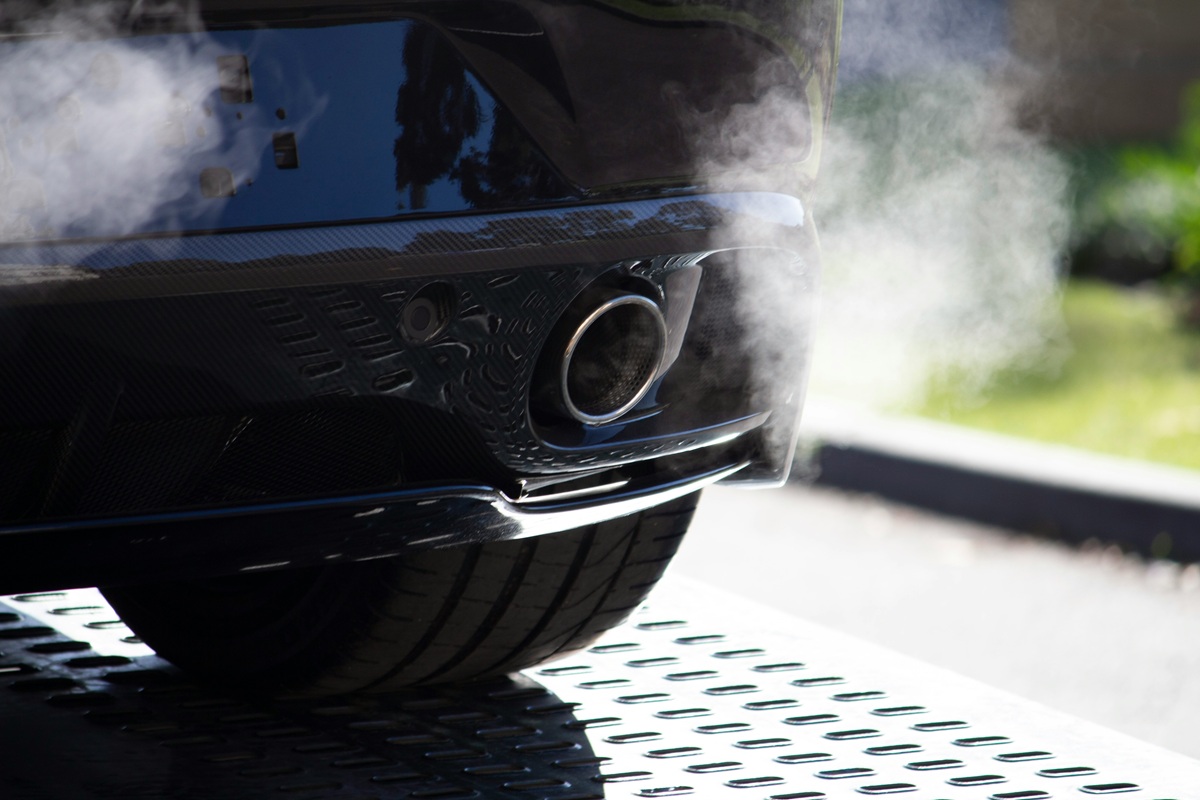
Drivers in Wales could be fined up to £150 for leaving their engines running while stationary under new rules coming into force this month.
Councils will be given greater powers to tackle unnecessary engine idling from September 30, with the existing £20 fixed penalty replaced by fines ranging from £75 to £150.
For the first time, local authorities will also be able to impose higher penalties in areas where vehicle emissions are of particular concern, such as outside schools.
Councils will be able to set a single penalty of between £75 and £150 for all idling offences in their area or vary the amount depending on where an offence takes place.
The Welsh Government said the increased penalties reflected “the seriousness of the impacts that unnecessary vehicle emissions can have on public health” and were intended to provide a greater deterrent.
It said stationary engine idling was an “unnecessary contributor to air pollution and noise”, as well as wasting fuel and increasing costs for drivers.
Idling can be a particular concern outside schools and healthcare settings, according to the government, where children, young people and older people could be disproportionately exposed to vehicle emissions.
Ministers have also highlighted the impact of noise from idling vehicles on people’s wellbeing.
However, while the new guidance is intended to help councils tackle both air pollution and noise associated with idling, fixed penalty notices can only be issued in relation to emissions.
The Welsh Government said its preferred approach was not based on enforcement alone, with councils encouraged to persuade motorists to switch off their engines through awareness campaigns and voluntary compliance.
It said: “Our approach prioritises supporting and encouraging drivers to switch off their engines through increased awareness, voluntary compliance and clear messaging about the benefits of doing so.
“Focusing on prevention through awareness-raising and behaviour-change strategies can help to reduce air pollution and noise.”
The government said its aim was to protect public health and reduce air pollution, particularly in places such as schools, care homes and healthcare settings.
Consultation
Draft guidance setting out how councils should use the strengthened powers has now been put out for consultation.
It provides advice on awareness campaigns and other initiatives aimed at discouraging drivers from leaving engines running, as well as guidance on when enforcement action should be taken.
The document also includes examples of anti-idling initiatives elsewhere in the UK and templates that can be used for campaigns involving schools.
The Welsh Government is asking whether the guidance will lead to a consistent approach across Wales and whether it strikes the right balance between awareness-raising, changing drivers’ behaviour and enforcement.
Transport emissions are responsible for a significant proportion of air pollution, including nitrogen oxides and particulate matter, which can have an adverse impact on health.
The measures form part of wider efforts to improve air quality under the Environment (Air Quality and Soundscapes) (Wales) Act 2024.
The consultation is open to drivers and non-drivers, councils, enforcement officers, health and education organisations, businesses and community groups.
Responses are being accepted until December 4.
Support our Nation today
For the price of a cup of coffee a month you can help us create an independent, not-for-profit, national news service for the people of Wales, by the people of Wales.
Get more trusted Welsh news
Choose Nation.Cymru as a preferred source in Google News to see more of our journalism.



All the while there is no limit on the vehicle weight and engine size that can be used on public roads, then this is no more than virtue signalling. Tackle the ‘tanks’ first !
Agreed but parents who idle their cars for up to an hr awaiting kids leaving school is a real issue
How many cars are stop start ready now?
Of course no issue with EV’s….
My car has engine shut-off when you apply the handbrake, a bit like the busses that shut-off the engine when in park mode. However, the engine management system works so it doesn’t do this when the alternator needs to generate sufficient current if the heater fan is on as well as head and fog lamps. This ‘new vehicle design’ came in years ago as part of EU regulations. This is not the problem. What I do observe however, is yummy mummys outside the primary school who keep their engine running deliberately for ages while waiting for Osian and Carys. For… Read more »