
Support for Welsh children with Tourette syndrome ‘isn’t good enough’ – Labour MS
Emily Price
Wales’ system for diagnosing and supporting young people with Tourette syndrome “isn’t good enough”, according to a former Welsh Government minister.
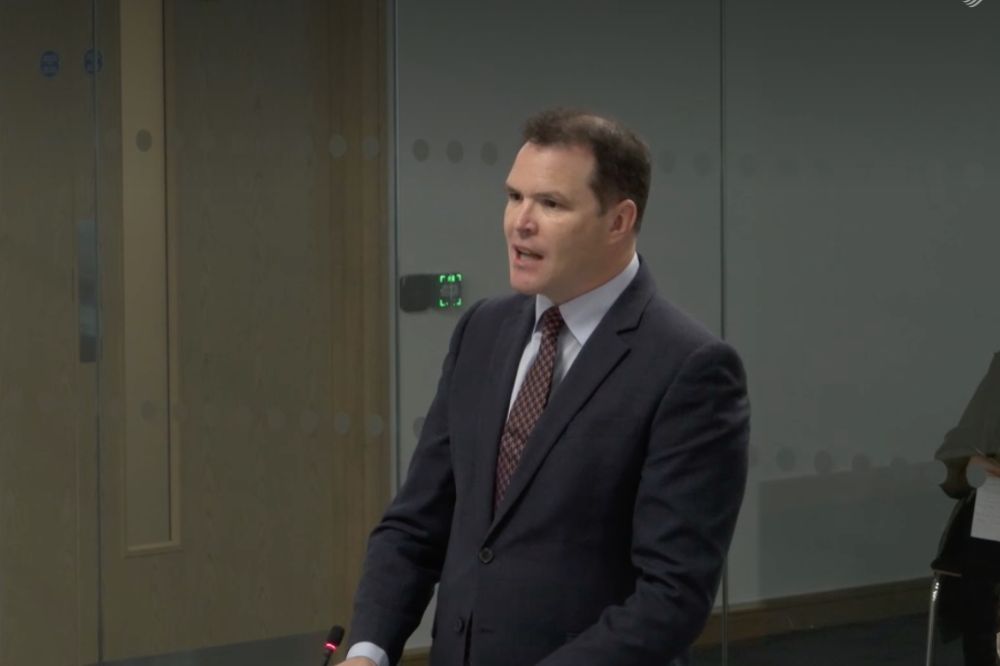
Llanelli MS Lee Waters quizzed Baroness Eluned Morgan during Questions to the First Minister on Tuesday (October 21) on what steps her government is taking to improve clinical guidance and service provision for the neurological disorder.
Tourette syndrome is characterised by involuntary, repetitive sounds and movements – such as blinking or shoulder shrugging – called tics.
The condition can be painful, with some sufferers chewing the inside of their mouths, swinging limbs out wildly or even punching themselves in the chest.
‘Fight’
Tourette syndrome is not considered a rare condition as it affects around 1 in 100 children.
Mr Waters told the Chamber that in Wales there is a “significant variation” in service provision affecting those with the condition because no Welsh health board provides a comprehensive diagnostic and treatment pathway for children and young people for tics.
He warned that family’s are being forced to “fight” in order to get a Tourette syndrome diagnosis for their children.
Speaking in the Senedd, Mr Waters said: “The new film I Swear, which is based on the true story of the Tourette syndrome campaigner John Davidson, as the title suggests, is about a man with involuntary tics that cause him to swear.
“But this isn’t true for some 90 per cent of people diagnosed with Tourette syndrome. It’s a hugely misunderstood condition.
“Most tics are uncomfortable, sometimes painful, often distressing and almost always exhausting. And about the same number of people have Tourette syndrome as have autism.
“But as the Welsh Government recently confirmed to me in a written answer, no health board currently provides a comprehensive diagnostic and treatment pathway for children and young people for tics, there is significant variation in service provision, and there is no NICE guidance, which is a factor contributing to inconsistencies in service design and delivery.”
Clogged up
He added: “To get a diagnosis, families in Wales have to fight—and it is a fight—for referral via Child and Adolescent Mental Health Services, which clogs up their waiting lists, and then for funding for the only specialist centre in the UK to see them, and that’s Great Ormond Street Hospital in London.
“But even if you get that far, First Minister, and you do get a diagnosis after a long wait, there is no support that follows locally in Wales. First Minister, this isn’t good enough. Would you please watch this funny and tender film and gather NHS leaders together to agree a way forward?”
Responding, the First Minister admitted the area needed “more attention”.
She said: “I wasn’t aware that the proportion of people with tics is anywhere near the same thing as autism so that is something I welcome – to have that information.
“It doesn’t help that there are no NICE guidelines – that doesn’t help because that means there is a lack of consistency.
“what we do have in Wales is this new neurology equality statement. so that takes us some way along the path.
“Because what we have also is the Welsh Government sitting on a Tourette syndrome steering group which is led by Nottingham university.
“There are examples of practice being better in some areas than others.
“So, in Hywel Dda, for example, they’re piloting psycho-education groups for parents and carers of children with tics and Tourette’s within CAMHS and child health.
“They’ve also piloted a Tourette’s pathway to improve access to children and young people with Tourette syndrome as part of the neurodivergence pathway.
“So, there are examples where some health boards are going further than others, but, I think, probably, this is an area that does need a bit more attention.”
Support our Nation today
For the price of a cup of coffee a month you can help us create an independent, not-for-profit, national news service for the people of Wales, by the people of Wales.


