


Take some green levies, not VAT, off bills to cut energy costs, Treasury urged
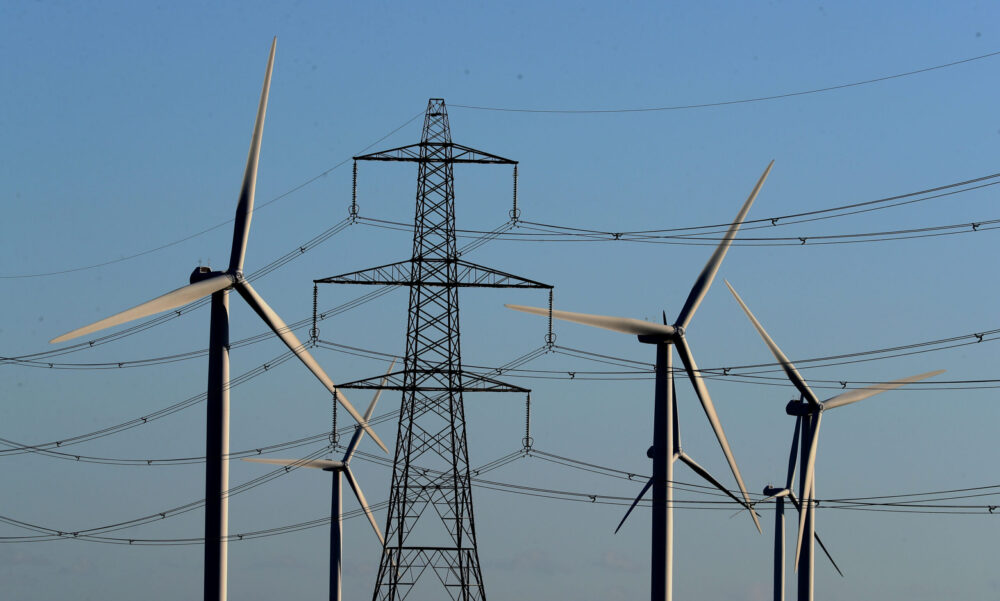
The UK Government should cut energy bills by removing renewables subsidies, reducing system costs and implementing efficiency standards for landlords, a think tank has urged.
Green Alliance says the measures could reduce the typical household fuel bill by £178 a year by 2030 – and much higher savings of up to £587 for families renting draughty, inefficient homes.
Reports suggest the Treasury is eyeing up removing VAT from energy and cutting efficiency programmes paid for through bills, as it seeks to bring down costs for households to tackle the cost-of-living crisis and counter criticism about the price-tag attached to net zero policies.
Green Alliance said the Government must act immediately to lower bills, with the average household paying £478 more in October 2025 than four years earlier – and nine million UK households in fuel poverty.
But the environmental organisation said cutting VAT and energy efficiency programmes would be the wrong way to do it.
Green Alliance senior policy adviser Stuart Dossett said: “We are still very much living in a cost-of-living crisis, which has been a fossil fuel-driven energy crisis.
“There are households up and down the country that are being battered by this, and many people, as we move into winter, will be unable to heat their homes to a comfortable temperature because bills are too high.”
While the Government has “rightly” recognised the need to bring down costs, Mr Dossett argued that bringing VAT rates down to zero could immediately cut bills, but would be a “forever more move”, as it would be politically difficult to reverse.
VAT cut
Using the £2.3 billion the VAT cut would cost the Treasury to take some green levies – focusing on subsidies for renewables dating back more than a decade – off bills and into government spending would still reduce consumer costs.
These would include the feed-in tariffs for household solar power and some of the “renewables obligation” subsidies for early clean electricity projects such as wind farms.
It would have advantages over zero-rating VAT as the schemes’ costs will decline until their conclusion in 2037, making it a better value move for the Government, Green Alliance argues.
And as they are levied on electricity bills, removing them would give greater savings to those who rely on direct electric heating – who tend to be lower income and in deep fuel poverty because of high running costs – while also incentivising take-up of clean electric-powered heat pumps.
Mr Dossett also warned the Government should not cut spending on energy efficiency measures, which pay for insulation and other improvements for households in fuel poverty via a levy on bills.
“If the Government is serious about lowering people’s bills for good, the way to do that is investing in insulating our homes, not raiding schemes that have helped families lower their energy costs as a way of making their sums add up in the Budget,” he said.
A new paper from Green Alliance launched ahead of the Budget also says that system costs could be reduced by 2030 with a series of “no regret” options, including lowering voltage levels on the low voltage network as modern appliances are using more power than they need.
Gas power plants
Green Alliance also advocates for putting gas power plants in a “strategic reserve”, removing them from the power market and enabling system operator Neso to determining when to generate electricity from gas, to prevent high gas prices pushing up the cost of power.
And measures to reduce the financing costs of new renewables could cut how much they cost to build and the price of the electricity they generate, while boosting their deployment and reducing the UK’s exposure to expensive fossil fuels.
The think tank also calls for the Government to implement a private rental sector minimum energy efficiency standard equivalent to Energy Performance Standard (EPC) C by 2030, to help people in rented accommodation who are often the most vulnerable to high bills.
Mr Dossett said the move would be “crucially important for lifting huge swathes of households that are currently experiencing fuel poverty out of it”.
Other measures including installing smart meters that could also help people reduce energy use and cut their bills.
Taken together, a typical household could save up to £178 a year by 2030, and a family in rented accommodation that is improved from an EPC E to a C rating and gets a smart meter, could save up to £587 in total, Green Alliance said.
A spokesperson for the Department for Energy Security and Net Zero (DESNZ) said the Government did not comment on speculation over tax changes.
But they said: “The Government’s clean energy mission is exactly how we will deliver cheaper power and bring down bills for good.
“Our mission is relentlessly focused on delivering lower bills for the British people, to tackle the affordability crisis that has been driven by our dependence on fossil fuel markets.”
The spokesperson said the Government would publish an update on plans to make private rental homes reach EPC C standard by 2030 in “due course”, and was exploring options for rebalancing gas and electricity prices.
Support our Nation today
For the price of a cup of coffee a month you can help us create an independent, not-for-profit, national news service for the people of Wales, by the people of Wales.



Better still, stop recouping the cost of bailing out the failed energy companies from energy bills.
If the government hadn’t done this, there would be some people on incredibly high bills. The scheme is like unemployment benefits – it’s for people, who bear no fault
The point is about how the bailout was funded, not if it was needed.
If renewable energy like wind and solar is now cheaper than fossil fuels as many claim, why is there a need for any “green levy” at all. The market would force the hands in the wholesale market. The reason, I suspect, is that the claims made are false. Instead of Labour governments taking cash of pensioners struggling to heat their homes it would be better to tax the rich, double council tax on any property above band E with an EPC lower than C. Also give Miliband a laptop with zoom so he need not fly to a jolly in… Read more »
…because so-called green energy is considerably more expensive than fossil fuel-generated energy. This is not a debatable point: it’s demonstrably true. However, not for the first time, some people and many politicians are operating under a delusion.
It’s very much debatable. https://journals.uclpress.co.uk/ucloe/plugins/isolinear/article/3584/version/1/ Currently Wind, Solar etc is very much in the growth phase, gas is very much mature. It looks like it’s expensive because expansion is happening apace. However, if we had invested in gas instead, the costs would have been much more. The simple fact is, we’re reducing energy costs overall and saving money on bills than compared to if we were just using gas. Unfortunately the price of energy is set by the Gas power stations in the UK in effect. Without those Gas power stations you and I would be seeing energy bills that… Read more »
The Green Levy is not quite that simple. You have the Renewables Obligation, Feed in Tariffs, Energy Company Obligation, Warm Home Discount, Assistance for Areas with high ED costs, Green gas.
The Renewables obligation is already set to begin phasing out from 2027. It was basically there there to offset costs of starting the renewable energy market, so the first few windfarms and solar projects, newer projects do not make use of this levy. Feed in Tariffs are closed to new applicants and will begin to phase out completely by 2039
Most of the costs are in infrastructure investment. Basically, the UK did virtually zero from 1960-2000, which lowered bills in those periods, but now we’re paying for that. It’s classic short terminism, costs being passed onto the next generation
It’s also worth remembering, electricity bills are effectively subsidising the high gas prices(!), the high electricity bills are not actually due to the high electricity cost – which is as perverse as it sounds!
Are we all still pretending that renewables are cheap and reliable? Just checking in.
Pretending? If I could get my energy solely from renewables I would. The fact of the matter is that it’s physically impossible unless I disconnect from the grid. There’s enough battery, solar and wind energy projects near me that in reality I’m probably not using energy that’s from a gas powered source.
Do you ever wonder how it is that your narrative aligns with a certain Russian leader sitting on a quarter of the world’s known gas reserves? Coincidence?
Yes, if we manage to cut gas from the system, bills will fall dramatically. The UK’s wholesale market uses a marginal pricing mechanism; the highest-cost generator required to meet demand sets the price for all generation in that half-hour block, which 99.9% of the time is gas. Because gas plants are often that marginal unit, they pull the price up even when many cheaper sources are operating