


Teams continue to tackle kerosene pollution on river
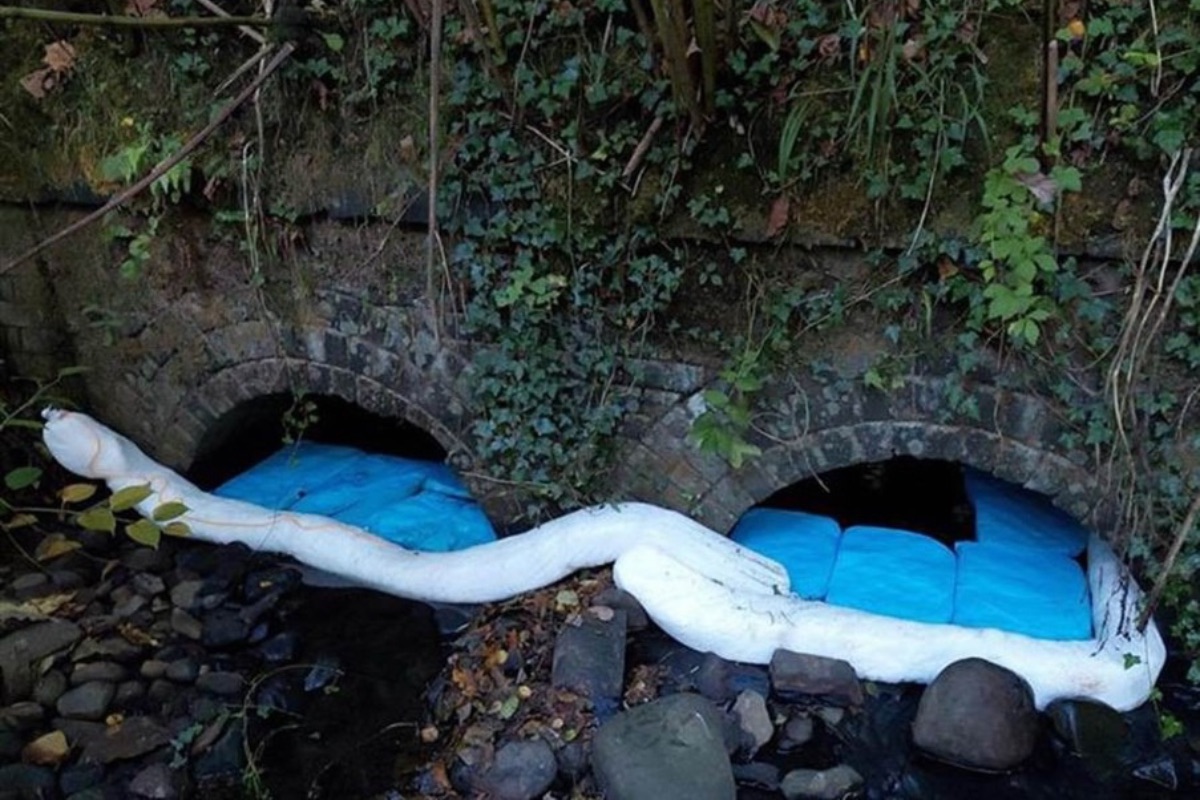
An investigation is continuing into a kerosene spill affecting a tributary of a south Wales river, with fish found dead and residents advised to avoid contact with the water.
Natural Resources Wales (NRW) and partner organisations are continuing their response to the kerosene pollution incident affecting a River Taff tributary.
The regulator said “swift action” taken since the pollution was first reported on Friday (16 October) has reduced the amount of fuel reaching the river.
As the incident involves complex underground drainage systems, work is ongoing to trace the exact source, including drone surveys and use of dyes to support the investigation and assess environmental impacts.
An NRW spokesperson said: “Our priority remains finding and stopping the source of the pollution as quickly as possible while doing everything possible to protect the river and reduce further environmental harm.
“We are grateful to colleagues and partners for responding rapidly when reports came in, as this has significantly reduced the amount of fuel reaching the river.
“As part of the investigation, we may use a harmless green tracing dye at points during the day to help track water flows and identify the route of the pollution.
“Members of the public who see the dye should be aware that it is a standard investigative technique and does not pose a risk to people or wildlife.”
NRW are also carrying out continuing wildlife assessments — with investigations considering any potential longer-term effects on the river’s wildlife and ecology — and samples collected from the river are being analysed.
While fish have been recovered, the incident had not, as of Sunday evening, been categorised as a major fish kill event.
Public Health Wales had issued the following advice: “Kerosene vapours may be mildly irritating to the respiratory system and as a liquid to skin. Our current assessment is that people who can smell kerosene may experience temporary irritation, particularly if they are exposed for prolonged periods.
“Public Health Wales advises residents to keep doors and windows closed while the smell is present and to open them again once the odour has passed. Also, as a precaution, to avoid contact with affected water. If in contact, remove affected clothing and wash any exposed skin with soap and water.
“Anyone who feels unwell or is concerned about their symptoms should seek medical advice by contacting NHS 111 Wales.
“Public Health Wales continues to work closely with Natural Resources Wales and other partners to assess the situation and monitor any potential impacts on public health.”
Support our Nation today
For the price of a cup of coffee a month you can help us create an independent, not-for-profit, national news service for the people of Wales, by the people of Wales.
Get more trusted Welsh news
Choose Nation.Cymru as a preferred source in Google News to see more of our journalism.


