


Terror watchdog calls for Australian-style under-16s social media ban
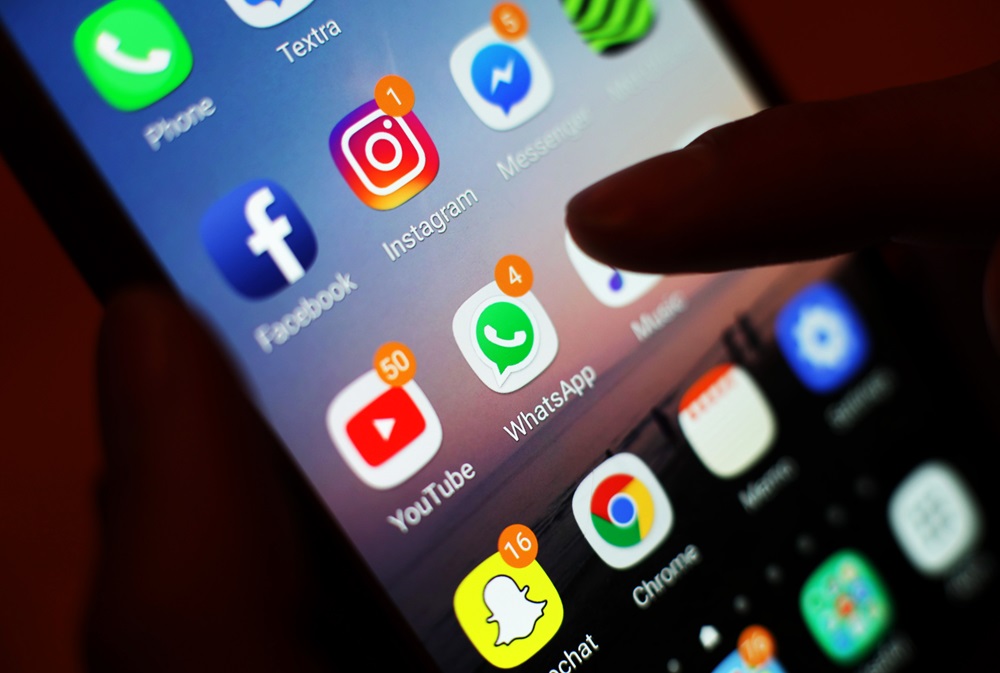
The UK should enforce an Australian-style social media ban to prevent teenagers from being radicalised online, the UK Government’s independent terrorism watchdog has suggested.
Jonathan Hall KC warned the internet had become a “portal to horrific acts of violence”, and that interacting with AI such as extremist chatbots could lead young misfits “down the dial of death”.
Writing in the Telegraph, he said Britain could “take back control” from the tech giants through new policy choices, pointing to the ban that came into effect in Australia last month as an example of “improving” legislation.
The measure is aimed at stopping children under 16 from using social mediasites like TikTok, X and Instagram, and could see companies fined up to 49.5 million Australian dollars (£25.6 million) for non-compliance.
Critics have voiced privacy concerns and questioned whether the ban can be effectively enforced, while the country’s government says it is needed to protect young people from online harms.
Mr Hall said the ban was “partial and circumventable” but “has echoes of other improving social legislation such as compulsory seat belts and the smoking ban in pubs.”
Online networks are encouraging some children to commit acts of violence against their peers, the senior lawyer, who is the UK’s independent reviewer of terror legislation, said.
He cited Southport killer Axel Rudakubana, who was 17 when he stabbed three young girls to death, and 19-year-old Nicholas Prosper, who murdered his mother and two siblings and was on his way to carry out a school shooting when he was stopped by police.
Both killers had looked at extreme and violent material online before carrying out the attacks, though neither case was deemed to fall strictly within the definition of terrorism.
“Terrorist chatbots or avatars of celebrated mass killers, always present and eager to please, are precisely the wrong companions for disturbed teenagers like Axel Rudakubana and Nicholas Prosper,” he said.
“It is entirely foreseeable that chatbots will stimulate some misfits even further down the dial of death.”
He added: “Taking children away from their devices is a whole lot easier than parents monitoring their content, laughably suggested by the tech companies as an alternative to regulation.”
Elsewhere, Mr Hall, who carried out a report on extremism within prisons, warned that certain cases risked giving human rights a “bad name” after a double murderer won compensation over his treatment in jail.
Fuad Awale was awarded £7,500 in damages after claiming decisions to house him in a close supervision centre, segregated from the wider prison population due to the risk he poses, had affected his mental health.
Taxpayers will also foot a £240,000 legal bill following the High Court ruling that Awale’s right to a “private life” under Article 8 of the European Convention on Human Rights (ECHR) had been breached.
Asked about the case, Mr Hall said he was not critical of the judicial decision but said the law was “very open-ended” and the case illustrated how its application in some instances can result in “surprising” outcomes.
“I think it’s probably damaging to have such uncertainty,” he told BBC Radio 4’s Today programme.
Mr Hall said prison authorities had “unsurprisingly” not wanted Awale, who was assessed as holding extremist beliefs, to associate behind bars with one of the Islamist killers of Fusilier Lee Rigby.
“It’s not a totally new case, but what it illustrates it that these very open-ended rights are being used in increasingly, I think I’m going to say surprising situations.
“And I’m not critical of the judge, because it’s often quite hard to work out when these rights apply or not, but it does result in, I think what most people would say are quite surprising outcomes.
“I think, just to finish the point, I also think that they risk giving human rights a bit of a bad name.”
Support our Nation today
For the price of a cup of coffee a month you can help us create an independent, not-for-profit, national news service for the people of Wales, by the people of Wales.



Got to do all we can to stop another 7/7, Manchester, Bondai etc. Our security services are amazing but they can’t be everywhere. It’s just a matter of time.
More broadly we need to be talking about the relative power of corporations and superwealthy individuals before we get to a point that they have more power than governments. If the OECD can get 140 countries to agree a global minimum corporation tax perhaps they can get agreement on global maximums for the market cap of corporations and individual net worth.
It’ll never happen. The big players won’t go for it. They are all in it together. Hear what you’re saying though. Matrix stuff.
They said that about a global minimum tax.