


Tory plan to reverse increase in Senedd Members ‘would save peanuts’
Martin Shipton
A leading financial think tank has ridiculed the Welsh Conservatives’ idea of scrapping the increase in the number of Senedd Members, saying it would save no more than a “rounding error” in the devolved budget.
The Institute for Fiscal Studies has also criticised the party for pledging tax cuts without specifying what reductions will be imposed to make up for lost revenue.
Responding to the Welsh Conservative manifesto, David Phillips, Head of Devolved and Local Government Finance at the Institute for Fiscal Studies, said: “The Welsh Conservatives’ flagship proposals are reductions to three of Wales’s devolved taxes: the Welsh rates of income tax, land transaction tax and business rates. But at a time when spending pressures in many areas are rising, a government that wants to cut taxes must also commit to spending less – and the manifesto lacks a credible plan for where these savings will come from.
“On income tax, the Welsh Conservatives propose a 1 percentage point reduction in the basic rate of income tax on non-savings, non-dividend income (UK government rates would still apply to income from savings and dividends). This would reduce income tax bills in Wales by up to £377 for basic-rate taxpayers, and by exactly £377 a year for higher- and additional-rate taxpayers.
“The biggest tax cut as a percentage of income (equivalent to 0.9% of net income) would be for taxpayers around the higher-rate threshold (£50,270). The gain for someone working full-time on the national living wage (earning £24,785 a year) would be smaller (£122 or 0.6% of net income, at most, and less if they are in receipt of universal credit). As the power to change thresholds or create new income tax bands is not devolved to Wales, this is the most progressive income tax cut option available to a Welsh Government.
“For land transaction tax, the Welsh Conservatives propose abolishing the tax for purchases of a main home but keeping it for purchases of second homes and rental properties. Just over half (54%) of main home purchases currently fall below the £225,000 threshold and attract no tax; this proposal would eliminate the tax for higher-value purchases as well. The value of the tax cut would increase with property value: £7,500 (or 2.1% of value) for a property bought for £350,000, rising to £33,000 (or 4.7% of value) for a property bought for £700,000 (and rising further for higher value properties).
“Land transaction tax is one of the most economically damaging taxes – discouraging property transactions, mutually beneficial moves and worker and business mobility. In general, reducing or abolishing it would reduce or remove these harms.
“Abolishing it for those buying a main home will reduce the cost of property purchases for both first time buyers and those moving home. This will push up demand from this group of homebuyers, leading to increases in property prices. This means winners will include not only those looking to buy a property worth more than £225,000 as their main home, but also existing owners of such properties, who will see the value of their property increase.
“These higher prices would increase the cost of buying property to use as a second home or to rent out. More properties would be used for owner-occupation and fewer made available to rent out; the reduced supply of rental properties could cause rents to increase, adversely affecting some renters. Ideally, if land transaction tax were to be reduced, it would be better to reduce it across the board, rather than for just some types of transaction.
“On business rates, the Welsh Conservatives propose abolishing business rates for more small businesses, as well as for pubs, post offices, small cinemas, and other cultural venues. They also want to pilot rates-free periods for new high street shops. These plans would benefit the targeted businesses. But by increasing demand for commercial space they would likely push up commercial rents more generally, offsetting some of the benefits for targeted businesses and increasing rental costs for non-targeted businesses (including existing high street shops, for example).
“These tax changes would not come cheap. Cutting the basic rate of income tax by 1 percentage point would cost £311 million as of 2026-27, while abolishing land transaction tax for main homes would cost around £175 million – with both figures growing over time as the size of the underlying tax bases increases. The combined cost of these two measures is equivalent to around 2% of Welsh Government day-to-day (resource) spending. To put this in context, this is equivalent to around 4% of spending on health and social care, and almost the entire resource budget for the ‘economy, energy and planning’ portfolio. Cuts to business rates would come on top of this.
“Tax cuts are possible in the coming Senedd term – but they would need to be matched with reductions in planned spending. Growth in Welsh Government funding is already set to slow. And with a range of growing spending pressures in the NHS, social care, and special educational needs provision, the Welsh budget will already be under some strain. Paying for tax cuts would therefore require cutbacks to at least some services – or risk broader deterioration in service quality. Delivering lower taxes will necessarily mean a smaller state overall.
Spend more
He continues: “The Welsh Conservative manifesto contains a list of areas where they would like to spend more: lower tuition fees (or fee refunds) for some university students; investment in major road schemes; and an extra £20 million a year in farm funding. These will all increase financial pressure. But the manifesto has very little to say about where the Conservative party might make the kind of savings needed to offset the cost of its tax cuts.
“There is an implicit reliance on unspecified ‘efficiency savings’ – on top of those already being assumed in budget planning. There are undoubtedly ways to improve public sector productivity, not least given the poor productivity performance since the Covid-19 pandemic.
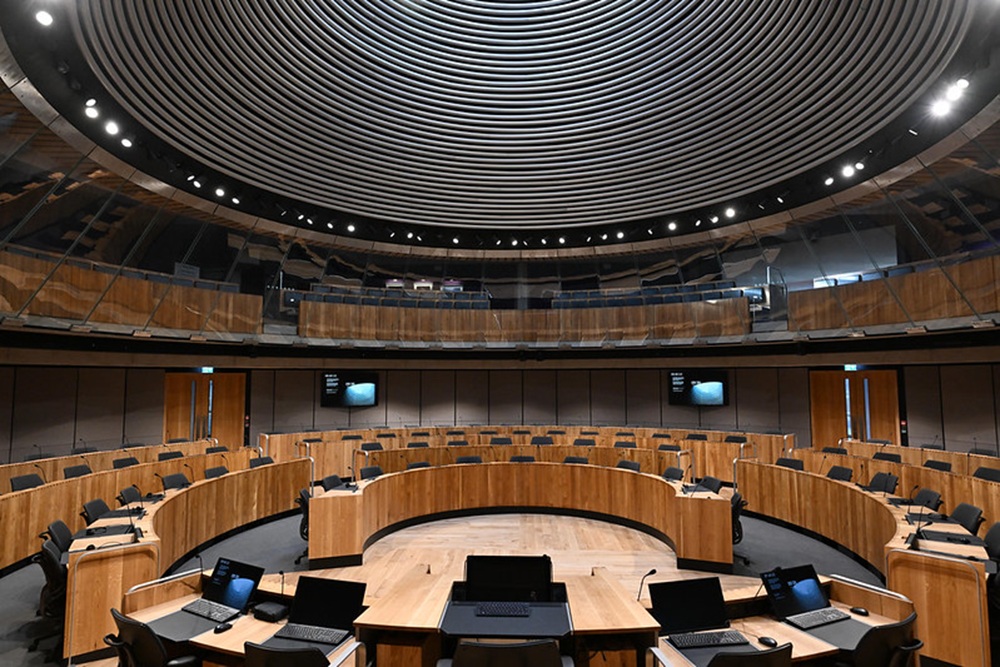
“But it is much easier to promise efficiency savings than to deliver them – and history is replete with governments failing to achieve productivity targets and having to top up budgets. Reliance on unspecified and uncertain efficiency savings to pay for tax cuts would therefore be risky. And a high-profile pledge to cut the number of Senedd members from 96 back to 60 would save just £13m a year in recurrent costs – a rounding error in the Welsh Government’s budget, and at most 3% of the cost of proposed tax cuts.
“It is therefore hard to see how the proposed combination of tax cuts and spending increases could be paid for without significant cut-backs in at least some Welsh Government services.”
Support our Nation today
For the price of a cup of coffee a month you can help us create an independent, not-for-profit, national news service for the people of Wales, by the people of Wales.



I would add -the plan to cut MS’s saves only 13m but in the totality of the Welsh budget, discretionary spending is now unbelievably low – WG only has around 150m, I believe. So close to 10% of this is spent on new MSs to ‘increase scrunity’ -which then evaporates when you remember that there’ll be a min 30 reform MS’s soon & and some pretty useless plaid, Tory and labour ones to boot
We can only speculate on the cuts needed to save someone buying Wales’ most expensive home from paying £891,750 on the £8m purchase but it could be to deny healthcare to the over 80s who aren’t party members.
Here in Cymru we need to save all the “peanuts” we can.
Yes we need to save our peanuts to pay the £40 billion pound cost of Westminster restoration.
I can only assume that Darren Millar went to the Liz Truss and Kwasi Kwarteng School of Economics!!
The Cons left out the bit where they want a cut back to zero people there and power handed back to Trump.
I mean Kemi BadEnoch.
Stupid economics. Obviously unbelievable. Just not worthy of ANY Senedd seats come May.
In 2010 the Conservatives promised to reduce the size of the commons to reduce the cost of governance. I’m 2012 they passed a law to reduce the number of MPs to 600. The boundary commission created three proposals for new constituencies. Conservative MPs rejected them all. In 2019 the Conservatives used secondary legislation to amend the 2012 law restoring the number of MPs to 650, they cited extra work due to Brexit for the need for more MPs. The 2011 referendum on full law making powers gave Cardiff bay extra work but the duplicitous Conservatives do not accept that as… Read more »