

Two in five train journeys on public services after Greater Anglia nationalised
The proportion of train journeys in Britain on services run by the public sector has hit 40%.
Analysis by the PA news agency found the figure has been reached with Greater Anglia becoming the third operator to be nationalised by the Labour Government.
The calculation was based on Office of Rail and Road data for journeys made in the year to the end of March.
South Western Railway was brought under public ownership in May, followed by c2c in July.
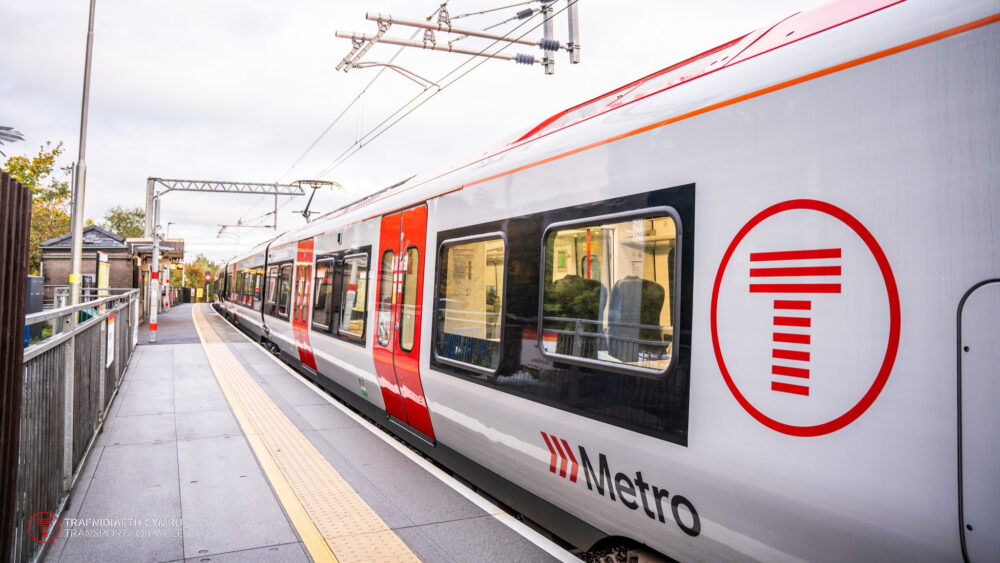
Northern, TransPennine Express, Southeastern and LNER were nationalised under the Conservative government because of performance failings, while ScotRail and Transport for Wales are owned by the Scottish and Welsh Governments respectively.
The action with LNER in June 2018 ended a period when all operators in Britain were privately-owned.
Overhaul
Labour is renationalising all operators as part of an overhaul of the railways.
By the end of next May – at which point Govia Thameslink Railway and West Midlands Trains will have been taken into public control – the proportion of journeys on nationalised trains will have risen to 61%.
Great Anglia is among the best performing operators in the country.
It had the joint lowest proportion of services cancelled in the three months to the end of June, matching Chiltern Railways at 1.5%.
The Department for Transport (DfT) said Greater Anglia will “continue to thrive” under public ownership and “be used as a benchmark for other operators”.
It connects Essex, Suffolk, Norfolk and Cambridgeshire with London Liverpool Street.
Ownership has switched from Transport UK, which will continue to operate East Midlands Railway and West Midlands Trains until they are nationalised, plus the Merseyrail concession and buses in London.
Reforming
Transport Secretary Heidi Alexander said: “Passengers commuting into Norwich or heading for a day out in Cambridge will be travelling on services that are owned by the public and run with their interests front of mind.
“We’re reforming a fragmented system and laying the foundations for a more reliable, efficient and accountable railway – one that puts passengers first and delivers the high standards they rightly expect.”
Greater Anglia managing director Martin Beable said moving into public ownership is “an exciting opportunity” to build on its success.
He continued: “By working more closely with the wider family of publicly-owned operators, we can share expertise, drive innovation and deliver even better journeys for our passengers.”
Rail, Maritime and Transport Union general secretary Eddie Dempsey said: “Greater Anglia coming back into public ownership is a big step forward towards creating Great British Railways and to unite track and train under a single publicly owned body, benefiting railway workers and passengers alike.
“What makes Greater Anglia stand out is that RMT has also secured agreement on a wave of insourcing.
“At London Liverpool Street, train presentation, gateline and customer service staff are now directly employed.
“This ends years of exploitation where outsourced workers, many from BME backgrounds, were left on worse pay and worse conditions.
“We still have work to do on outsourcing within the company but this is a fantastic start.”
Support our Nation today
For the price of a cup of coffee a month you can help us create an independent, not-for-profit, national news service for the people of Wales, by the people of Wales.



When GWR and Avanti are nationalised, TfW needs to get a share of their rolling stock to run alternative “flagship” services to London. Passengers need a choice of operators even when they’re all nationalised otherwise there won’t be any innovation or drive to improve customer service.
And although Lumo are set to introduce an alternative in south Wales, this will be a (very welcome) budget airline style service which is not going to lure visitors and investors without the sort of quality experience offered by TfW on Cardiff-Manchester services.
It’s always been the case that when a Train Operating Franchise comes to an end it falls back into the hands of the Department of Transport (or Welsh or Scottish government if applicable). The way the Labour Government is spinning this as ‘nationalisation’ is just smoke and mirrors. They just stuck ‘Great British’ into a press release.
The decision to not re-franchise them to Dutch, French, German or Italian governments to extract the profit to invest in their own railways is still nationalisation even if it flies in the face of your idea that nationalisation should cost trillions and cripple an economy.
It was the last Conservative government which put a stop to re-franchising. By far, the largest rail operator, Govia group which included Southern, Thameslink and Southeastern was bought back into government hands long before Starmer was elected.
It’s true it started under the Cons. GBR was Grant Shapps’s baby and I think everyone was a little surprised at their admission that privatisation had failed. But Johnson was always big on big government. It stopped again when the freemarket extremist took control, and even under Sunak they baulked at taking back Avanti when everyone knew it had to happen, just to avoid embarrassing Thatcher’s legacy. GTR which operates Thameslink, Great Northern, Southern, and Gatwick Express is still privately run. It’s GNER that collapsed and was taken back and never refranchised. That was also an embarrassment because performance massively… Read more »
Given that Scotland and Wales will retain their own rail operators, should Great British Railways be branded ‘English Railways’ instead?. The recurring conflation of ‘British’ and ‘English’ similar to the use of the UK national anthem at England football and rugby matches highlights a branding and governance challenge. A major flaw in the UK Government’s ‘muscular unionism’ strategy. I suspect that their is a long-term agenda here. Either they will devolve rail contracting to English regional authorities (e.g., metro mayors) within a national framework, or attempt to merge TfW and ScotRail into Great British Railways.