

Two key areas of the Cardiff Capital Region deserve special protection, says conservation body
Martin Shipton
A leading conservation group is demanding that two key areas in the Cardiff Capital Region be protected from development.
Cardiff Civic Society says the Gwent Levels and the Taff River Corridor are special landscapes that deserve enhanced protection.
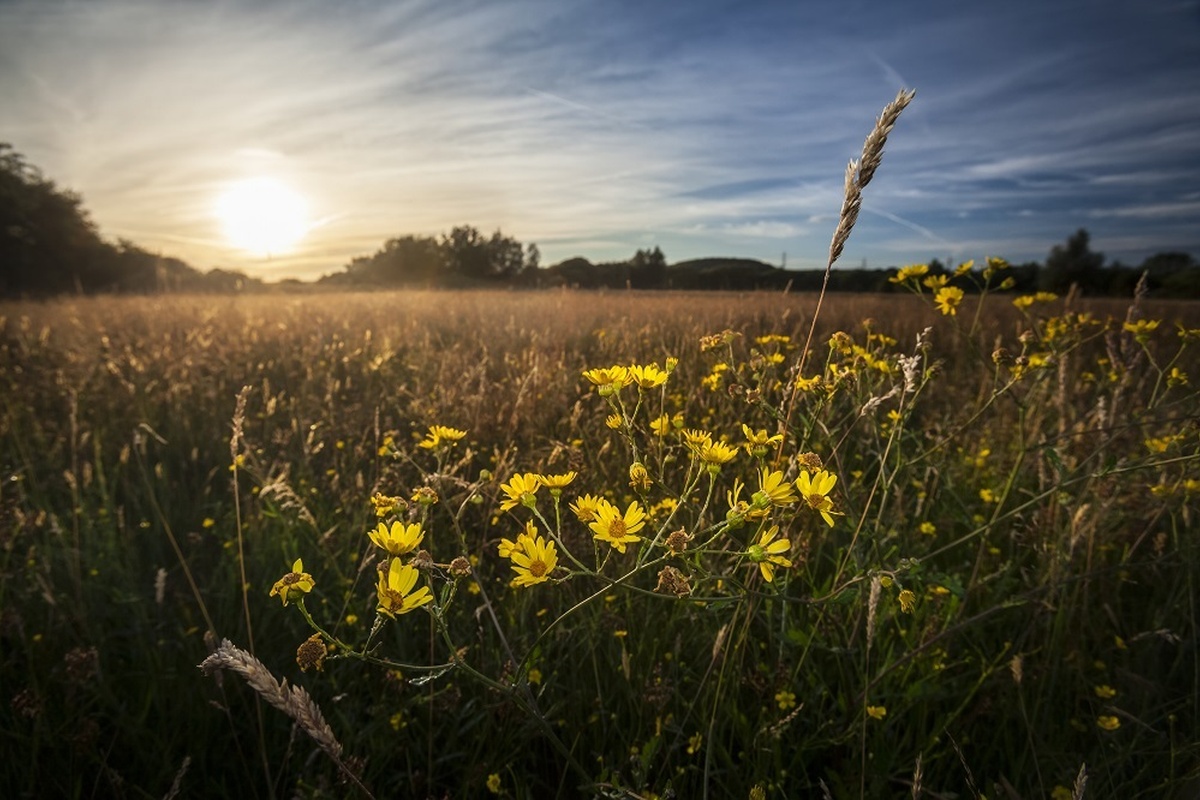
The Gwent Levels is an internationally important wetland zone, providing a mosaic of habitats that nurture a rich diversity of wildlife throughout the year. It is one of the largest surviving areas of ancient grazing marsh and reen (drainage ditch) systems in Britain and the largest of its kind in Wales.
Thanks to several nationally significant archaeological finds, the Gwent Levels is designated a Landscape of Outstanding Historic Interest. Its biodiversity significance is recognised both nationally and internationally. The area is also home to the water vole, one of the UK’s fastest-declining mammals.
The proposed M4 relief road was rejected by former First Minister Mark Drakeford partly on environmental grounds. The road would have cut through the Gwent Levels.
The Taff River Corridor is a vital natural tract of land running approximately 64km from the Bannau Brycheiniog National Park through Merthyr Tydfil to Cardiff and, ultimately, Cardiff Bay. It is a vital wildlife corridor designated as a Site of Importance for Nature Conservation (SINC).
The river and its riparian area act as a crucial green habitat. After decades of heavy industrial pollution that left parts of the river “running black”, clean-up efforts and environmental regulations have brought back Atlantic salmon, sea trout, otters, kingfishers and herons. Fish passes, such as those near Blackweir and Merthyr Tydfil, allow migratory species to travel upstream.
The newly formed Taff Catchment Partnership, led by Natural Resources Wales, coordinates efforts from Bannau Brycheiniog to Cardiff Bay to manage flood risks, improve water quality and protect local habitats.
Nerys Lloyd-Pierce, Chair of Cardiff Civic Society, said: “The importance of these two irreplaceable areas cannot be overestimated. Nature is not just a ‘nice to have’ but is vital for the survival of the human race, and our health and wellbeing.
“The Gwent Levels have been wrongfully characterised as an area ripe for built development for too long. Their worth is recognised internationally, but often overlooked locally. Wetlands are too important to be lost. They cover only about 3% to 9% of the planet’s land surface yet store roughly 30% to 35% of all land-based carbon.
Kerosene leak
“The recent appalling kerosene leak from the GE Aerospace plant in Nantgarw illustrates beyond any shadow of doubt why development of this kind is wholly unsuited to a river corridor. The Taff River Corridor is hugely important for wildlife and for flood mitigation as our winters are becoming catastrophically wetter. Both these vital areas must be defended at all costs.
“Cardiff Civic Society has taken the step of formally putting these two zones forward to be earmarked for protection by the Strategic Development Plan (SDP) because the current Welsh Government system of nature protection via designations such as SSSIs is not up to the job. Hendre Lakes SSSI is a case in point, where development is proposed despite this area’s supposed protected status.”
The Cardiff Capital Region (CCR) is a city region in south-east Wales that covers 1,085 square miles (2,809 square kilometres) and has a population of around 1.5 million people, nearly half the population of Wales. CCR brings together 10 local authorities.
The SDP is a 25-year regional spatial blueprint used in Wales to manage cross-boundary issues such as housing, employment, transport and the environment. In Cardiff and south-east Wales, the plan is led by the Cardiff Capital Region Corporate Joint Committee.
Key focus areas of the SDP are:
- Housing and employment growth: setting the regional scale and distribution of future homes and jobs.
- Strategic development sites: identifying major mixed-use and regional growth hubs.
- Transport infrastructure: coordinating road networks, public transport and regional travel routes.
- Environmental protection.
Support our Nation today
For the price of a cup of coffee a month you can help us create an independent, not-for-profit, national news service for the people of Wales, by the people of Wales.
Get more trusted Welsh news
Choose Nation.Cymru as a preferred source in Google News to see more of our journalism.


