


Two species of disease-carrying mosquitoes found in the UK
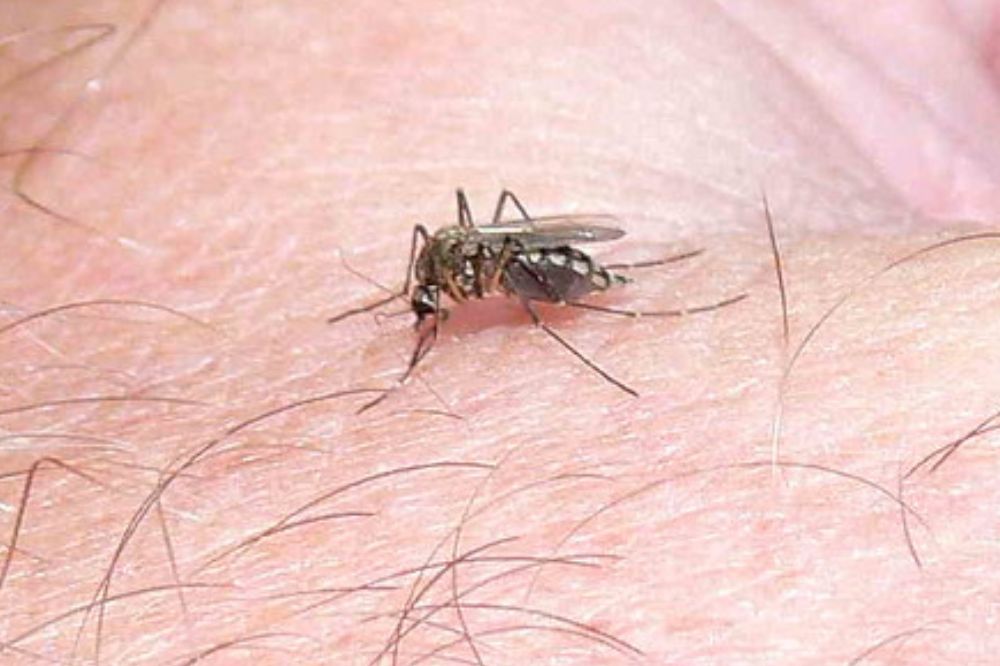
Two species of disease-carrying mosquitoes have been found in the UK, according to new research.
Aedes aegypti, also known as the Egyptian mosquito, and Aedes albopictus, also known as the (Asian) tiger or forest mosquito, are carriers of diseases including yellow fever, dengue, chikungunya, Zika and dirofilariasis.
They are frequently found in Africa and sub-tropical places such as south-east Asia, but have also appeared in several European countries.
Experts believe that their spread will become more common in part due to climate change.
Mosquito surveillance
A new report into mosquito surveillance from the UK Health Security Agency, covering May 2020 to November 2024, found that both Aedes albopictus and Aedes aegypti are not currently established in the UK.
However, analysis of 1,070 traps at 117 places across England, Wales and Northern Ireland, found evidence of them being in the country.
The traps were put at seaports, airports, and highway transport hubs and examined every two weeks.
In 2020, 2021 and 2022, no Aedes albopictus specimens were detected, though four eggs were found at a service station along the M20 motorway in Kent in August 2024.
And in September 2023, Aedes aegypti eggs were detected in a freight storage facility near Heathrow Airport – they are currently thought to be an isolated case.
Timely action
The UKHSA also undertakes broader mosquito surveillance efforts, including using adult mosquito traps in 307 places across England and Wales.
The new report, published in PLOS Global Public Health, said the UK faces the risk of invasive mosquito populations becoming established unless there is timely action.
It added: “Combined, our findings suggest that future incursions of invasive mosquitoes in the UK are likely and undertaking enhanced surveillance is key to identifying and reducing the likelihood of their establishment.”
If Aedes albopictus and similar species did become established in the UK, it is thought isolated cases of vector-borne diseases, similar to those seen in continental Europe, could happen.
However, current modelling suggests that even with warmer temperatures, it is unlikely the UK will see mosquito populations big enough to sustain large outbreaks of disease.
Climate change
Alexander Vaux, principal medical entomologist at the UKHSA, said: “The risk from mosquito-borne disease in the UK is increasing due to global travel and trade, changing land use and climate change.
“In recent years there has been an increase in locally acquired cases of diseases like Chikungunya virus and dengue fever in Western Europe, driven by the establishment of Aedes albopictus throughout the Mediterranean including much of France.
“UKHSA surveillance systems have detected these mosquito species in the UK on a number of occasions since 2016. To date there is no evidence of established populations in the UK.”
Dr Oliver Brady, associate professor at the London School of Hygiene and Tropical Medicine, said: “Our risk models have long suggested that climate change and increasing trade and travel will bring these mosquitoes to the UK, but this is the first direct evidence that this threat is real.
“These early detections are actually good news. They show that if we invest in surveillance we can detect and stop these mosquitoes spreading in a way that hasn’t been possible elsewhere in Europe.”
Support our Nation today
For the price of a cup of coffee a month you can help us create an independent, not-for-profit, national news service for the people of Wales, by the people of Wales.



Truly scary and a real sign of how badly Britain is suffering from the effects of global warning. Which will only get worse with Badenoch and Faraaage in power.