


UK could sign up to Brussels rules without Commons votes under planned new law
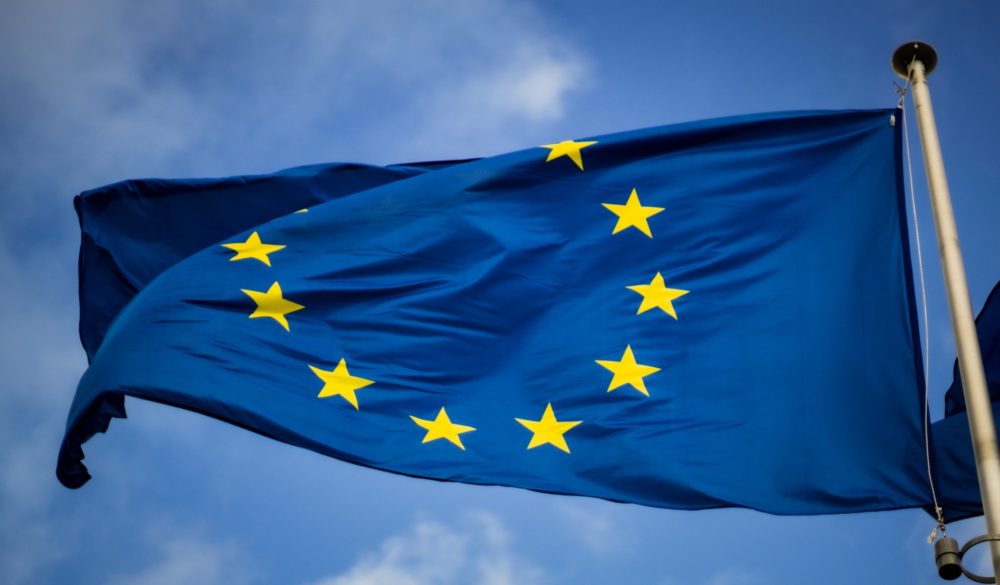
Sir Keir Starmer’s Government will follow European Union rules without necessarily giving MPs a vote on each piece of red tape under plans which will be unveiled in the King’s Speech.
As part of the Prime Minister’s reset with Brussels, the UK Government will seek to pass a new law which would allow single market rules to be adopted through secondary legislation.
That is likely to mean new rules being rubber stamped by MPs as Parliament can either approve or reject secondary legislation but cannot amend it.
The UK-EU reset legislation enabling the use of the so-called Henry VIII powers is expected to be part of the King’s Speech package set out on May 13 and will be subject to the full parliamentary scrutiny process as usual.
But critics said the plan to allow the use of secondary legislation for dynamic alignment with Brussels – changing the UK’s rules to mirror those set in Brussels to make trade easier – would sideline Westminster.
Speaking to BBC Radio 5 Live, the Prime Minister said the changes will only come into force if Parliament passes the legislation, adding that a stronger relationship with Europe is in the “UK’s best interest”.
He said: “We’re in a world where there’s massive conflict, great uncertainty, and I strongly believe that the UK’s best interests are in a stronger, closer relationship with Europe, whether that’s defence and security… energy, inevitably, and also, our economy.”
Sir Keir added that the legislation will make trade easier, reducing “burdens” on businesses and lowering prices.
“A stronger, closer relationship with Europe is in the UK’s best interest, particularly in a world that is as volatile as it is at the moment, and I know that worries a lot of people,” he said.
A Government spokesman said: “The Bill will go through Parliament in the normal way.
“Any new treaties or deals with the EU will also face parliamentary scrutiny, and Parliament will have a role in approving new EU laws required under those deals via secondary legislation.
“This will allow us to deliver a food and drink trade deal worth £5.1 billion a year, backing British jobs and slashing costly red tape for our farmers, producers and businesses.”
The Government has repeatedly made clear the UK will not rejoin the single market but Chancellor Rachel Reeves has set out that areas where the UK diverts from the Brussels rules should be the “exception, not the norm”.
The plans under the new “UK-EU reset Bill”, as it has been unofficially called within Whitehall, would give the Government the mechanism to adopt EU rules in areas where it has signed deals with Brussels.
A Whitehall source said: “We are clear Parliament will have a role for new deals and on new EU laws applying under those deals.”
There are circumstances where votes can be held on approving pieces of secondary legislation, but they do not have the same level of scrutiny as a new law.
But any blocking votes would be likely to cause issues with the EU and could spark retaliatory action by Brussels.
Britain and the EU are aiming to finalise negotiations on a youth mobility scheme in time for a joint summit this summer.
They also want to secure a common sanitary and phytosanitary area – which would apply to the movement of plants and food – and agree on a way to link their emissions trading systems by that time.
Shadow business secretary Andrew Griffith said: “Parliament reduced to a spectator while Brussels sets the terms is exactly what the country rejected.
“Labour’s dire management of the economy has driven Starmer scurrying to Brussels to distract from his own failings.
“Labour are still fighting the referendum because they fundamentally cannot accept the democratic decision the British people made.
“We should be seizing the opportunities of Brexit, however, Starmer’s weakness on the world stage has made this near-impossible.”
Reform UK’s deputy leader Richard Tice said the plan was “outrageous” and promised his party would “reverse such a betrayal” if it won power.
Support our Nation today
For the price of a cup of coffee a month you can help us create an independent, not-for-profit, national news service for the people of Wales, by the people of Wales.
Get more trusted Welsh news
Choose Nation.Cymru as a preferred source in Google News to see more of our journalism.



Ultimately, the UK will move closer to the EU – it has to. Brexit has been a major disaster and has cost us all dearly.
This is a backdoor arrangement which flies in the face of the 2016 vote and therefore has no democratic mandate. Wales voted to leave the EU and suffer the consequences. It should be allowed to do so, or there should be another full referendum.
Brexit was about leaving the EU, not banning alignment where the UK Parliament thinks it’s sensible. Labelling all cooperation a “backdoor rerun” pushes the 2016 mandate much further than it ever went.
Wales didn’t vote to leave. Some people here voted to leave along with other in the UK. It was national vote. The regional aspect was the gov turning it into a Eurovision contest.
That Cameron agreed to a referendum was exceptionally naive. Thinking he could win the Remain vote and see off the far right. The extreme complexity of our entwined economies was no candidate for a simple yes/no vote.
There should be another referendum on what type of Brexit people wanted. The question was only about the political union. It didn’t say anything about ending security and economic cooperation.
A wise move, can you imagine the hours spent in the Commons debating each Regulation? So the Brexiteers get in a funk, so what!
Bring it.
The Badage/Faranoch conjoined unit are up in arms over this so it is clearly the right thing to do.
Hopefully to both be shown the door in Wales.