


UK food imports at risk as farmers face El Nino heat stress, experts find
Rebecca Speare-Cole, Press Association Sustainability Reporter
UK food imports could be coming under further pressure from climate impacts as farmers producing supermarket staples in poorer nations are increasingly unable to work because of heat stress, experts have found.
Agricultural workers who produce supermarket staples, such as rice, coffee, tea and chocolate, face increasingly difficult working conditions as climate change drives record-breaking global temperatures, according to an analysis by the Energy and Climate Intelligence Unit (ECIU).
This could be intensified further in the coming months after UN scientists found that a warming “El Nino” weather event this summer is now 80% likely and could lead to 2027 becoming the hottest year on record, the group of experts said.
In a report released on Monday, ECIU researchers said developing countries – which are often the most exposed and least resilient to global weather extremes – were the source of 13% of the UK’s food imports, worth £8.9 billion in 2025.
The 15 top suppliers from that group alone made up 11% of UK food imports, worth £7.4 billion.
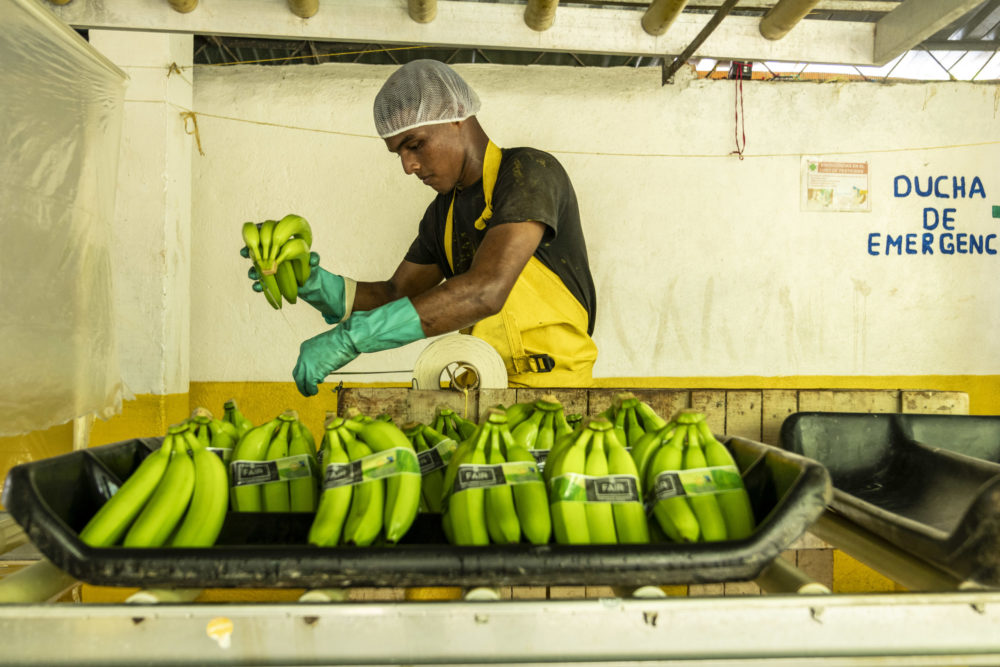
This includes rice, for which India is the UK’s biggest supplier, as well as fruits like grapes, lemons, oranges and nectarines from South Africa, Peru and Egypt, coffee from Vietnam and Brazil, cocoa beans from Cote d’Ivoire and Ghana, Colombian and Ecuadorian bananas, and Kenyan tea.
But the ECIU found that farmers in these 15 countries lost 216 billion potential work hours in 2024 because of heat stress, equating to nearly 49 working days per worker every year.
These losses could also be speeding up, the research suggests, with lost work rising by roughly four to five hours per worker per year.
Citing research in the Lancet Countdown report, the ECIU said 640 billion potential work hours were lost as a result of heat exposure in 2024.
This was found to be higher than the previous highest year and more than 98% higher than the decade from 1990 to 1999.
Agricultural workers are by far the group most exposed, the figures show, with nearly two-thirds (63.5%) of all potential work hours lost – or three quarters (75.5%) in poorer countries.
Shamika Mone, a rice farmer in India and president of the Intercontinental Network of Organic Farmers, said: “Extreme heat makes the already difficult job of farming even harder.
“There are real fears that hotter, drier weather caused by a super El Nino could damage harvests.
“To safeguard our food system, governments need to cut greenhouse gas emissions – including from fertiliser production – and get more climate finance direct to smallholders and their organisations so they can adapt.
“Adopting nature-friendly farming approaches – including planting a greater diversity of crops and shade trees – can help to bring down the temperature on farms and protect farmers and harvests.”
It comes after a recent report by UK intelligence officials found that biodiversity loss and ecosystem collapse are a realistic possibility that could trigger a global competition for food, mass migration to the UK and nuclear war in Asia.
The Institute and Faculty of Actuaries (IFOA) – representing the people who determine risk for the financial sector – also said in April that the world’s food system is fracturing as a result of worsening climate change impacts and the loss of biodiversity.
Gareth Redmond-King, ECIU head of international programme, said: “The threat from climate change is growing, hitting the food crops themselves, but also the workers we rely on to produce them.
“With a powerful El Nino about to land on top of climate change, unless farmers here in the UK, and in the countries that grow our food are supported to shift towards more resilient, sustainable forms of agriculture, everyone’s food security is at risk.”
Previous research from the ECIU found that climate impacts have added around £360 to the average UK household food bill every year and are already affecting UK farmers who have seen three of the worst harvests on record in the past five years.
Food price inflation
Chris Jaccarini, ECIU food and farming analyst at the Energy and Climate Intelligence Unit, said: “Foods we import to the UK that are hit by climate change are disproportionately driving food price inflation, and we know that many of those higher prices are unlikely to fall fast or soon.
“Short term shocks like the closure of the Strait of Hormuz add new layers of threat to our food imports, and to food security in producer nations, given the shift towards more sustainable farming is ongoing and reliance on gas-based synthetic fertilisers is still very high.”
Alongside cutting planet-heating emissions to net zero, the ECIU said climate finance from wealthy nations to those with low climate readiness is key to supporting farmers to adapt to global warming while ensuring British retailers keep supplies and prices stable for UK consumers.
The group also warned against further withdrawal from overseas aid and climate finance, arguing it would leave some of the world’s most vulnerable farmers even further exposed to climate change, with the potential to undermine global food production and UK food security.
New technology
A UK Government spokesperson said: “We will always protect the food security of this country.
“We’ve committed to maintaining domestic food production; we’re investing billions in the development of new technology to increase yields, develop climate resilient crops and help farmers produce more food; and we’re increasing our water supply by building new reservoirs for the first time in 30 years.
“These are the steps of a government that is committed to safeguarding food production for the future.”
Support our Nation today
For the price of a cup of coffee a month you can help us create an independent, not-for-profit, national news service for the people of Wales, by the people of Wales.
Get more trusted Welsh news
Choose Nation.Cymru as a preferred source in Google News to see more of our journalism.



