


UK Government research finds overhead pylons remain cheapest way to upgrade electricity networks
Rebecca Speare-Cole, Press Association Sustainability Reporter
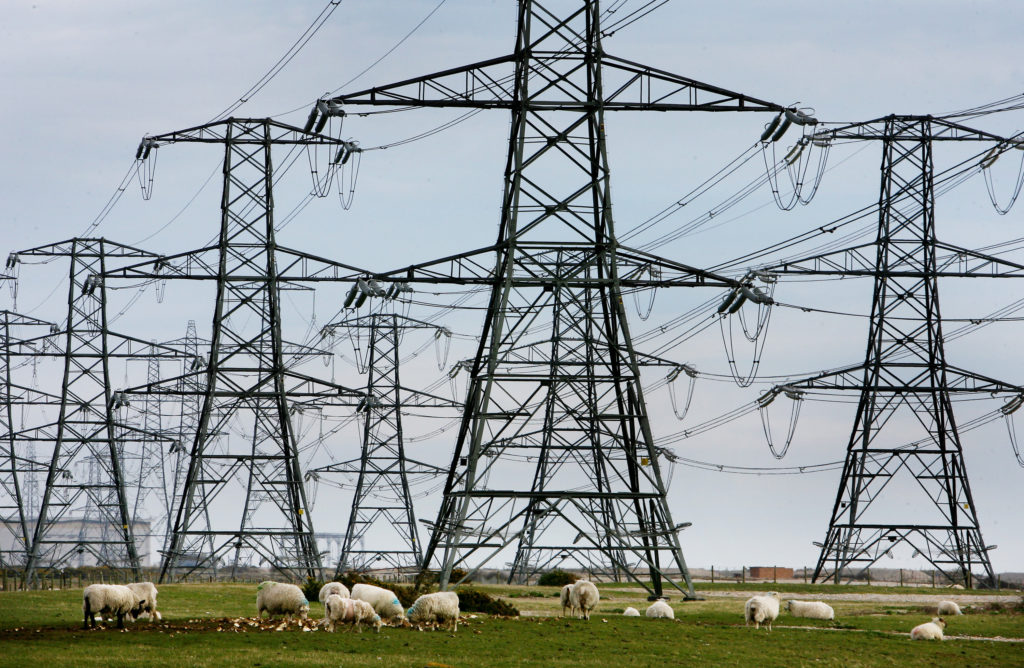
Overhead lines remain the cheapest option for upgrading and expanding Britain’s energy grid compared with underground cables, UK Government-commissioned research has found.
Two reports, independently carried out by engineering firm Ramboll and financial services giant Deloitte, explored different technologies that may be deployed to transport electricity across Britain in the next decade.
It comes as Westminster says the UK needs to roll out thousands of miles of new cables to meet growing demand and upgrade ageing lines, with many dating back to the 1960s when much of Britain’s grid was built.
New infrastructure is also required to meet the Government’s goal of removing almost all fossil fuels from the electricity grid by 2030 to boost UK energy security, tackle climate change and cut bills.
But public opposition to new overhead lines and pylons is strong, especially among communities that could host them, and many have been campaigning for the transmission network to be buried underground or run offshore.
The new reports, released on Friday, indicate that overhead lines remain the cheapest option after researchers explored the costs of different “undergrounding” methods as well as the impact of other countries’ policies.
They come as the latest research commissioned by ministers to build an evidence base on the most cost-effective and efficient methods to upgrade the network.
Ministers also said on Friday they will soon provide an update on plans for those living near new pylons in Britain to receive up to £2,500 off their bills over 10 years.
Energy minister Michael Shanks said: “We urgently need to rewire Britain’s grid after decades of underinvestment to power-up homes and businesses and help bring down bills for good.
“This research is more proof that the fastest, most cost-effective and often most environmentally friendly way to do that is with overhead pylons.
“We are determined communities will be at the heart of this generational investment – making sure those who host new pylons receive tangible benefits – including money off their bills – and that we are creating manufacturing and supply chain jobs at the same time”.
Researchers from Ramboll examined the cost of undergrounding methods such as cable ploughing, where a narrow slit is created and cables are fed into the ground in a single, continuous operation.
They found that this is cheaper than traditional “cut and cover” techniques, which involve digging a bigger trench and then laying the cable before backfilling the trench to return the surface to its original state.
Cable ploughing was found to be cheaper than “cut and cover” methods but the average build costs are still between 3.5 and five times more expensive than overhead lines, depending on how much electricity the lines can manage, according to the report.
Separately, Deloitte researchers looked into policies that other countries have implemented in the rollout of new grid infrastructure.
They found that while undergrounding can reduce opposition in some circumstances, it also added significant costs and time to key projects.
The report cited how the German government issued a mandate in 20215 to prioritise underground cabling for some transmission lines, but its regulator later estimated that switching back to overhead lines for new projects between now and 2045 could save up to 35 billion euros (£30 billion).
The policy also faced backlash from farmers and rural landowners, who said undergrounding has harmed agricultural soil, the report said.
These findings build on a previous Government-commissioned report, led by the Institute of Engineering and Technology and published last year, which concluded that undergrounding transmission cables has lifetime costs of four to five times those of overhead lines.
Support our Nation today
For the price of a cup of coffee a month you can help us create an independent, not-for-profit, national news service for the people of Wales, by the people of Wales.
Get more trusted Welsh news
Choose Nation.Cymru as a preferred source in Google News to see more of our journalism.



So build them. The new type out down Somerset look good, high capacity as well.
I agree . Why reserve these ugly metal pylons for Wales?
I bet they will not have any pylons around Stonehenge, Blenheim Palace etc. etc.
Need a compromise and agree to put 10% underground then consult with communities which sections will benefit. Can’t simply say it’s too expensive to put anything underground.
Put cables underground.
Less likely to get damaged by the weather.
And you can’t see them!