


UK manufacturing growth accelerates as exports rise for first time in four years
Growth in the UK’s manufacturing sector accelerated last month with demand from the US and China helping lift export sales for the first time in four years, new survey data shows.
The S&P Global UK manufacturing PMI survey, watched closely by economists, showed a reading of 51.8 in January, up from 50.6 in December.
This was the highest score since August 2024 and above earlier estimates for the sector.
Any reading above 50 indicates that activity is growing while any score below means it is contracting.
Manufacturing output rose for the fourth month in a row, with last month’s acceleration linked to improved export sales, a generally stable market within the UK and a boost from customers choosing to restock.
The level of new export orders rose for the first time in four years, lifting the market out of a slump amid higher sales to Europe, the US, China and several emerging markets.
However, the PMI survey indicated that the growth in production was driven by bigger manufacturers, while output among small and medium businesses (SMEs) declined for the third month in a row.
Rob Dobson, director at S&P Global Market Intelligence, said: “UK manufacturing made a solid start to 2026, showing encouraging resilience in the face of rising geopolitical tensions.
“There was also a positive bounceback in business confidence, which rose to its highest level since before the 2024 autumn budget, as manufacturers focused on opportunities lying ahead despite persistent concerns about the geopolitical environment, Government policy and tariff tensions.”
Mr Dobson also pointed out that even though staffing levels were reduced for the 15th month in a row in January, the rate of job cutting slowed to its weakest since the cycle began, offering “encouraging news” for the sector.
He added: “Cost pressures are creeping higher though, as the pass through of the increased Minimum Wage and employer national insurance contributions continue to work through the supply chain alongside the rising costs for commodities such as metals.”
Fhaheen Khan, senior economist at industry group Make UK, said: “Manufacturing activity is finally moving at a pace deemed worthy of its optimism, taking advantage of the much needed stability in the policy environment since the budget.
“Until recently, many businesses had paused investment due to cost uncertainty, though it is unfortunate that cost cutting measures are favouring job losses which will lead to a new headache for the Government.”
Mike Thornton, head of industrials at RSM UK: “2025 saw trade uncertainty, but despite tariff and geopolitical risks, UK manufacturers are maximising new trade opportunities.
“If export demand continues, if we see no more tariff changes and if the Industrial Strategy clarity boosts investment, then 2026 could unlock real growth for UK manufacturing.”
Labour’s Industrial Strategy is a long-term plan to boost investment and productivity to support industries including manufacturing.
Support our Nation today
For the price of a cup of coffee a month you can help us create an independent, not-for-profit, national news service for the people of Wales, by the people of Wales.



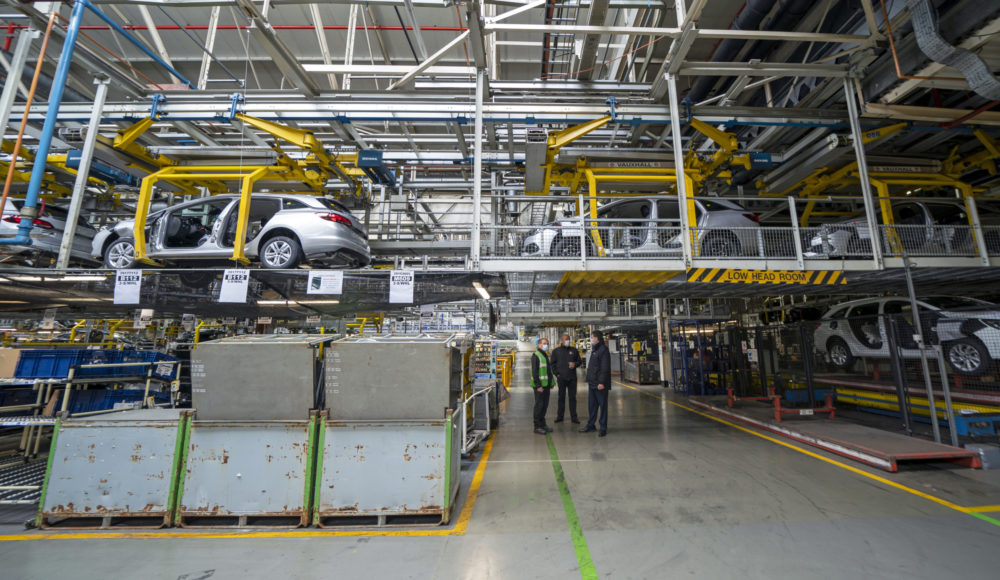
This is an old photo – this is of inside of vauxhall plant in Ellesmere port. They closed the astra line down due to Brexit. To save some face, the government moved the Luton van production up to Cheshire at enormous cost to tax payer!