


Unprecedented summer of wildfires sparks Welsh fire resilience summit
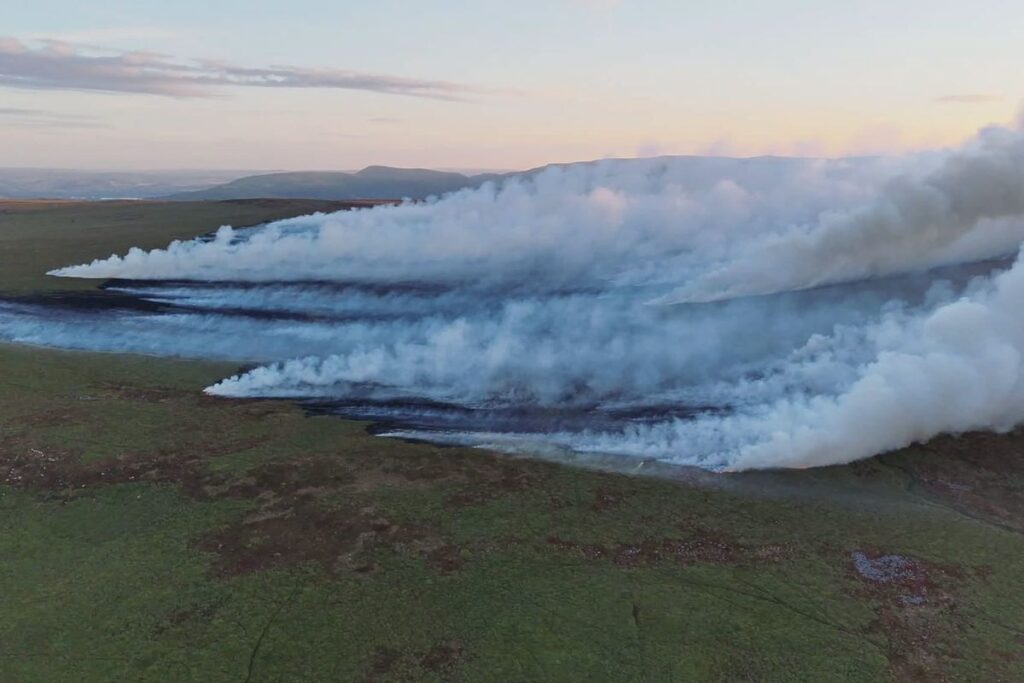
Zoe Head-Thomas, Press Association
First Minister Rhun ap Iorwerth will hold a fire resilience summit this week, following an “unprecedented” summer of wildfires.
With 14 consecutive incidents ongoing at one time and fire zones identified in more than 50 locations, Wales had to declare four major incidents in the summer of 2026.
South Wales Fire and Rescue Service (SWFRS) alone saw a 227% increase in calls and responded to more than 1,000 grassfire incidents, leading to support outsourced from services across England and the UK military in August.
At the summit, the main topics expected to be discussed include aerial support, climate change, technology, funding and prevention techniques.
Assistant Chief Fire Officer for SWFRS, Matthew Jones, said: “This was unprecedented for us. As a service, we pride ourselves on our ability during the wildfire seasons.
“This for us now is that signal around what is coming in the future.”
According to data from Global Wildfire Information System, 28,299 hectares of land burned across the UK, making 2026 the second highest year on record.
During his first public appearance after the summer recess, Rhun ap Iowerth promised to hold the first-of-its-kind event, citing the climate emergency as “a reality right now here in Wales” rather than in “some distant future”.
The Blaenavon fire of July, which lasted weeks, was identified by EFFIS, the European Commission’s Fire Information System, as particularly environmentally impactful.
Professor Stefan Doerr at Swansea University, and leader of the Centre for Wildfire Research, said: “They actually flagged this as one of the fires worldwide that emitted one of the largest amounts of carbon per unit area.
“Now, globally, the UK is normally not in the news about its fires. We have other countries that are much more problematic in terms of wildfires. But this particular fire, because it burned deep into the peat, released a huge amount of carbon.”
In August, following a devastating fire in the Midlands, Prime Minister Andy Burnham revealed he planned to commission firefighting planes, as used to douse flames in Europe and the US.
While Natural Resources Wales, which manages land owned by the Welsh Government, have contracts with helicopter operators, no fire and rescue service in the country yet possess their own aircraft – limiting geographical reach and access to aerial support.
“Under extreme conditions, you cannot get close enough to that fire and this is when aerial support such as helicopters or planes are more important”, Prof Doerr said.
“They do not necessarily put out the fire completely, but they can help to stop the fire from moving to an area that is particularly important.
“In the future, we do need this aerial support to be available under those more extreme conditions.”
Technology is already being explored with a year-long drone trial led by Cardiff University launched earlier this month.
The flying device is equipped with advanced sensing capabilities and thermal and optical imaging to detect and monitor fires in areas of difficult access.
NRW’s Executive Director of National Operations Dominic Driver said: “The impacts of this summer’s significant wildfires are still being felt across the country, going far beyond the visible scars left on the landscape.
“They can be seen in the habitats destroyed, carbon stores depleted, and damaged soils that will take many years to regenerate and recover. We are focused on supporting nature’s recovery and building resilience to this increasing challenge posed by climate change.
“Creating wildfire-resilient landscape requires strong partnership between Government, fire and rescue services, landowners and land managers and communities themselves. The challenges around wildfire are complex and require action before, during and after incidents.
“We’ll only succeed by taking a joined-up approach across public awareness and prevention, land management, emergency response and environmental recovery.
“The summit is a critical opportunity to share learning, strengthen connections, and consider how Wales can prepare for and minimise the increasing risks posed by climate change.
“As a major land manager and conservation body in Wales, we recognise the important contribution we have to make, and we will be prioritising this important work to help make Wales a more climate-resilient nation.”
Support our Nation today
For the price of a cup of coffee a month you can help us create an independent, not-for-profit, national news service for the people of Wales, by the people of Wales.
Get more trusted Welsh news
Choose Nation.Cymru as a preferred source in Google News to see more of our journalism.


