


Valleys community describes life near quarry as ‘slow Aberfan disaster’
Emily Price
A community living in the shadow of a quarry have described their lives being blighted by terrifying explosions and fears of exposure to toxic dust, dubbing the ordeal “the slow Aberfan disaster”.
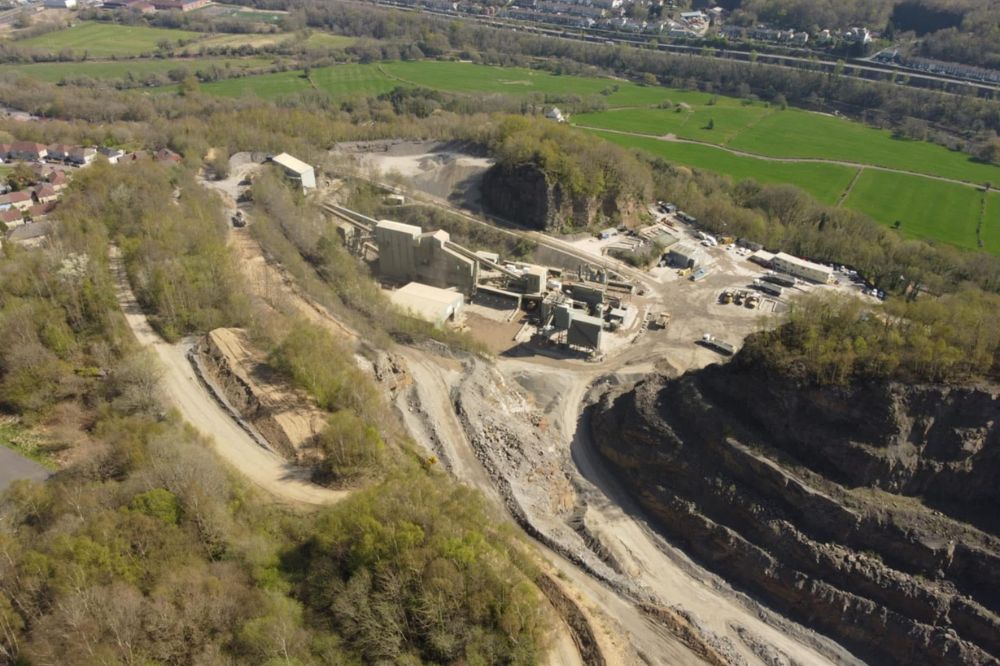
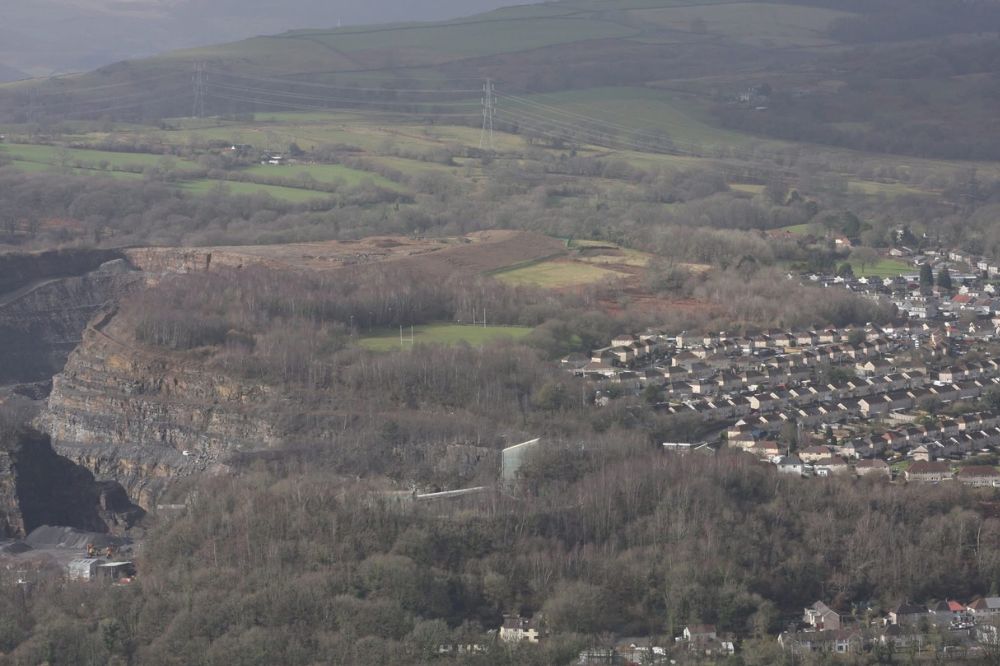
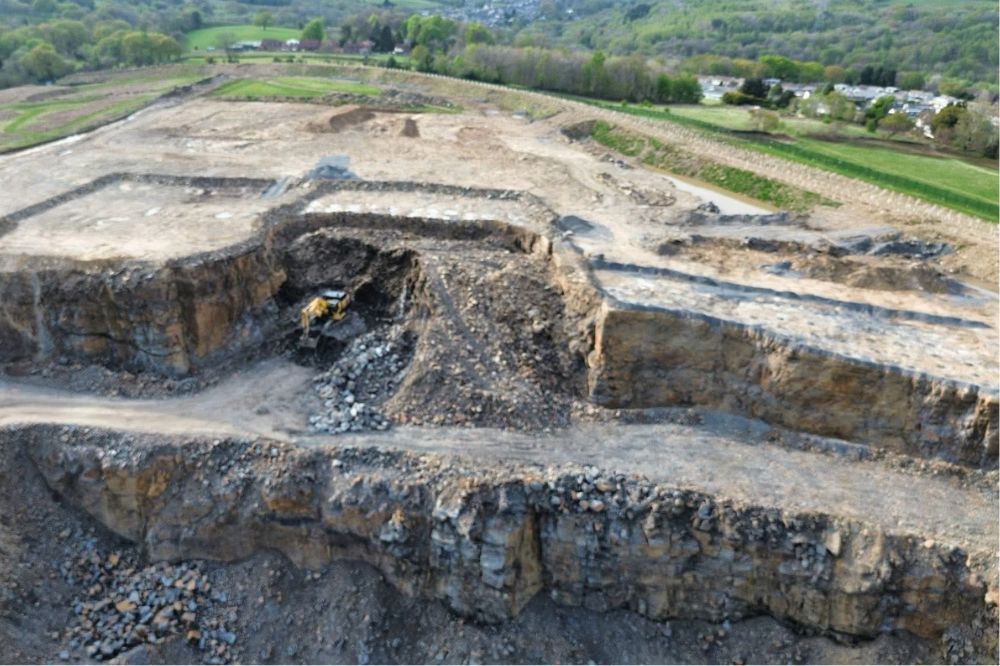
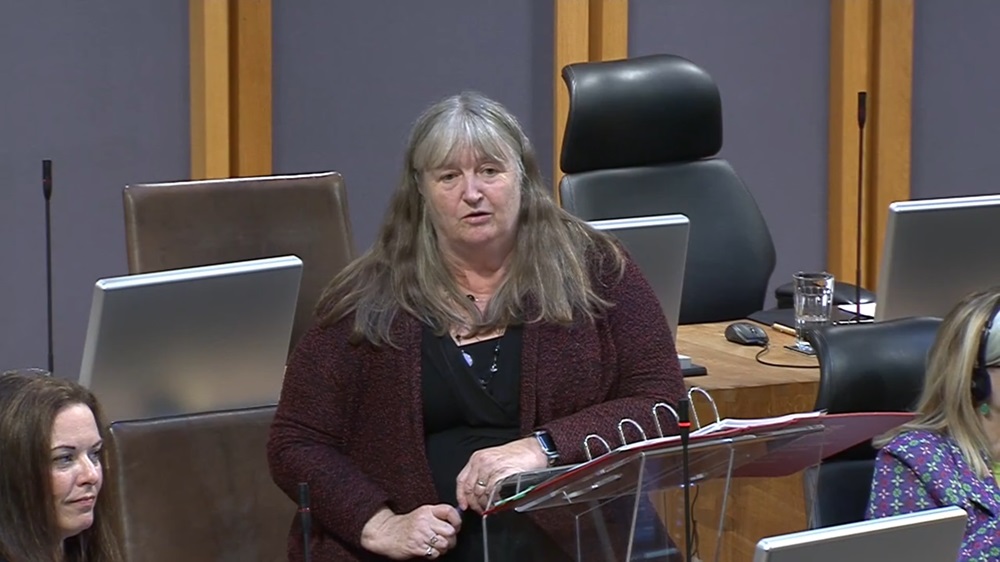
Craig Yr Hesg quarry in Glyncoch, near Pontypridd was given the green light to expand by the former climate change minister Julie James in 2022 following an appeal.
It came after Rhondda Cynon Taf County Borough Council (RCTCBC) twice rejected expansion proposals following concerns about the community’s wellbeing.
Despite planning regulations identifying a buffer of 200m as being a suitable minimum distance between quarries and residential areas, the quarry’s expansion brought its working area to within 109m from the nearest property.
Residents in Glyncoch have described life next door to the site as a “nightmare”.
They say they are forced to suffer the impact of regular blasting – sometimes without much warning – that shakes buildings and leaves cracks in their homes.
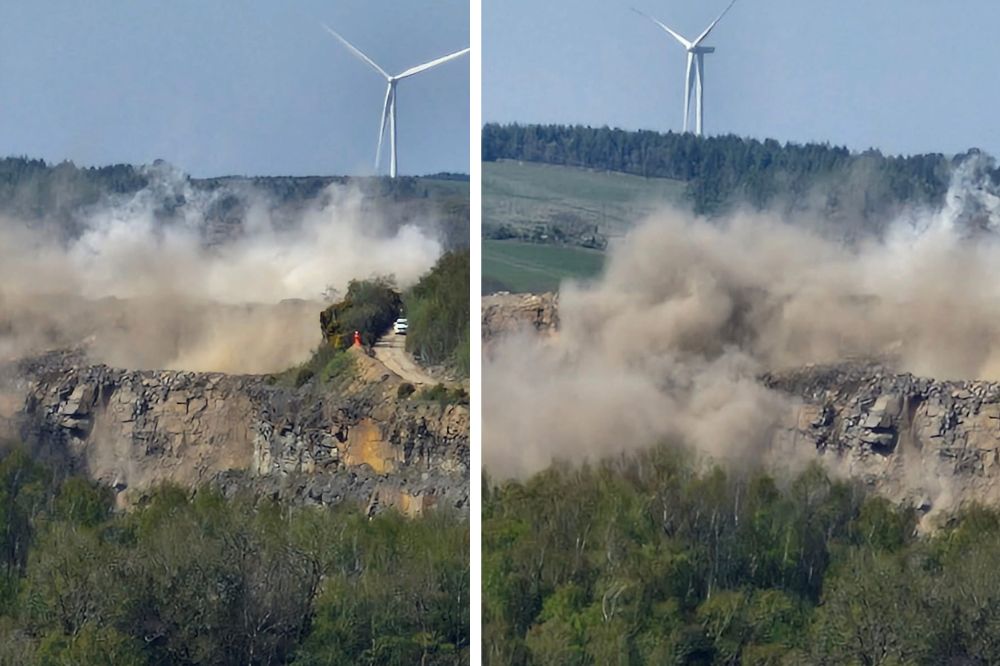
Video footage shows small children covering their ears and jumping in fear when blasting is carried out once a month.
The quarry’s operator says the blasts are well within permitted peak particle velocity (vibration) levels and are not strong enough to cause structural damage to homes.
But an independently verified database of decibel levels recorded at Craig yr Hesg shows that in February a blast “exceeded the air overpressure” set out in the quarry’s planning conditions.
Residents that have raised concerns about dust from blasts and a crusher machine used to grind quarry materials say they are being “gaslit” by authorities.
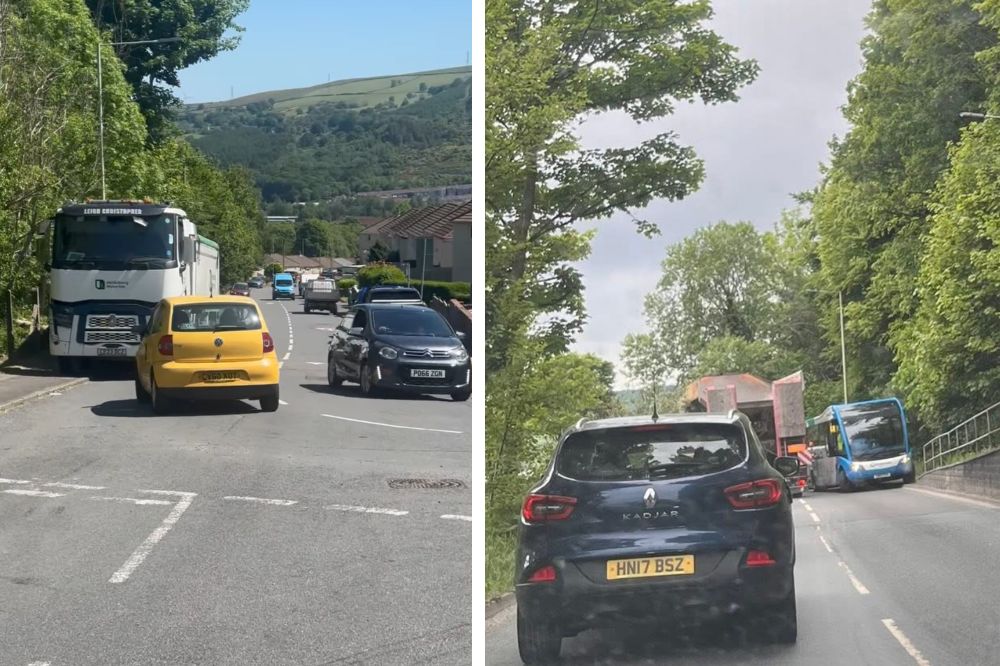
The quarry operator’s wide lorries are left parked on curbs near schools and cause disruption on narrow roads.
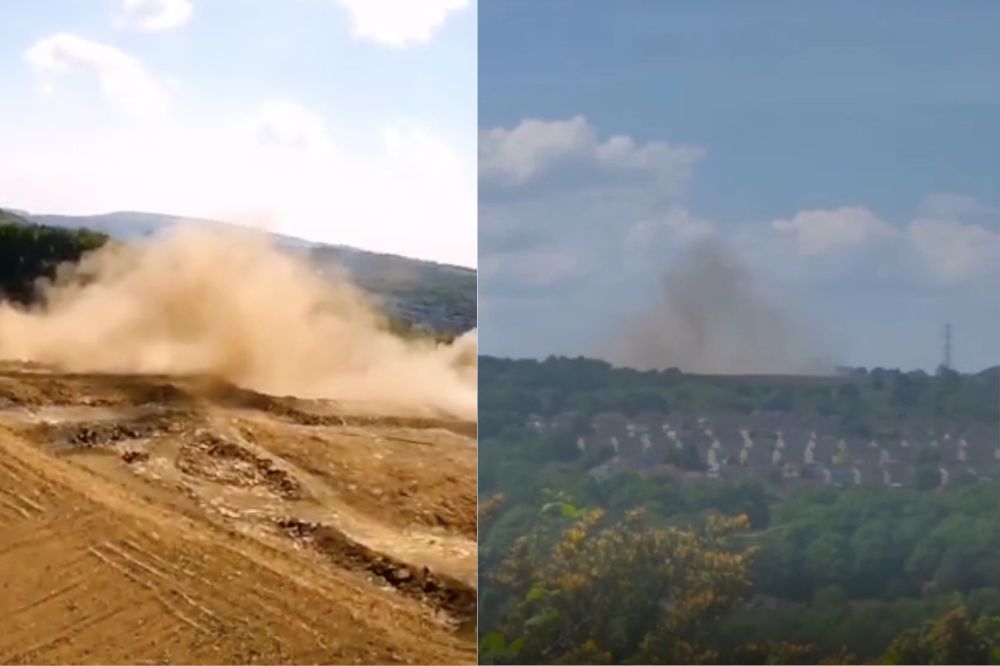
Video footage shows huge mushroom clouds of dust from the quarry that hangs in the air above the community.
People passing through the area report their skin being coated in a fine gritty powder.
The quarry’s operator, Heidelberg Materials, is mining for blue pennant sandstone – a material used in skid resistant road surfaces.
The stone found at Craig-yr-Hesg has been described as one of the highest quality in the UK with 10 million tonnes expected to be quarried at the site over the next two decades.
But people living nearby say they have suffered breathing difficulties and mental health struggles.
Heidelberg Materials says there is “no evidence” to suggest any link between quarrying and lung disease among members of the public who live close to quarries.
RCTCBC says it raised objections relating to lack of standards for nuisance dust during the planning appeal stage of the quarry’s expansion.
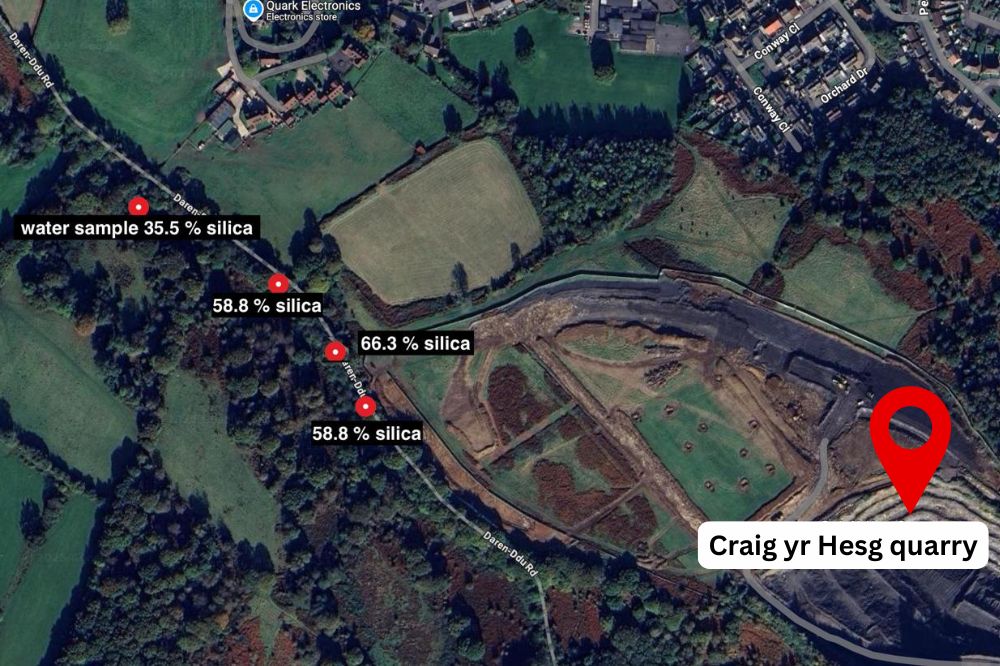
Some residents that feared the dust could contain a toxin, gathered samples from several locations for testing at a regulated laboratory.
The results – seen by Nation.Cymru – revealed the samples contained crystalline silica – otherwise know as quartz.
The Health and Safety Executive’s (HSE) website states that “silica is the biggest risk to construction workers after asbestos”.
Heavy and prolonged exposure to respirable crystalline silica can cause serious respiratory diseases.
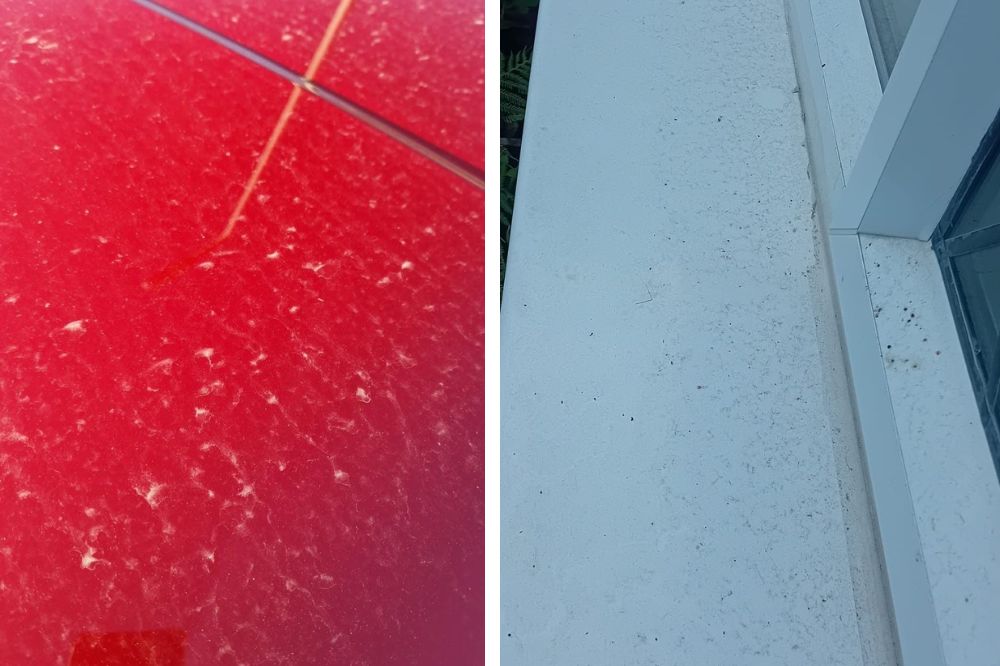
Dust samples tested for crystalline silica in May from three points on the main road that passes the quarry showed readings of 58.8%, 66.3%, 58.8% and 35.5% quartz.
Testing was also carried out in October on dust obtained from window sills at several properties in Glyncoch.
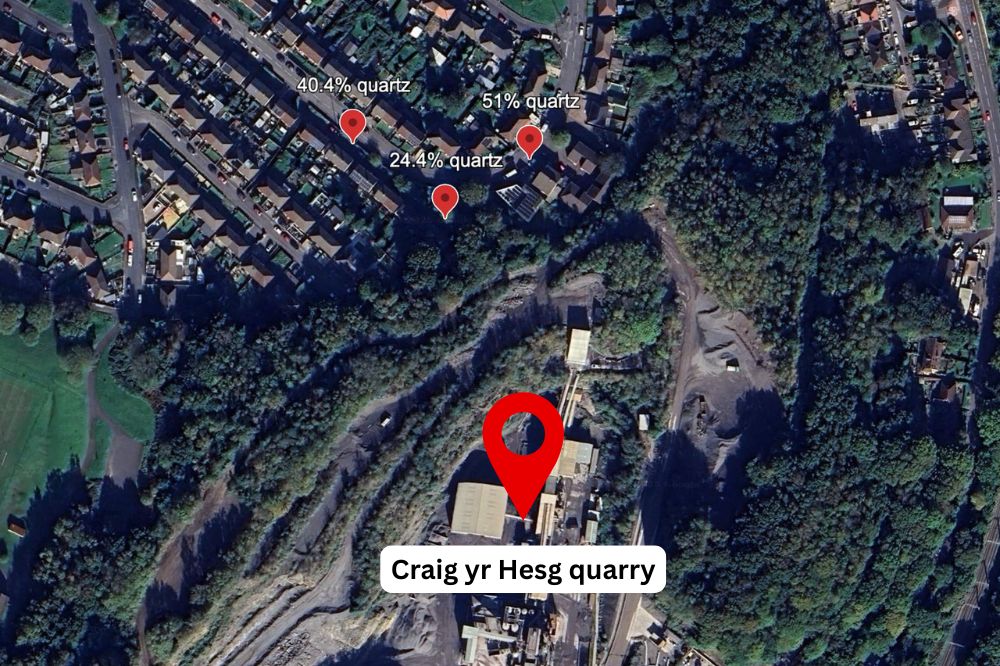
The results revealed that 51%, 24.4% and 40.3% quartz was present in the samples.
A HSE report from 2016, revealed that Craig yr Hesg quarry had previously contravened control of substances hazardous to health regulations.
The report stated the quarry had “not ensured that the exposure of employees to substances hazardous to health, namely dust containing respirable crystalline silica was either prevented or adequately controlled”.
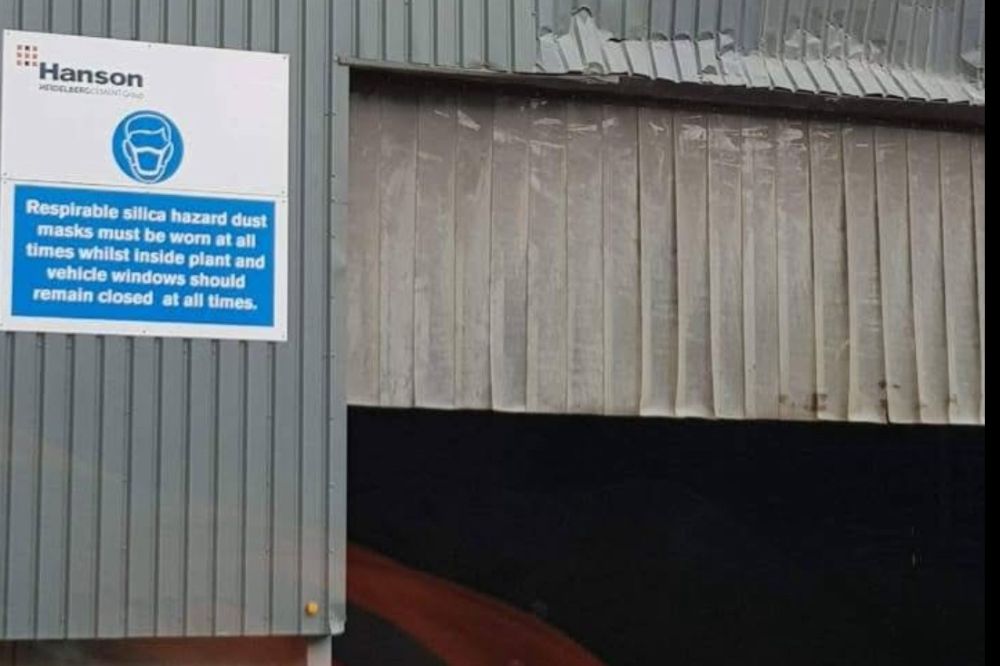
The national regulator for workplace health and safety concluded that the quarry exhibited high levels of settled dust “demonstrating that engineering controls were not effective” and that the company was heavily reliant on “face fit disposable respiratory protective equipment (RPE).”
Heidelberg Materials says the improvement notice was “immediately acted upon” and the issue fully discharged by HSE “within a short time”.
The operator added that the mandatory wearing of RPE is only required inside the processing plant.
Glyncoch resident and campaigner Ian Gibbs said: “We live with cracked walls, subsiding gardens, dust on our windowsills — and in our lungs. Blasts shake our homes.
“Children walk to school breathing in air thick with quarry dust and lorry fumes, with a crusher operating just 70 metres from the local shops.
“Between 7am and 9am, 35 lorries rumble through our narrow streets, mounting kerbs and putting lives at risk.
“When we raise these concerns, we’re met with cold references to regulations that haven’t been reviewed in over 20 years. No acknowledgement of the lived experience. No recognition of the damage.
“Glyncoch is one of the most economically deprived communities in Wales — but we were rich in nature, in peace, in potential.
“With remote working becoming more common, we had a foundation to build a future around wellbeing and access to green space, in line with the Future Generations Act. That opportunity has been taken from us.”
South Wales Central MS Heledd Fychan says the community of Glyncoch has been ignored and their fears “dismissed and belittled”.
She said: “Despite repeatedly raising their concerns, with all relevant authorities, the community has been left to fight this themselves. And despite presenting evidence, it’s a struggle to get anyone to take notice.
“It seems authorities are happy to prioritise economic benefit above the health of residents, which makes a mockery of the future generations act.
“It’s time for Welsh Government to listen, and support residents to establish what risk is posed by the quarry and take action.
“Glyncoch will no longer be silenced, and I’m proud to support the campaign to close the quarry.”
Heidelberg Materials says its operation aligns with the “strict regulations” that underpin modern quarrying and ensures “people, property and the environment are protected”.
Astrid Dahl, Area General Manager, Aggregates South Wales, said: “Craig-yr-Hesg is subject to a comprehensive set of 57 modern planning conditions, which we adhere to and these have been set to mitigate the impact of quarrying.
“Dust management measures include extensive dust suppression activities, including
sprinklers and wheel washes as well as the creation of screening bunds and new woodland with over 3,200 trees being planted.
“The potential air quality and dust hazards from some quarry activities, such as crushing or screening which take place in an enclosed building, are also managed as part of the stringent regulatory controls.”
Ms Dahl added that air quality beyond the quarry boundary is monitored by RCTCBC and is part-funded by Heidelberg Materials.
She said: “Quartz, which we understand has been collected locally and tested, is a naturally occurring mineral.
“Based on the information available it has not been possible for us to assess the specific source and scientific sampling methods used or to determine any potential link between the dust collected and local air quality levels.
“What is clear is that the on-going monitoring in place highlights that the area’s air quality is well within the safe levels mandated by the UK’s Air Quality Standards.
“We remain committed to being a responsible operator and to playing our role within the local community at Craig-yr-Hesg.”
The operator added that it’s keen to establish a community liaison group so that “the benefits of our operations to the local area and community can be fully realised.”
A Rhondda Cynon Taf Council spokesperson said: “We refused planning permission to expand the quarry’s operation in 2020, and Hanson (now Heidelberg) subsequently exercised its right to lodge an appeal against that decision.
“After a public inquiry, the Council’s decision to refuse the application was not supported by Welsh Ministers who granted planning permission for the western extension of the quarry.
“We acknowledge the concerns that residents raised and continue to raise, however, as a result of the decision by Ministers, our role is to monitor the conditions imposed on the planning permission. Our role includes monitoring air quality based on the size of particles, and enforcing the environmental permits that fall under our remit.
“We continuously monitor the site to ensure that relevant controls are being adhered to. To support this, we have upgraded our air quality monitoring stations to ensure they continue to accurately record air quality.
“Publicly available air quality data is reported to Welsh Government and available online.”
In June, the Senedd will debate an 11,000 strong petition which calls for a mandatory 1000m buffer zone for all new and existing quarries in Wales.
The Welsh Government was invited to comment but declined to provide us with a statement.
Instead, a spokesperson sent us a copy of the decision letter published by them in October 2022.
Support our Nation today
For the price of a cup of coffee a month you can help us create an independent, not-for-profit, national news service for the people of Wales, by the people of Wales.



OMG. How is this allowed to happen? What is the point of the Senedd if this is allowed to happen to its own people? I’m in total shock.
How is this allowed! Everyone involved in the planning and desion makers. Need to be look at.! Can this be repot to the police 🤔
I live directly across from this, so no longer feel the blasts as they point elsewhere. But can see bits of Glyncoch coverd by trees previously. And walked up the left of this site and its ruined the walking path. We need to be like Germany, not close to peoples homes.
Having just seen the effect that the blasting had on the school children, that alone should be enough to close the Quarry!
What RCT fails to mention is that they sold the land for the quarry extension to the quarry company – this decision was made via executive officer decision and deemed not in the public interest – they sold 27 acres of prime agricultural land for £4K in 2017 – the only reason RCT’s hands are tied is because they tied them – what did they think a quarry company was going to do with 27 acres of land, farm sheep ? ? Their appeal efforts were worthless and they had to pay the quarry company hundreds of thousands for their… Read more »